A 115-million-year-old Brazilian fossil contains heme-related chemistry and cell-like structures. Researchers disagree over whether the shapes are red blood cells.
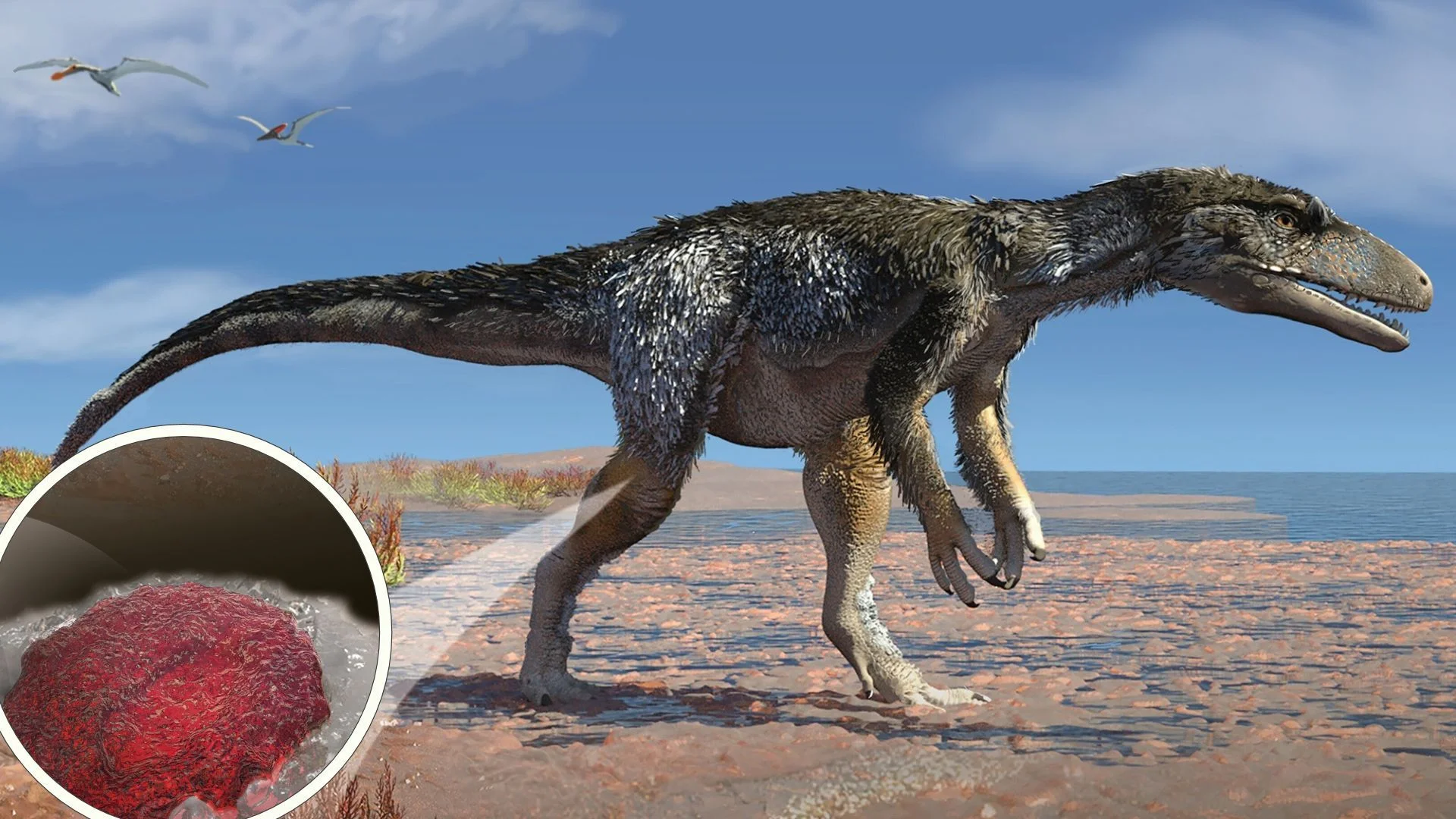
A Brazilian dinosaur fossil has produced a rare combination of cell-like structures and blood-related chemistry, offering a possible glimpse of biology preserved for 115 million years. The interpretation is disputed: one molecular paleontologist says the structures don’t look like the red blood cells expected in reptiles and birds.
The findings, published Monday (Nov. 2) in PNAS, come from limb bones of Aratasaurus museunacionali, a theropod estimated to have been about 10 feet (3 meters) long. The researchers report microscopic forms resembling red blood cells, along with chemical signals associated with heme, the iron-bearing component of hemoglobin.
Earlier studies have reported blood in dinosaur fossils. The authors say their work is the first to use chemical analyses to identify heme-related signatures in dinosaur bone.
Linking chemistry to structures
The research began with a broader question about how much of an organism’s biology can persist through fossilization, said co-author Kliti Grice, a professor at Curtin University’s School of Earth and Planetary Sciences in Australia. Fossils are usually studied through their bones, teeth and other visible features, she said, but exceptionally preserved material may also retain microscopic and molecular evidence.
Grice’s team examined limb bones from A. museunacionali, a small theropod that lived in Brazil during the Early Cretaceous period. Theropods were mostly carnivorous dinosaurs that walked on two legs, a group that also includes Tyrannosaurus rex and Velociraptor.
Under the microscope, the researchers found many small structures inside vascular canals, the channels that once carried blood vessels through the bone. Their position, size and outline were consistent with red blood cells, the team argues. Chemical and mineral analyses detected heme-related compounds in association with the structures.
The researchers analyzed the chemistry within the bone itself, rather than extracting molecules and inferring where they came from. That let them compare the chemical signals with the structures in their original physical setting, Grice said. Heme is a ring-shaped molecule that forms part of hemoglobin, the protein that carries oxygen in red blood cells.
The fossil also preserved amino acids associated with collagen, a structural protein found in bone.
What may have preserved the traces
The team proposes that the dinosaur was quickly buried in sediment with little oxygen, in an environment containing microbial mats—thin films made up of microorganisms. Such conditions may have changed the usual course of decay and helped preserve microscopic forms and associated chemistry.
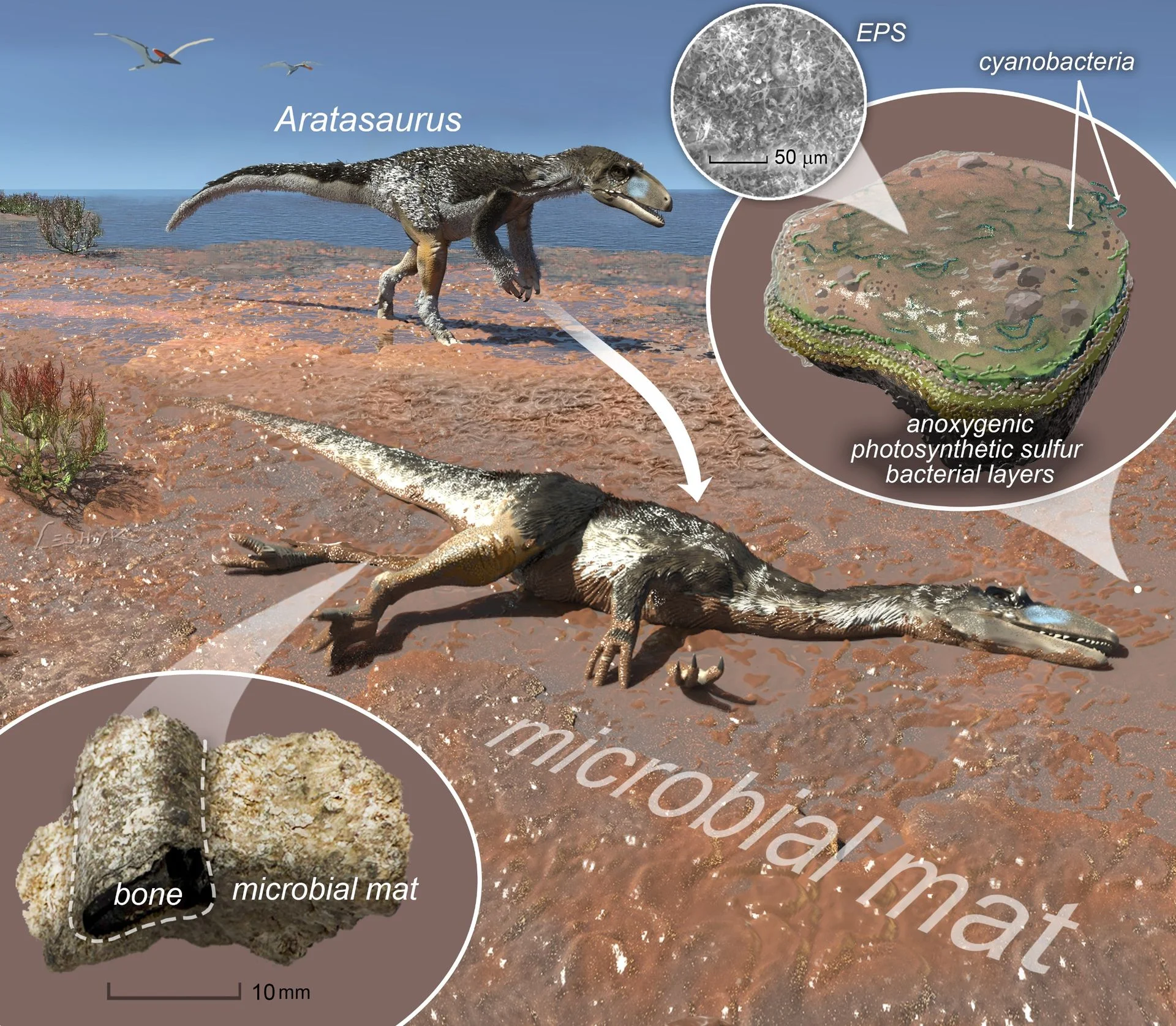
Grice said the cell-like structures were mineralized with hausmannite, a manganese oxide mineral (Mn₃O₄). The researchers think early mineralization may have stabilized or replicated biological forms before they broke down completely, while some related chemical signals survived in altered form.
Why the identification is contested
Other dinosaur fossils have yielded reported blood traces, but Mary Schweitzer, a molecular paleontologist at North Carolina State University who was not involved in the study, questions whether these particular structures are red blood cells.
Schweitzer said she agrees that molecules produced within an organism can persist in some form over geological time and can reveal information about ancient life. But she said the images don’t persuade her that the structures are remnants of red blood cells.
The shape is central to her objection. Mammalian red blood cells lose their nuclei as they develop, while the cells of birds and reptiles retain them, typically creating a visible bulge. Schweitzer said the structures in the fossil instead appear concave, without that bulge, and are smaller than most non-mammalian red blood cells. “So morphological similarity is not met,” she said.
Schweitzer welcomed the study’s use of new methods and said she was excited to see researchers pursue molecular analysis of ancient fossils. For now, the work presents chemical evidence tied to suggestive structures; whether those shapes are dinosaur blood cells remains an open question.
- Rare armored dinosaur found in Japan may have ancestors that migrated across a land bridge 100 million years ago
- Fossil of 'unconquered female warrior' dinosaur with long claws found in UK museum drawer after 100 years
- Remarkably preserved feathered dinosaur discovered in China reveals new secrets of flying-predator evolution
Editor's Note: This article was updated at 5:44 p.m. E.D.T. to remove an outside comment that suggested the study did not include resonance Raman spectroscopy. The team did perform that analysis.
Discussion
Sign in to join the discussion.