A nine-month search found no blue whales near the Galápagos. Researchers suspect warm water disrupted feeding conditions and shifted their route south.
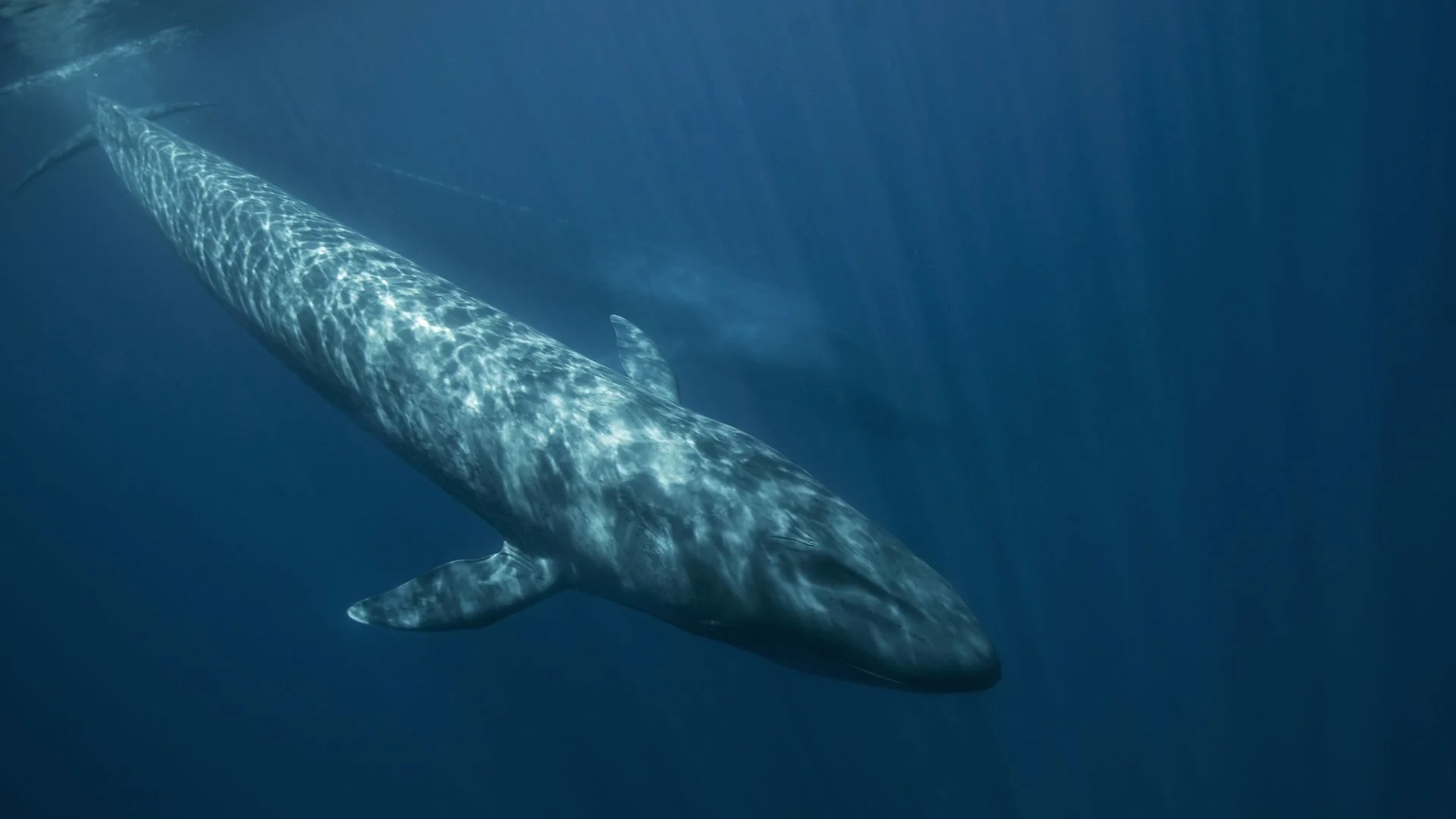
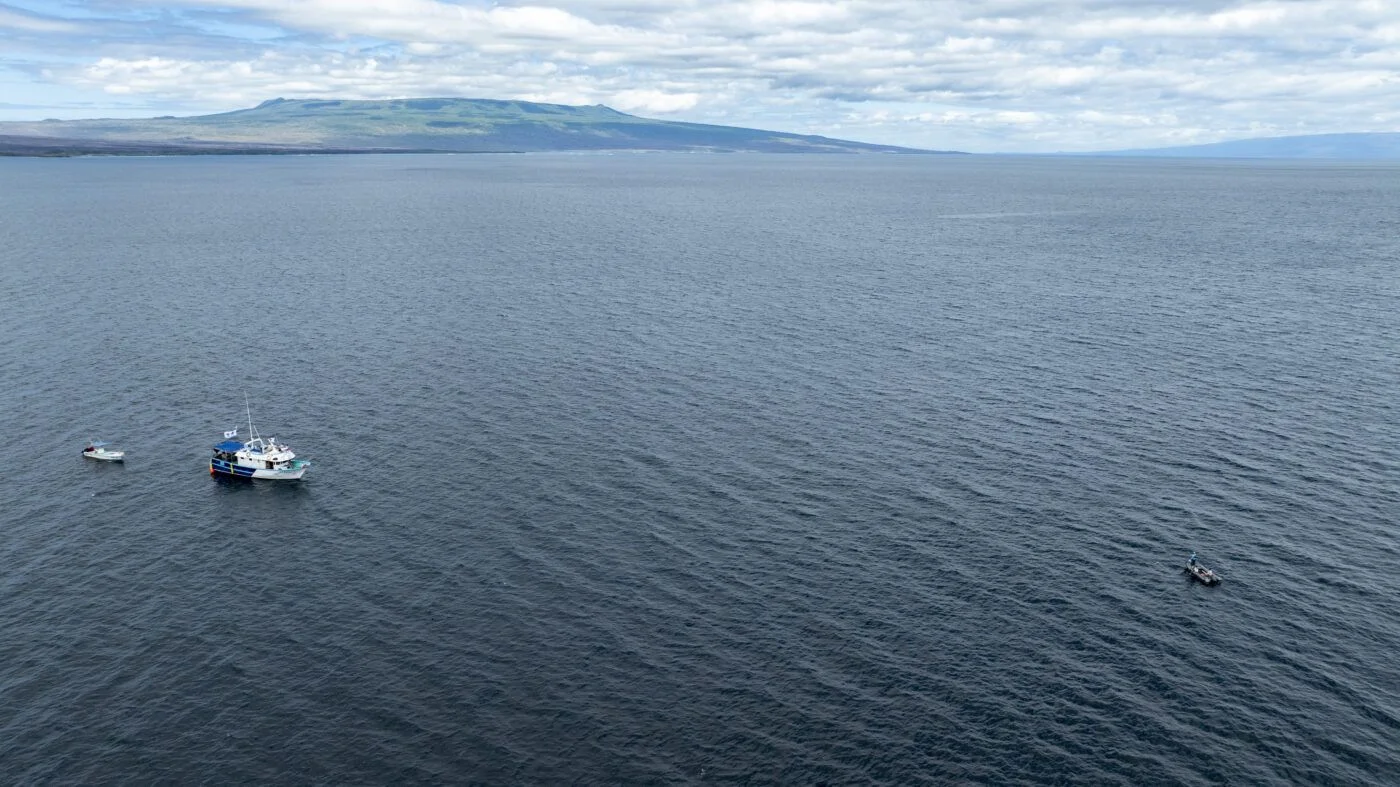
The empty search for blue whales around the Galápagos points to a likely change in where the animals can feed. Researchers spent nine months surveying waters where the whales had previously been recorded, from October 2025 through July 2026, but found none to tag. Unusually warm conditions during an El Niño offer a possible explanation: the whales may have moved south in pursuit of cooler, more food-rich water.
That interpretation remains a hypothesis. The expedition did not locate the whales, and researchers did not directly measure krill abundance in the relevant waters. Still, temperature readings and the depth of peak chlorophyll concentrations suggest that conditions near the islands may have been poorly matched to the whales’ feeding needs.
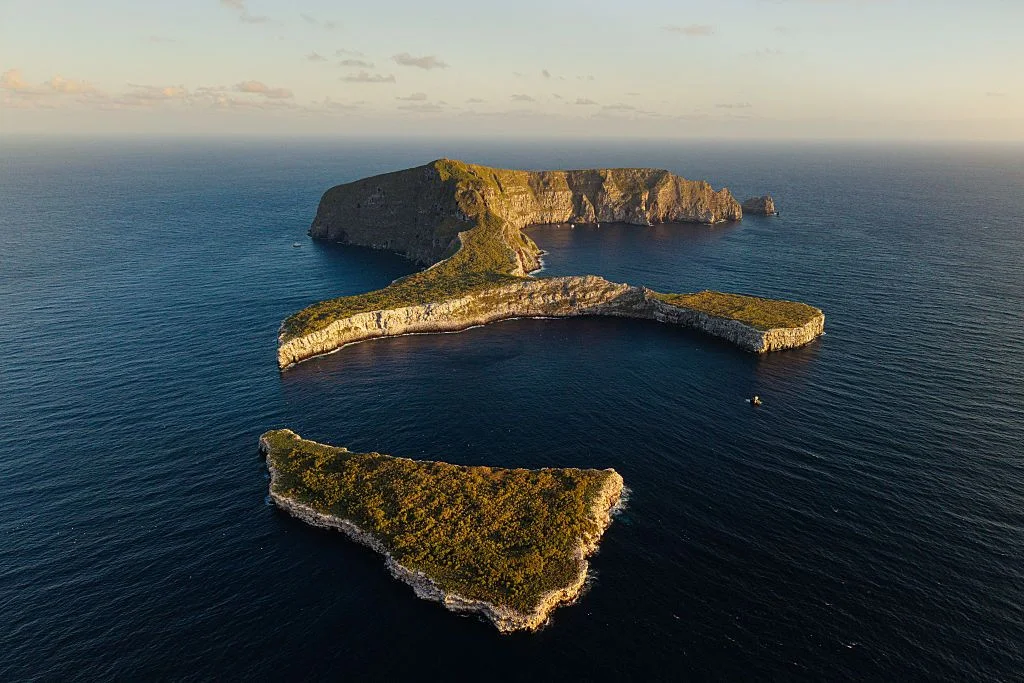
“The hypothesis is that the whales are staying in areas with greater productivity [more food] farther south, in waters with slightly cooler temperatures,” said expedition leader Daniela Alarcón, a researcher at the Universidad San Francisco de Quito’s Galápagos campus and the Galápagos Science Center. Waters off Peru are one possible destination. The whales could also be farther offshore, beyond the team’s search area.
Alarcón described the warm water around the islands as a possible “temperature barrier” that may have kept the whales from feeding there. This would make their absence a sign of changed movement, rather than evidence that the animals had disappeared from the region permanently.
Warm water may have shifted the food supply
Blue whales (blue whales, Balaenoptera musculus) depend on large quantities of krill, small crustaceans that form the core of their diet. An individual can eat as much as 12,100 pounds (5,500 kilograms) in a day. Finding concentrated feeding grounds is therefore essential to sustaining these enormous animals.
“These are very large animals that need to move to areas where they can keep feeding,” Alarcón said. The key question is whether El Niño left enough krill in the Galápagos waters, and at depths the whales could use. The expedition’s observations cannot answer that directly, but they provide clues.
Earlier research suggested that blue whales in the region tend to feed in water near 71 degrees Fahrenheit. During this expedition, water at about that temperature was found roughly 197 feet (92 meters) below the surface. Peak chlorophyll concentrations, meanwhile, appeared higher in the water column, at depths of 39 to 121 feet (12 to 37 meters). Chlorophyll offers an indirect signal of phytoplankton, which krill eat; it does not establish how many krill were present.
That separation raises the possibility of a mismatch between the layer where whales typically feed and the layer where the base of the food supply was most concentrated. It is suggestive evidence, not proof of a krill shortage. As marine biologist Juan Pablo Muñoz of the Universidad San Francisco de Quito put it: “Honestly, we had never encountered such unusual conditions before.”
The temperature anomaly was substantial. Surface water reached 82 F (28 C). At 330 feet (100 meters), temperatures ranged from 66 to 67 F (18.9 to 19.4 C), as much as 9 F (5 C) above the seasonal norm. Those measurements help explain why researchers are considering a southward shift, though they cannot show exactly where the whales went.
The search followed a decline in sightings
The nine-month effort extended a trend that was already visible in local reports. Sightings submitted to the Cetácea Galápagos citizen science network began falling between August and September 2025. Two reports, in May and June 2026, raised hopes, but the expedition team could not confirm either one despite stepping up its search.
“We knew conditions wouldn’t be the same, but we thought that if we put in more effort, we might be able to find some individuals. But we searched, and searched, and searched — and found nothing,” Alarcón said.
Finding blue whales can be difficult even when they are in the region. Muñoz noted that humpback whales (Megaptera novaeangliae) are often easier to spot; in some places, observers can see them from shore or after a short boat trip. Blue whales tend to stay farther from mainland Ecuador’s coast and away from populated parts of the Galápagos, making sightings less likely.
Past El Niño events offer a comparison
Fernando Félix, a marine biologist at the Pontifical Catholic University of Ecuador and the Whale Museum (Museo de Ballenas), was not surprised that the team came up empty. He said researchers had seen similar movement during the 1982–1983 El Niño, when blue whales, fin whales (Balaenoptera physalus) and Bryde’s whales (Balaenoptera brydei) were recorded shifting south as the ocean warmed.
Félix argues that whales can respond to environmental cues that signal when feeding conditions have deteriorated. “They can clearly sense that when temperatures are unusually high as they travel north from the south, vertical mixing has been disrupted and there is no food in the Galápagos. They perceive environmental conditions and naturally direct their movements toward areas where they believe feeding conditions are better,” he said.
In his view, the missing animals most likely moved elsewhere. “I don’t think the whales have died,” Félix said. “They simply didn’t go to the Galápagos region. They went elsewhere, where conditions were better.” He also suggested that dolphins may have shifted toward colder waters or dispersed, though those movements have not been established by the expedition.
Recovery depends on cooler water returning
Researchers expect El Niño’s effects to continue into the coming months. Félix warned that warm water arriving from the north and west between January and May 2027 could further affect local marine conditions. The implications extend beyond whales: tuna, swordfish, anchovies and sardines have also moved toward colder water, he said.
There are reasons to expect the food web to recover when colder, nutrient-rich water rises again. Muñoz said krill populations can rebound within one to three months after that upwelling begins. Whale sightings increased in the years after the 2015 and 2023 El Niño events, offering a precedent for a return after conditions improve.
On that basis, Muñoz sees 2028 as a potentially promising year if cold water returns to the surface. “The system bounces back,” he said. Félix was more confident still, comparing El Niño to a computer restart that allows ecological processes to begin again. “I can guarantee that there will be large numbers of blue whales at this time in 2028,” he told Live Science.
That forecast is a researcher’s expectation, not a confirmed timetable. For now, the strongest evidence points to an altered feeding environment and a likely change in whale movements. The next meaningful signal will be whether cooler water and renewed productivity bring sightings back to the Galápagos.
- Hundreds of whale calves have mysteriously died in Patagonia — and scientists are racing to find out why
- This psychologist has a new theory for why orcas keep attacking boats
- 'They would come in with a chord change': Composer Jim Nollman has collaborated with turkeys, kangaroo rats and whales. Now he's dropping 'Orcas' Greatest Hits.'
Help us improve Live Science Pro: We're always trying to make our content better. Leave us feedback about Pro here.
Discussion
Sign in to join the discussion.