Discover the best places to see the Northern Lights while enjoying unique attractions, ensuring a fulfilling trip, regardless of the aurora's visibility.
The allure of the Northern Lights is captivating, yet the unpredictability of this natural phenomenon can lead to disappointment. Many travelers book trips to renowned spots, only to find themselves staring at a cloudy sky for days. The aurora borealis isn't a guaranteed spectacle; instead, it's a distributed event across various latitudes, making it essential to choose destinations based on more than just the potential for an aurora sighting.
This guide takes a fresh perspective, focusing on destinations that offer memorable experiences, ensuring that a lack of auroras won’t ruin your trip.
Timing Your Trip: Solar Cycles and Best Seasons
The aurora follows an eleven-year solar cycle, with the last peak occurring in October 2024. Surprising as it may sound, this phase offers significant opportunities. Historically, the declining periods in the solar cycle have been known for producing some of the most intense geomagnetic storms, and heightened activity is expected until around 2027.
For travelers, equinox periods offer prime viewing opportunities, particularly late September and March, as the angle of Earth's magnetic field facilitates the solar wind's entry. The ideal aurora season spans from September through March; as winter nights grow longer, the chances of spotting the lights increase, making summer visits, regardless of latitude, less effective.
For more insights into aurora viewing mechanics and conditions, refer to Atlas Obscura's uftimate guide on auroras.
Svalbard: A Destination with Unique Attractions
If you're looking for an extraordinary experience, Svalbard, located about 650 miles from the North Pole, is an intriguing choice. The Northern Lights are just one highlight among many. The Svalbard Global Seed Vault is an essential site, designed to safeguard seed diversity against global disasters.
This vault has seen real-world use, notably during the Syrian civil war, where essential seeds were withdrew for regrowth. The location also attracts conspiracy theories surrounding its purpose, overshadowed only by its functional reality: a community of 2,700 people hailing from fifty nations resides nearby.
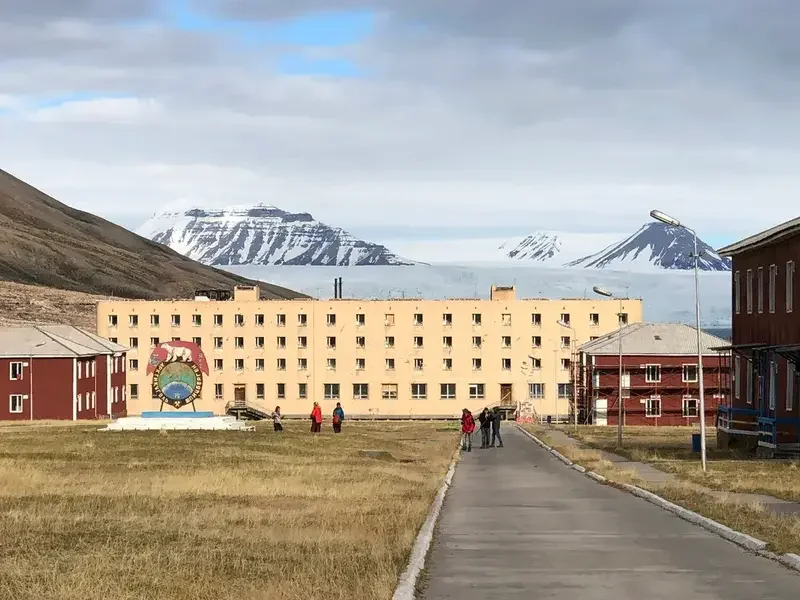
Above Longyearbyen lies Pyramiden, a ghost town from a bygone Soviet era. The remnants of this abandoned coal-mining town present an essential glimpse into history, featuring items like an Olympic-sized pool and forgotten film reels, all poised to survive the extreme conditions for years.
Even if your aurora viewing doesn’t pan out in Svalbard, the surrounding attractions will ensure your trip remains worthwhile.
Iceland: Enhancing Your Aurora Experience
Capturing the perfect aurora photograph can be challenging if the sky is the only subject. In Iceland, locations such as Jökulsárlón provide stunning backdrops with glacial lagoons full of drifting icebergs, creating a picturesque scene that enhances the beauty of the lights.
In stark contrast, the nearby Diamond Beach features icebergs that wash ashore against volcanic sand, a surreal visual treat. If you find Jökulsárlón overcrowded, consider visiting Heinabergslón, a tranquil, glacier-fed lagoon that remains relatively uncrowded.
Iceland also offers a comforting waiting experience in geothermal waters, like the famous Blue Lagoon, and presents over 163 other attractions to explore during cloudy nights.
Arctic Norway: High Probability of Viewing the Lights
Tromsø, often hailed as the premier destination for aurora viewing, stands out with its perpetual auroral oval coverage, readily facilitating travel to areas with clearer skies. What truly enhances the experience is the seamless infrastructure focused on northern lights tourism.
For those seeking solitude amidst the stunning scenery, the Lofoten Islands present an alternative. Known for their dramatic peaks, the islands are popular among photographers who frequently capture incredible auroral displays. Moreover, Norway offers various other unique experiences, with a staggering 141 attractions to enjoy.
Finnish Lapland: A Cozy Aurora Watch
The Kakslauttanen Arctic Resort offers visitors the chance to watch the Northern Lights in comfort from geodesic glass domes, allowing for unobstructed views. These unique accommodations enhance the experience, especially for those wary of frigid night temperatures.
Alternatively, the Arctic Guesthouse & Igloos in Ranua features mobile glass igloos that can be towed to pristine, light-pollution-free locations for optimal viewing. Finnish Lapland also stands as a hub for aurora research; recent findings even unveiled a new aurora type, recognized as "dunes," providing a rich context for enthusiasts learning about this spectacular display. Plus, there are 96 other attractions to enjoy at your leisure while you await the lights.
Scotland: The Underrated Aurora Spot
Scotland often gets overlooked in Northern Lights discussions, but during strong storms, the auroral oval can extend southward, allowing regions like southern Scotland to witness the phenomenon. The Galloway Forest Park has been recognized as the UK’s first Dark Sky Park and traditionally offers regular sightings of auroras on clear nights.
However, note that the Scottish Dark Sky Observatory faced a regrettable setback with a fire in June 2021. A new facility is on the horizon, set to replace the old observatory and enhance future stargazing experiences.
Maximizing Your Aurora Experience
To truly enhance your chances of seeing the Northern Lights, consider these tips:
- Stay for a minimum of five nights. A three-night stay leaves too much to chance.
- Access multiple valleys. Local cloud cover varies, so being able to drive short distances for clearer skies can be invaluable.
- Familiarize yourself with the Kp index. Utilize NOAA’s Space Weather Prediction Center for reliable forecasts, rather than less accurate mobile apps.
- Plan your trip during an equinox. This maximizes your opportunities for sightings.
- Choose your location based on overall attractions. Should the auroras elude you, being in a place filled with enriching experiences keeps your trip worthwhile.
This approach ensures that you won’t miss out if the skies are cloudy, and it encapsulates the essence of travel: enjoying the journey, regardless of the final destination.
Discussion
Sign in to join the discussion.