Discover winter destinations where unique landscapes emerge and experiences await, far beyond the typical beach escape.
Most winter sun destinations tend to blend together: sunny beaches ranked by average temperatures, replete with glowing resort descriptions. But if we shift our perspective, a more intriguing question emerges: which locations transform during the northern winter into experiences that are otherwise hidden, dangerous, or inaccessible year-round? Embracing this angle reveals a fascinating array of possibilities.
Salar de Uyuni, Bolivia: A Mirror of the Sky
The Salar de Uyuni, the world's largest salt flat, stretches over nearly 4,000 square miles at an elevation of 12,000 feet. For the majority of the year, it presents a stark, featureless expanse of white. However, when the rains return in December, a thin layer of water blankets the salt, transforming it into an expansive mirror that reflects the sky, creating an illusion where visitors seem to float in the clouds. This phenomenon peaks from December through March; outside this time frame, like in July, the flat is merely a dry, cracked surface resembling a parking lot.
While you're in Uyuni, make sure to visit the Great Train Graveyard. This eerie site features over a hundred British steam locomotives from the early 20th century, left to the mercy of time and the salt-laden winds. With no fences to hold back the curious, the site tells stories of abandonment and decay and serves as a stark contrast to the mirror-like salt flat. Nearby attractions include Laguna Colorada, a strikingly red lake populated by graceful flamingos, and Salvador Dalí Desert, named for its surreal landscapes.
The Salton Sea, California: A Desert Oasis
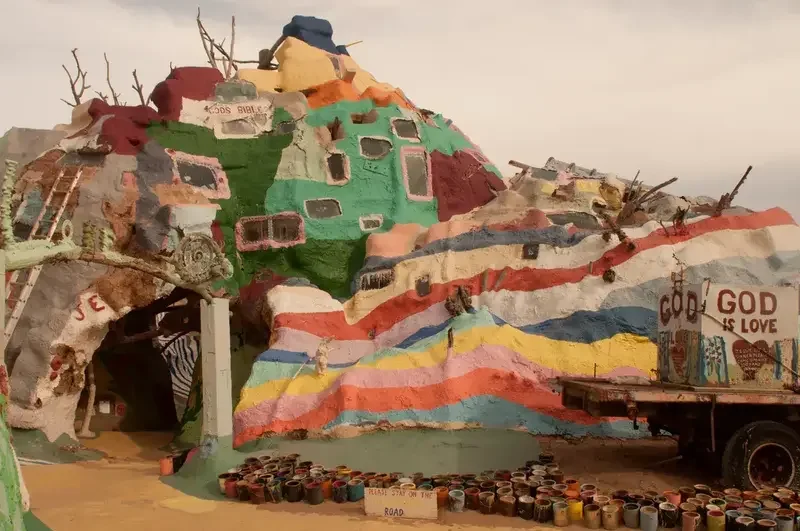
Conceptualized in a remote desert in Southern California, the Salton Sea transforms with the winter season, attracting snowbirds eager to escape the icy north. During the sweltering summer months, temperatures can rise to hazardous levels, making winter the prime time to explore the area. This is particularly evident in Slab City, a vibrant off-grid community that comes alive with visitors in RVs. The entrance is marked by Salvation Mountain, an awe-inspiring art installation made from adobe and colorful paint, celebrating spiritual messages from its creator, Leonard Knight.
The Salton Sea itself is a curious tapestry of ecological struggles. Once touted as a desert paradise, it’s now marred by the remains of fish die-offs and barnacles clinging to its shores. Despite this, it has evolved into a critical habitat for a myriad of bird species, straddling the line between beauty and decay. During winter, the area is replete with opportunities for birdwatching, art exploration, and a visit to the various attractions such as geothermal mud pots and the historical remnants of the once-thriving Bombay Beach.
The Atacama Desert, Chile: The Driest Place on Earth
Traveling to the northern Chilean Atacama Desert reveals a landscape that defies expectations. It is so arid that organic materials barely decay, presenting a unique opportunity for exploration. Here, meteorite hunter Rodrigo Martinez has spent over three decades uncovering meteorites, leading to the establishment of a >meteorite museum in San Pedro de Atacama. This museum allows visitors to interact with meteorites that have literally fallen from the sky, an unforgettable experience given the region's unique conditions that preserve these extraterrestrial objects.
In stark contrast to this alien landscape are the remnants of Chile’s once-booming nitrate industry found in ancient towns like Humberstone, now ghost towns abandoned after the rise of synthetic alternatives. Visitors can wander through time, exploring the preserved conditions and artifacts within these towns. Notably, a visit to Chacabuco, a former concentration camp, serves as a reminder of Chile’s tumultuous history, and access requires a guided visit due to remaining landmines.
Kolmanskop, Namibia: Nature's Relentless Takeover
In Namibia, Kolmanskop serves as a haunting testament to time’s passage. This town emerged during the diamond rush of the early 1900s but fell silent when richer deposits were discovered. Today, the shifting sands of the Namib Desert have reclaimed the town, filling its houses with dunes and telling an eerie story of prosperity, loss, and nature's persistence. Accessing Kolmanskop requires a permit, but the haunting beauty of structures overwhelmed by desert sands is well worth the effort.
Challenges and Survival in the Desert Climate
Each of these locations showcases the principle that deserts are unique repositories for human history and natural wonders. The low humidity means that materials decay slowly and population densities are low, allowing remnants of past endeavors and natural phenomena to thrive. The northern winter is an opportune time to explore these remarkable areas, offering a stark contrast to conventional winter escapes dominated by beach resorts.
So why look for sun-soaked beaches when adventure and curiosity lie in the hidden corners of the world waiting to be uncovered this winter?
Discussion
Sign in to join the discussion.