The August 2, 2027 solar eclipse offers a rare lengthy totality, with Luxor as the prime viewing location due to its accessibility and clear skies.
Maximizing Your Eclipse Experience: The August 2, 2027 Event
On August 2, 2027, a total solar eclipse will traverse southern Spain, North Africa, and the Arabian Peninsula. For those keen on experiencing totality, the highlight will occur near Luxor in the Nile Valley, where spectators will enjoy an impressive six minutes and twenty-three seconds of obscured sunlight.
This duration surpasses most total solar eclipses, which typically provide only two to three minutes of totality. The renowned North American eclipse of 2024, for example, offered a maximum of four and a half minutes. With this upcoming occurrence presenting the longest totality observable from accessible land until 2114, enthusiasts have a singular opportunity that won't come around again for decades.
Moreover, the likelihood of clear skies in Luxor during August is favorable, with cloud cover probabilities resting between one and twenty percent. This makes Luxor an ideal spot for eclipse chasers aiming for the best visibility. The eclipse’s path spans approximately 250 kilometers wide and crosses an area rich with ancient monuments, each linked to humanity's enduring fascination with the sun.
Why Luxor Stands Out
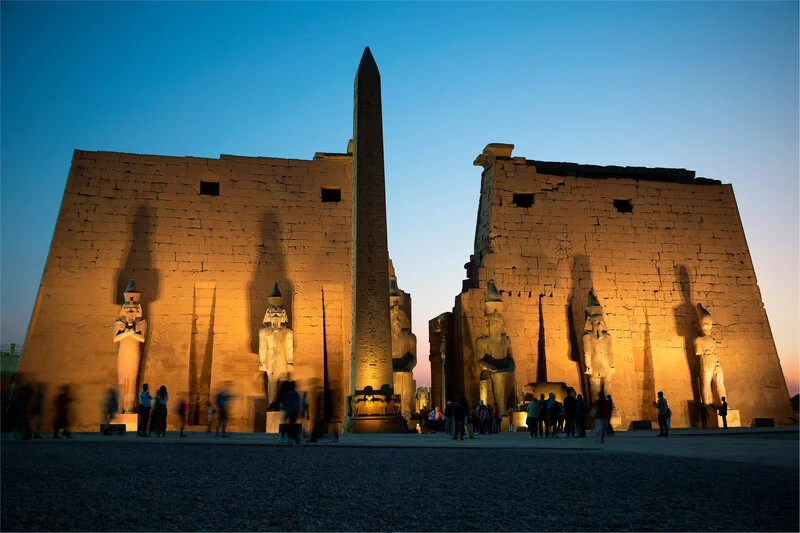
The path of totality crosses nine countries, but Luxor clearly emerges as the premier destination. Positioned near the centerline with the maximum achievable duration, Luxor also boasts convenient infrastructure, including an airport and accommodations that can cater to the influx of visitors. The peak of the total eclipse will occur around 1:05 PM local time, when the sun will be nearly overhead, at an elevation of 82 degrees.
A common misstep is assuming you can enjoy the total eclipse from Cairo; that location will only experience a partial eclipse. With Aswan offering about four to five minutes of totality, Luxor is the clear winner for those seeking the complete experience.
Connecting with Ancient Egypt: Abu Simbel and Luxor's Monuments
Ancient Egyptians ingeniously aligned their monumental architecture with solar events. The famous Temple of Abu Simbel, dating back to around 1244 BCE, exemplifies this. Constructed for Rameses the Great, its design allows sunlight to illuminate the innermost sanctum on specific days of the year, highlighting three major deities while leaving one in shadow.
In Luxor, the Colossi of Memnon have withstood the test of time for over 3,400 years, noteworthy for the acoustic phenomenon once celebrated throughout the ancient world. Additional highlights in Luxor include the tomb of Nefertari, renowned for its intricate paintings, and the tomb of Rekhmire, which provides insight into life during the height of the pharaonic period.
Luxor is steeped in history and culture, making the journey not solely about the eclipse itself but also an exploration of its surrounding marvels.
Other Locations Along the Path
The eclipse will first make landfall in southern Spain, passing through Cádiz and Gibraltar before reaching Tangier in Morocco. These locations present excellent alternatives, particularly for European travelers seeking easier logistics and shorter flights, though the duration of totality will be significantly shorter than what Luxor offers.
In Spain, totality lasts only about two minutes and fifty-six seconds, while Gibraltar promises four minutes and twenty-eight seconds. However, weather conditions along the Atlantic coast in August may pose a higher risk of cloud cover than the arid climate of Egypt.
The eclipse path extends further, including Algeria, Tunisia, Libya, Saudi Arabia, Yemen, and Somalia. However, many of these areas may have serious travel advisories, making them less appealing or even inaccessible for leisure travel.
Planning Your Eclipse Journey
Act quickly and flexibly. Since hotels along the eclipse path have been in high demand since 2024, securing your accommodations sooner rather than later is crucial, particularly if you’re eyeing Luxor. Booking well in advance is advisable for an experience not to be rushed.
Consider your environment. While Luxor will attract most visitors due to its famous attractions, the area southeast of the city offers almost equal duration of totality in a more secluded setting, allowing you to enjoy the wonder without the crowds.
Obtain proper solar viewing glasses. Ensure they conform to the ISO 12312-2 standard for direct sun observation. They should only be removed during the brief moment of totality and promptly replaced as soon as the sun begins to reappear.
Give yourself ample time. August temperatures in Upper Egypt can be extreme, warranting extra days to savor the monuments and to avoid a hurried visit. It's essential to remember that the eclipse itself lasts only a fleeting six minutes, but the journey and the destination richly reward those who take the time.
Ultimately, selecting a destination worth visiting regardless of weather variability ensures an unforgettable experience. With Luxor’s breathtaking history and the spectacular celestial event, it stands out as a prime spot for this once-in-a-lifetime eclipse.
Discussion
Sign in to join the discussion.