The Crown of Kerch, unearthed from a Hun noblewoman's grave, showcases the artistry and status of ancient nomadic elites in Crimea.
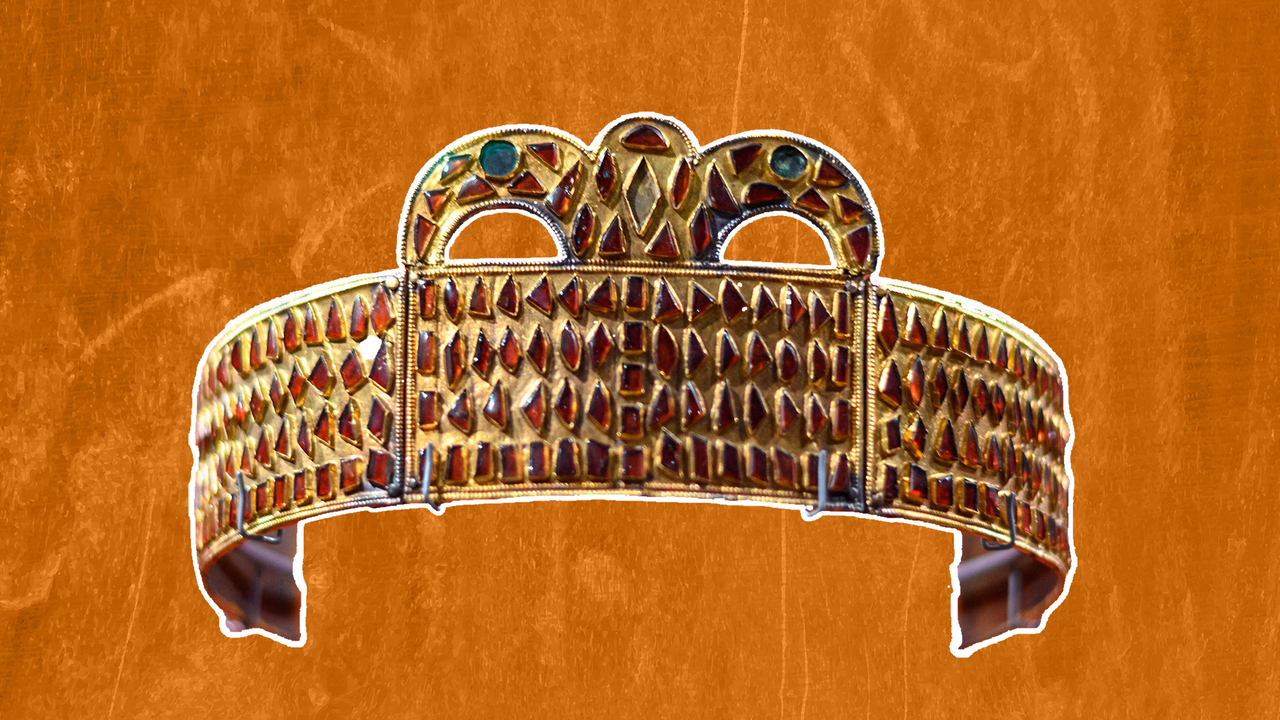
The Crown of Kerch represents a striking example of ancient craftsmanship and societal hierarchy among the Huns, suggesting both artistry and significant status. This diadem, adorned with garnets and gold, was unearthed from a grave in Crimea and hints at the cultural blend of the region during its time. Given the tumultuous history surrounding the area, the artifact encapsulates the complex interactions of cultures and the nuanced social structures that existed in this aspect of ancient history.
Artifact Background
Discovered in the early 20th century, the Crown of Kerch was part of a trove acquired by a German art collector from a Russian-led archaeological dig at a Hun settlement in Crimea. This dig was remarkable for unearthing various items of immense archaeological significance, but the crown quickly became the standout piece of the collection. Its intricate design features gilded bronze plaques and over 250 gem-studded elements, elevating it above mere functional objects to the level of art. The sheer opulence of the crown is a microcosm of the wealth and artistry that characterized certain strata of Hun society. The artifact now resides at the Neues Museum in Berlin, where it continues to invite scholarly debate and public fascination.
Design and Symbolism
Measuring approximately 1.7 inches (4.4 centimeters) in height, this diadem features two stylized bird heads flanking a floral centerpiece. The choice of bird motifs, likely representing eagles, together with round green gems that symbolize their eyes, suggests an intentional choice to embody power and status. In many ancient cultures, birds of prey stood as symbols of strength, often associated with rulers and deities. Such symbols were commonplace in ancient jewelry, extending to artifacts found in other cultures including the Visigoths in Spain. This cross-cultural similarity raises questions about interaction among societies and the possible exchange of ideas concerning adornment and symbolism.
Historical Context
The Crown originates from Pantikapaion, a Greek colony established in the sixth century B.C. This city, known for its significant trading activities, became a notable necropolis when the Huns invaded in the late fourth century A.D. During archaeological excavations in the area, researchers discovered a vast burial site containing numerous artifacts, though only a fraction could be preserved due to the conditions of the time and the nature of excavation techniques. The site eventually fell under the control of the Byzantine Empire, which adds another layer to the narrative surrounding the Crown of Kerch. The shifting power dynamics in the region underscore the constant upheaval that characterized the ancient world, leaving behind a rich tapestry of cultural influences and artifacts. This historical context is vital for understanding how items like the crown are not merely relics but also narrative vessels that communicate the values and hierarchies of their time.
Burial Practices and Use
Notably, Joachim Werner, a German archaeologist, noted in a 1956 study that the Crown was found alongside a woman exhibiting an artificially modified skull, indicating her high status. This insight opens a window into the burial practices of the Huns and the significance of ornamentation within their society. His research implies that this diadem functioned not merely as a grave good but was likely worn by elite Hun women during their lifetimes. It paints a picture of women not just as passive figures in societal hierarchy but as participants in the power dynamics, wearing items that conferred status. Perhaps the crown was paired with a veil or cloth cap, pointing to the complexity of attire and symbolism in elite ceremonies and rituals. (and this is the part most people overlook) Such embellishments indicated a careful balance between beauty and social standing, a blend that resonates quite deeply throughout history.
Significance in Archaeology
Currently, around two dozen similar gold diadems have surfaced, pointing to a practice of prestigious adornment among the ruling classes of the era. This proliferation suggests that the Crown of Kerch may not be a royal insignia but rather a testament to the sophisticated aesthetic preferences of the Hun elite 1,600 years ago. Each artifact adds complexity to our understanding of social stratification and cultural expression among the Huns. Such findings compel researchers to reconsider the role of ornamentation as a driver of identity and social cohesion in ancient cultures, not merely as decorative elements. There's a broader narrative in play about how art and form can influence structures of power and interpersonal relationships within societies.
Implications and Future Outlook
The discovery of artifacts like the Crown of Kerch contributes significantly to our understanding of the Huns, populating the historical narrative with nuance that challenges monolithic perceptions of these ancient peoples. Future archaeological efforts in Crimea and the larger Black Sea region may reveal even more about the fusion of cultures during this tumultuous period of history. As new technologies such as 3D imaging and enhanced preservation techniques are employed in archaeological digs, there's a good chance that more elaborate understandings of these diadems will emerge. If you're working in this space, you’ll find that the implications of such findings can extend beyond academic circles; they have the potential to reshape cultural heritage narratives and revive interest in often-overlooked ancient societies. The crown itself is a reminder that each ornament, each burial good, tells a larger story about humanity's past—reflecting values, beliefs, and hierarchies that, while distant, still echo into our present.
For further insights into remarkable archaeological finds, explore our Astonishing Artifacts collection.
Discussion
Sign in to join the discussion.