Climate change is drastically impacting crop yields and nutrition, threatening food security globally and highlighting the fragility of our agricultural systems.
**The Looming Agricultural Crisis: The Impact of Climate Change on Food Production**
As global temperatures rise, the consequences stretch far beyond simply adjusting our thermostats. They delve deep into our food supply, which is beginning to face unprecedented challenges. This piece examines how climate change is reshaping agricultural landscapes, posing dire threats to crops, nutrition, and ultimately, food security.
Let’s start with a vivid example from Colorado, where winter wheat underwent a dramatic fate. Following a warm, dry winter, a sudden cold snap devastated crops just before harvest. Not surprisingly, this led to a staggering 73% of the yield being categorized as poor or very poor. The 2026 harvest marked the smallest output since 1965, highlighting just how fragile our agricultural systems have become. The pattern is unmistakable: extreme weather events are not merely inconveniences but harbingers of a new reality—one in which food supplies can no longer be taken for granted.
What does this mean on a larger scale? Take a moment to consider crops globally. They’re not just facing one-off challenges; the entire agricultural sector is experiencing upheaval as climate change interferes with traditional growing patterns. Increasing temperatures reduce food quality, alter growth cycles, and introduce variability that farmers struggle to cope with. In less-developed parts of the world, the impacts are even starker, leading to nutritional declines and food shortages, particularly tough for communities unable to afford imported alternatives.
Yet this isn't just a grim projection; the data paints a concerning picture. Rising CO2 levels mean that many staple food crops are losing essential micronutrients such as zinc and protein. Studies show that by 2050, millions could find themselves deficient in these critical nutrients, with severe repercussions for health, immunity, and growth. In fact, a 2018 study suggests that an additional 175 million people may face zinc deficiencies, exacerbated by climate-induced losses.
Here's the kicker: it’s not just about growing conditions but also about the entire ecosystem that supports food production. Ocean acidification and shifting fish populations threaten coastal food sources, while rising temperatures and erratic weather patterns are destabilizing agricultural output. The forecast is sobering: if current trends continue without mitigation, certain regions could see fisheries decline by as much as 92%. Imagine the cascading consequences of a world with reduced fish stocks while our dependence on these resources only grows.
When you look across the food spectrum, the implications resonate. Dairy farming is poised for struggles as heat stress on cattle can directly diminish milk yields. This is a problem particularly for Americans who prefer yogurt and cheese, products highly dependent on the fat and protein content of milk. Should these metrics decline—due to heat conditions—so too could consumer satisfaction and access to these favored foods.
While farmers are known for their resilience, they now face a tremendous amount of uncertainty. Should they adapt to shifting environments by cultivating new strains of crops or investing in innovative agricultural practices? Every year poses different risks—droughts, unexpected floods, or heat waves—each bringing their own set of challenges that can threaten not just yields but also long-term sustainability.
The stakes truly couldn't be higher. Ominously, the potential collapse of significant ocean currents could introduce dire climatic shifts across Europe and the Americas. This system's unpredictability adds another layer of complexity for farmers trying to plan for the future. With heightened uncertainty, the essential question looms: should agricultural policies prepare for warming climates or gear up for a potential return to cooler, stark winters? The answers remain elusive, but one thing is for sure—climate change is here, and its impact on our food systems is profound and unavoidable.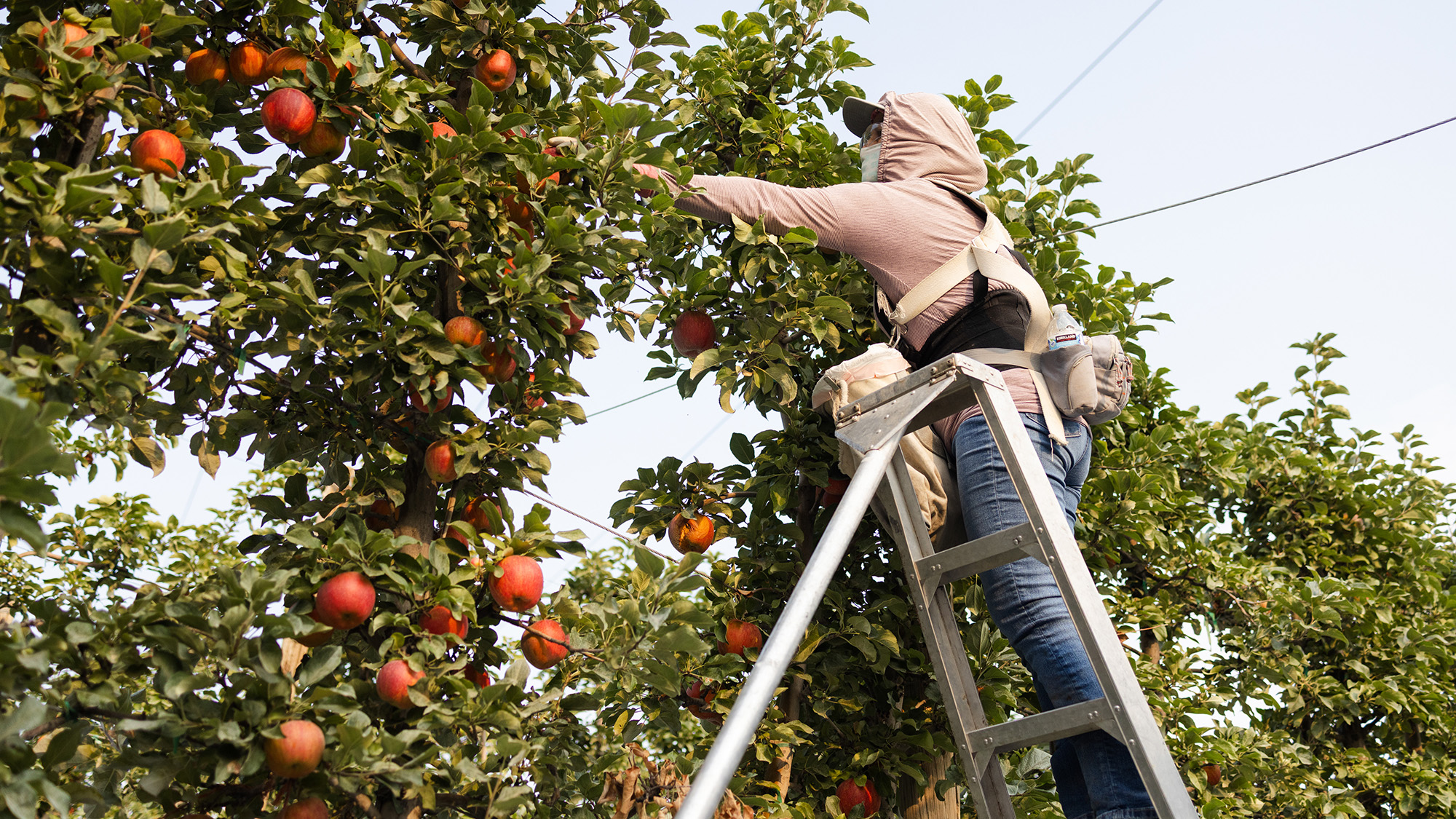 The apples we eat now, like honeycrisps, may not fare well under climate change. (Image credit: Bloomberg via Getty Images)
Historically, humanity has demonstrated an ability to avert agricultural disasters. The "Green Revolution" of the 20th century is a testament to this – it transformed global crop yields by introducing new rice and wheat varieties and making synthetic fertilizers widely available. This leap in productivity could inform further innovations that mitigate hunger as climate conditions become increasingly inhospitable.
Yet, the most effective strategy for addressing these challenges is glaringly simple: cutting emissions. Research indicates that while adapting to climate change could reduce expected caloric losses by about 30%, a significant reduction in greenhouse gas emissions could potentially halve that figure. The AMOC's future may be uncertain, but experts like van Westen are clear: if we take immediate action to limit climate change, we can strengthen its currents for future generations.
As we face these unprecedented challenges in agriculture, the urgency to act becomes more apparent. If you're involved in this sector, it’s time to think critically about how both immediate mitigation and long-term adaptation strategies will be essential for sustainability. The choices we make today can significantly influence the agriculture landscape tomorrow.
The apples we eat now, like honeycrisps, may not fare well under climate change. (Image credit: Bloomberg via Getty Images)
Historically, humanity has demonstrated an ability to avert agricultural disasters. The "Green Revolution" of the 20th century is a testament to this – it transformed global crop yields by introducing new rice and wheat varieties and making synthetic fertilizers widely available. This leap in productivity could inform further innovations that mitigate hunger as climate conditions become increasingly inhospitable.
Yet, the most effective strategy for addressing these challenges is glaringly simple: cutting emissions. Research indicates that while adapting to climate change could reduce expected caloric losses by about 30%, a significant reduction in greenhouse gas emissions could potentially halve that figure. The AMOC's future may be uncertain, but experts like van Westen are clear: if we take immediate action to limit climate change, we can strengthen its currents for future generations.
As we face these unprecedented challenges in agriculture, the urgency to act becomes more apparent. If you're involved in this sector, it’s time to think critically about how both immediate mitigation and long-term adaptation strategies will be essential for sustainability. The choices we make today can significantly influence the agriculture landscape tomorrow.
Future of Agriculture Amid Climate Change
The challenges posed by potential shifts in the Atlantic Meridional Overturning Circulation (AMOC) are daunting. Experts like van Westen emphasize that while these changes could take centuries to fully materialize, their implications for agriculture in Europe and the northeastern U.S. could demand a complete overhaul of current farming practices. Such a drastic transition won't be straightforward. As van Westen points out, "It will be very challenging to adapt to such a scenario." However, it’s crucial to recognize that a catastrophic collapse of global food systems isn’t a foregone conclusion. Adaptation is already underway. Farmers are responding to the increasing unpredictability of climate conditions by shifting away from water-intensive crops during drought conditions and exploring heat-resistant crop varieties. These proactive measures highlight resilience in the agricultural sector, which is more vital than it appears.
The apples we eat now, like honeycrisps, may not fare well under climate change. (Image credit: Bloomberg via Getty Images)
Historically, humanity has demonstrated an ability to avert agricultural disasters. The "Green Revolution" of the 20th century is a testament to this – it transformed global crop yields by introducing new rice and wheat varieties and making synthetic fertilizers widely available. This leap in productivity could inform further innovations that mitigate hunger as climate conditions become increasingly inhospitable.
Yet, the most effective strategy for addressing these challenges is glaringly simple: cutting emissions. Research indicates that while adapting to climate change could reduce expected caloric losses by about 30%, a significant reduction in greenhouse gas emissions could potentially halve that figure. The AMOC's future may be uncertain, but experts like van Westen are clear: if we take immediate action to limit climate change, we can strengthen its currents for future generations.
As we face these unprecedented challenges in agriculture, the urgency to act becomes more apparent. If you're involved in this sector, it’s time to think critically about how both immediate mitigation and long-term adaptation strategies will be essential for sustainability. The choices we make today can significantly influence the agriculture landscape tomorrow.
Discussion
Sign in to join the discussion.