A newly uncovered Roman mosaic in Turkey features a cat named Emerald and a dog named Ocean, revealing insights into household life in antiquity.
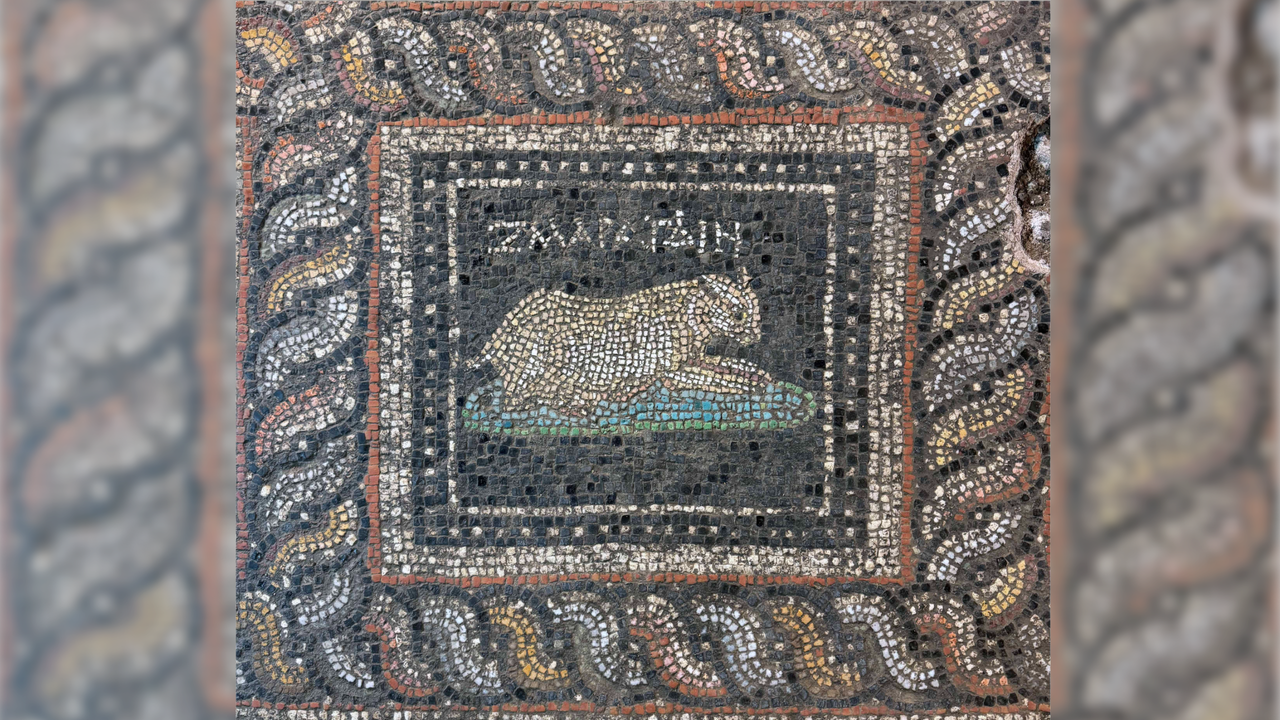
A meticulously crafted Roman mosaic has been unearthed in the archaeological site of Adramytteion, located on Turkey's Aegean coast, featuring two household animals—a cat named Emerald and a dog named Ocean. This stunning floor mosaic, a central element of a villa dating back to the late second to third centuries A.D., highlights the significance of pets in Roman domestic life. The artistry of this mosaic illustrates not just skilled craftsmanship but also the social context of the era, showcasing a glimpse into the personal lives of those who inhabited these ancient spaces.
The Excavation Process
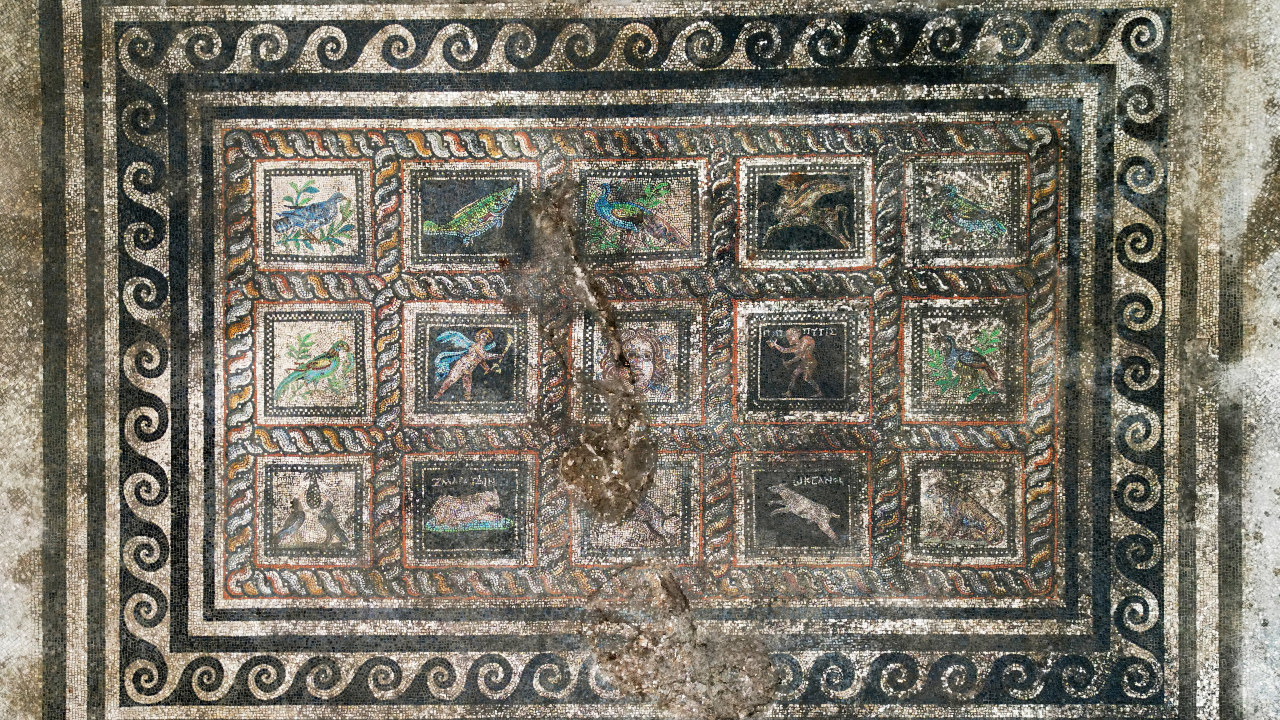
The excavation, led by archaeologist Hüseyin Özgen of Mimar Sinan Fine Arts University, revealed a villa comprising three halls arranged around a central atrium. This collaborative research effort involved a team of experts, employing various archaeological techniques to ensure the preservation of artifacts. The intricate nature of the mosaic, featuring 15 distinct panels, showcases both real and mythical creatures, which raises questions about the cultural narratives important to the Roman society that lived there. Özgen's research is set to appear in the forthcoming Journal of Mosaic Research.
Significance of the Site
Özgen has been excavating at Adramytteion since 2012, but the discovery of the villa and its impressive mosaics occurred during digs in 2025 and early 2026. Once a significant provincial capital in ancient Asia Minor, Adramytteion's strategic position on the Aegean Sea made it a bustling trade center. It served as a hub of commerce and cultural exchange, reflecting the interconnectedness of ancient societies. The villa itself features three elaborately mosaicked halls alongside various secondary rooms, complemented by a sophisticated plumbing system for waste management. Such advancements indicate a level of domestic sophistication that parallels similar Roman villas of its time.
Details of the Mosaic
Guests arriving at the villa would have been greeted by an elaborate mosaic, the largest within the residence, measuring an impressive 16.4 by 11.8 feet (5 by 3.6 meters). Arranged in three rows, the panels predominantly depict flora and fauna, including birds and fish, alongside mythological figures like a gorgon (likely Medusa) and a winged horse resembling Pegasus. These intricate designs were brought to life using a vivid color palette featuring hues of white, black, red, orange, yellow, pink, burgundy, blue, turquoise, and green. This attention to color and detail not only exemplifies the aesthetic values of Roman society but also mirrors their connection to nature and mythology.
The Symbolism of Emerald and Ocean
While only two animals in the mosaic are named, their significance is profound. Emerald, depicted lounging on a blue-green cushion, has its name inscribed above in Greek—ΖΜΑΡΑΓΔΙΝ, meaning emerald. This suggests a link to a pet, possibly hinting at the owner’s lifestyle and status. On the opposite side, Ocean is portrayed in motion, labeled with the Greek letters ΩΚΕΑΝΟΣ. Given Adramytteion’s coastal position, the name resonates with the surrounding maritime environment. Names like these can often symbolize the owner's values or aspirations, reflecting the importance of these animals in daily life. It’s a peek into their world.
Özgen theorizes that Emerald and Ocean were likely well-known to those inhabiting the villa, serving as symbols of domestic identity and ownership. This mosaic, in its luxurious detailing, speaks to the emotional bonds the inhabitants had with their pets. The presence of these names in the mosaic reflects the personal connections and stories woven into the fabric of ancient Roman life, suggesting that pets were not merely animals but integral family members.
Future Implications and Research Directions
Research efforts at Adramytteion are ongoing, with insights from this excavation poised to enhance our understanding of Roman domesticity. While the discovery of this mosaic adds to our appreciation of Roman artistry, it also raises further questions about daily life, social hierarchy, and personal identity in antiquity. The integration of mythology with domestic themes signals a rich narrative canvas that requires further exploration. This is where the significance lies: it opens dialogues regarding community dynamics and how personal relationships were interwoven with myth, art, and environmental context.
As excavation efforts continue, parallels may emerge with other sites across the Mediterranean. Each finding at Adramytteion could contribute to a broader comprehension of not just Roman civilization, but how it adapted to its environment, valued domestic life, and interacted with nature. These are not trivial details; they form the foundation of our understanding of historic human experience.
What this means for you, whether you're in academia or simply interested in history, is that the story of human-animal relationships has deeper roots than we often consider. If you're working in this space, the implications here extend beyond archaeology into sociology, anthropology, and art history.
Discussion
Sign in to join the discussion.