Explore how the Romans designed and built their enduring aqueducts, combining advanced surveying techniques and quality materials for lasting impact.
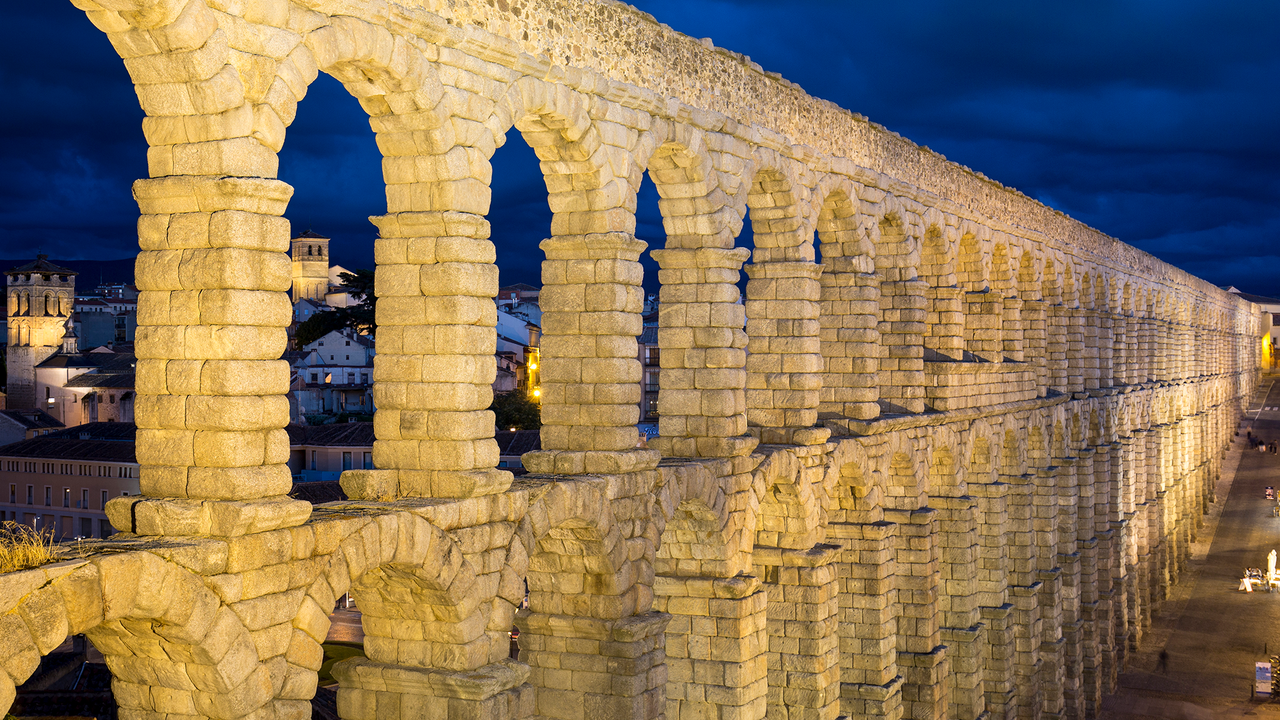
The architectural feats of the Romans are perhaps most famously exemplified by their aqueducts, which effectively transported water across vast distances to cities and settlements. One notable example is the Valens aqueduct, stretching an impressive 250 miles (400 kilometers) to serve ancient Constantinople, modern-day Istanbul. These engineering marvels weren't just about practicality; they represented the Romans' understanding of urban planning and public health, reflecting a society keenly aware of the importance of water supply for civic life.
Route Planning
Success in building these aqueducts hinged on meticulous planning, starting with the selection of a water source. Springs were often prioritized to establish a reliable flow towards urban centers. According to Ann Olga Koloski-Ostrow, a classics professor at Brandeis University, a slight downhill gradient from the spring to the endpoint was crucial to facilitating water movement. This gradient wasn't just a minor detail—it was a sophisticated understanding of fluid dynamics, underscoring how the Romans approached engineering challenges with a methodical mindset.
Roman surveyors employed precise instruments like the libra and dioptra to chart their courses. The dioptra, resembling a disk with a central sighting bar, enabled surveyors to align their measurements against natural landmarks. This device was crucial for evaluating elevation changes in the terrain. Similarly, the libra, though its exact design remains less understood, utilized a plumb bob to measure height differences along proposed routes, aiding in the engineering of a consistent gradient. Surveyors were often seen almost as magicians of the landscape, transforming challenging terrains into opportunities for construction.
Construction Techniques
To ensure longevity, Roman builders utilized a form of concrete that outlasts most modern versions. This ancient concrete incorporated pozzolan—an ashy material mixed with lime and water—resulting in a substance that hardened in the presence of water. Giovanni De Feo, an industrial engineering professor at the University of Salerno, emphasizes that while this durable concrete was crucial, the preservation of these structures stemmed from multiple factors. Carefully chosen routes that followed stable geological formations were equally important. The Romans were keen observers of nature, fully aware that the geological context could make or break their ambitious projects.
Moreover, ongoing maintenance practices contributed significantly to the aqueducts’ survival over centuries, with many structures receiving upkeep that extended into the Middle Ages. This attention to maintenance often helped to avoid environmental challenges such as volcanic activity or unstable landscapes. Maintaining these infrastructures was viewed as a civic duty, highlighting a profound understanding of how crucial water systems were to everyday Roman life. (And this is the part most people overlook: that the success of these monumental structures was as much about community commitment as it was about engineering prowess.)
Interestingly, aqueduct construction wasn’t solely an above-ground endeavor. Many structures featured extensive underground segments where terrain difficulties necessitated it. Researcher Gerda de Kleijn notes that some aqueducts had almost no above-ground portions outside cities, while others employed arches for considerable lengths. This dual approach not only minimized the visual impact on the landscape but also safeguarded the aqueducts from weather-related damage. It’s a testament to the Romans’ holistic view of infrastructure: they weren’t just laying pipes—they were carving out a lifeline for their cities.
As the water neared its destination, it often passed through settling basins to filter out sediment. Harry Evans, a classics professor at Fordham University, explains that in these basins, pollutants would settle to the bottom, allowing clean water to continue to distribution tanks. This process is reminiscent of modern filtration techniques, showcasing that the Romans were far ahead of their time in public health practices. At the core of these systems was a deep understanding of sanitation, underscoring that aqueducts were instrumental not only for hydration but for public health.
Labor Force
The workforce required for aqueduct construction varied significantly based on the project scale and timeline. For instance, the Hadrianic aqueduct in Athens, covering about 12.4 miles (20 kilometers), might have employed around 500 workers and taken roughly 15 years to complete, as per estimates in a 2022 study. This heavy reliance on labor speaks volumes about the organizational structure of Roman society—the ability to mobilize vast numbers of laborers shows just how pivotal these infrastructures were deemed to be. Such projects required not just physical labor but also skilled artisans who possessed the expertise to work with the specialized materials used.
Maintenance Protocols
Post-construction, regular maintenance became necessary to preserve the aqueduct's integrity. Cees Passchier, head of tectonophysics at Johannes Gutenberg University Mainz, studied an aqueduct in Divona, France, finding that mineral deposits built up over time required attention. Maintenance teams adapted their methods, some scraping away carbonate buildup while others opted to plaster over deposits without extensive cleaning. This evolution of maintenance techniques reflects a pragmatic approach to engineering—when faced with the realities of natural wear, the Romans demonstrated a willingness to innovate and adapt.
The scale of maintenance work often reflected the size of the aqueduct; in a smaller installation like Divona, a dozen workers could suffice, while larger systems in Rome demanded hundreds. Even after the Roman Empire's decline, many aqueducts continued to be maintained, some even up to the present day. A prime example is the Aqua Virgo, initially constructed in 19 B.C., which remains functional in supplying water to Rome today. This survival is remarkable and points to the enduring human need for water. If you're working in this space, consider how the Romans set a standard for infrastructure maintenance that modern societies often strive to emulate.
Legacy and Significance
The legacy of Roman aqueducts exemplifies how engineering principles, strategic planning, and diligent maintenance practices ensured their remarkable durability, leaving a lasting mark on urban infrastructure well beyond the lifespan of the empire. The challenges faced and overcome in their construction provide valuable lessons for contemporary infrastructure projects. As urban populations grow and climate impacts become more pronounced, revisiting these ancient techniques may yield insights into creating sustainable, long-lasting water management systems. The Romans taught us that great cities demand even greater care and vision. Their aqueducts aren't merely relics of the past; they remain a vital study in the art of constructing enduring civic utilities.
Discussion
Sign in to join the discussion.