A groundbreaking study uncovers evidence of ancient drug use in Indonesia, linking habitual consumption of betel nuts to dental issues among Ice Age hunter-gatherers.

Recent research has identified the earliest known evidence of habitual drug use among prehistoric populations in Indonesia, specifically involving betel nuts. These findings reveal that Ice Age hunter-gatherers on the island of Sulawesi consumed these nuts, which contain neuroactive compounds, for pain relief.
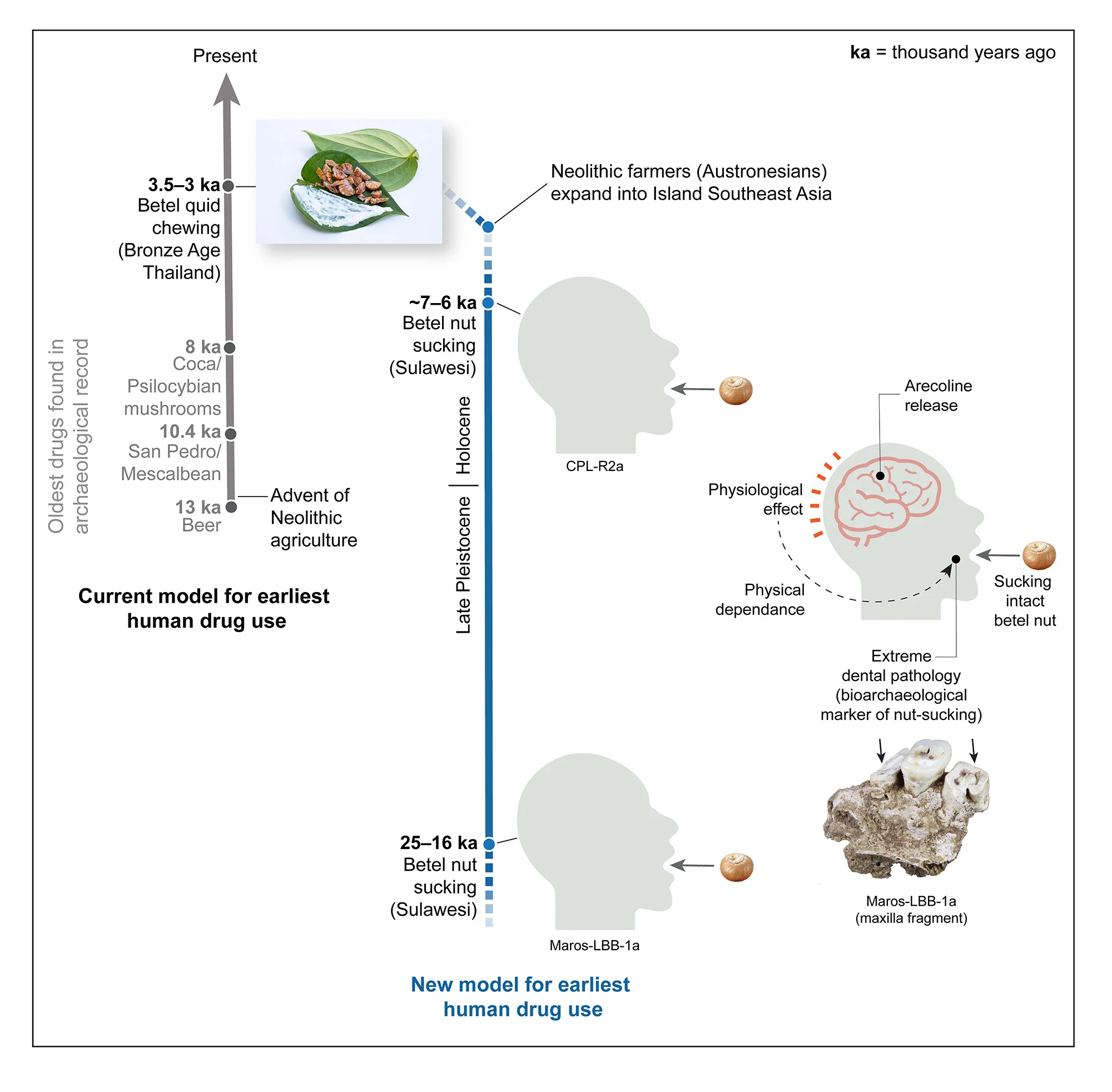
The study, published in Science Advances, was sparked by unusual grooves observed in the teeth of two ancient individuals, indicating repeated sucking on betel nuts (Areca catechu). This practice likely aimed to alleviate tooth pain, possibly leading to further dental complications.
The skeletal remains of these two individuals dated back thousands of years. The earlier one, a male from between 25,000 and 16,000 years ago, lived during the Last Glacial Maximum, a period marked by extreme cold. Despite substantial environmental changes, Sulawesi remained largely ice-free. The second individual lived between 7,600 and 6,300 years ago, and the sex could not be determined.
Betel nuts are noted for containing arecoline, a compound that can produce a stimulating effect when consumed with slaked lime (calcium hydroxide). However, the method of consumption, which involved sucking the nuts, would primarily numb the mouth rather than confer the stimulant benefits seen with the quid method used today.
Extensive dental analysis revealed a pattern of severe damage linked to a near-continuous consumption of betel nuts. Though intended to soothe toothaches, this practice likely worsened the dental health of these early humans. "The more they sucked on the nut to relieve pain, the worse the damage to their teeth became," explains Adam Brumm, the study's lead author and an archaeologist at Griffith University. The progression of the grooves culminated in exposure of the inner tooth pulp, which would have caused significant pain.
While a prior study indicated that Neanderthals utilized plant bark for its pain-relieving properties, this new research provides the earliest documented case of habitual drug use derived from plants, significantly predating the advent of agriculture.
Other archaeological evidence of plant-based drug use is noted globally, including 10,000-year-old traces of psychedelic cactus pollen in Peru and residues of ancient beer found in Israel dating back 13,000 years.
Understanding Betel Nut Usage
The research team also conducted testing to ascertain the neuroactive properties of betel nuts, revealing significant effects through genetically engineered frog eggs with human neuroreceptors. This research reinforces that the practice of consuming betel nuts extends far back into human history.
Today, betel nuts, commonly referred to as areca nuts, are still prevalent in parts of South Asia and Oceania. Current consumption practices involve mixing the nut with slaked lime to form a chewable wad, which has addictive qualities. It is estimated that roughly 600 million people globally partake in this custom, although it poses serious health risks, including carcinogenic properties when mixed with tobacco.
Researchers suspect the Neolithic period introduced the common practice of mixing betel nuts with slaked lime around 4,000 years ago. "Betel chewing likely evolved from simpler practices like merely sucking on the nut," the authors conclude in their findings.
The Timing of Drug Use
The first dated instance of betel nut usage predates agricultural development, challenging the long-held belief among archaeologists regarding the timeline of psychoactive plant use. Brumm suggests that this discovery confirms that the use of such plants occurred thousands of years before farming became established.
This study represents a significant advance in understanding early drug use, according to Elisa Guerra Doce, a prehistoric archaeologist not involved in the research. She emphasizes its relevance in illustrating the continuity of cultural practices surrounding neuroactive plants in Southeast Asia and the Pacific.
Moreover, the findings shed light on how prehistoric societies utilized their natural environments for not just sustenance, but also for medicinal and psychoactive substances, shaping their social and cultural traditions over millennia.
Discussion
Sign in to join the discussion.