The 2026 ZWO Astronomy Photographer of the Year winners showcase a breathtaking array of celestial photography, highlighting talent from around the globe.
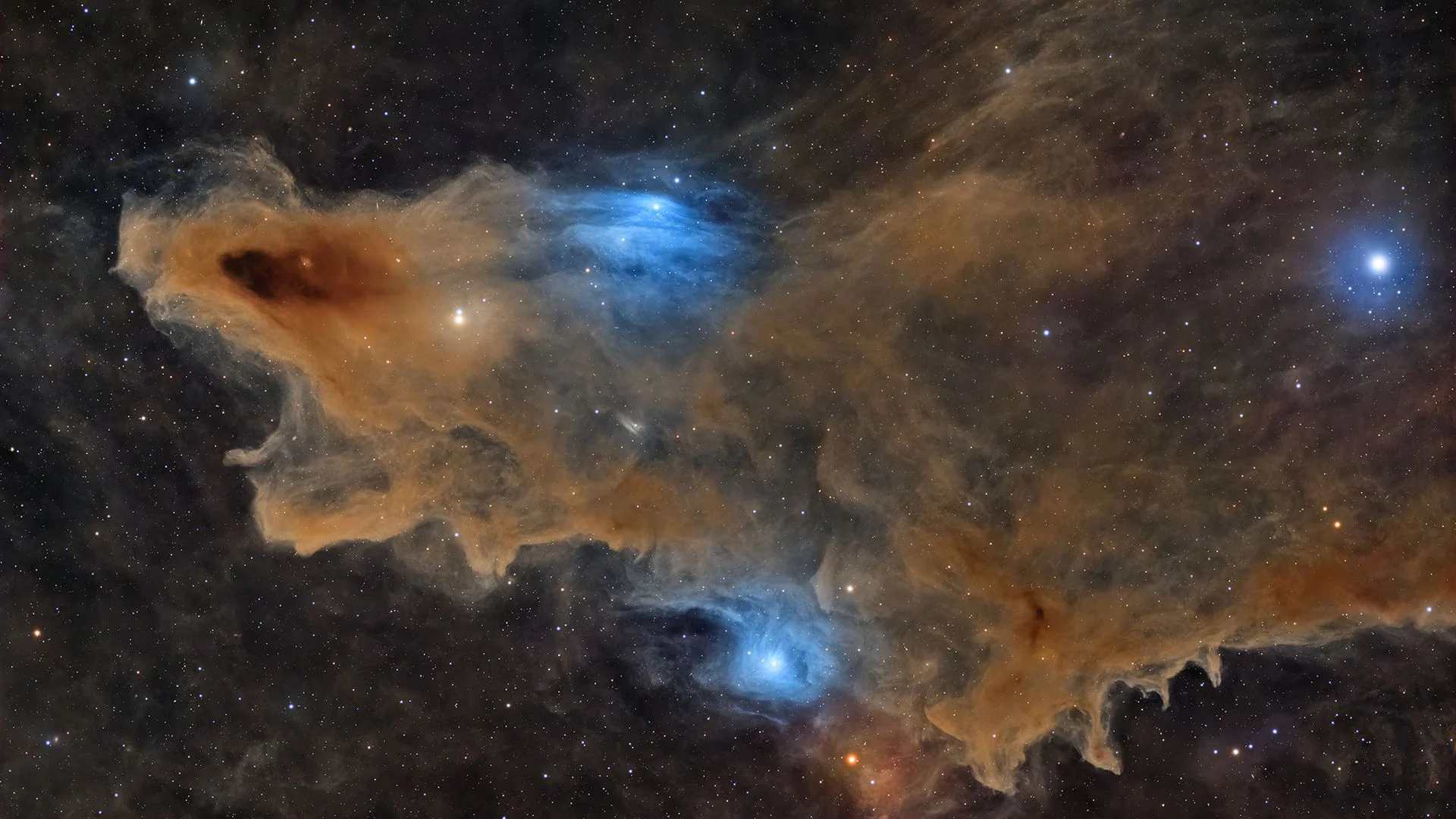
A recent contest held by the Royal Observatory Greenwich has crowned its champion: a stunning image of a shark-shaped gas cloud, aptly named "The Quiet Predator." Captured by Ali Alobaidly, this fascinating snapshot of the Shark Nebula (LDN 1235) resides about 650 light-years away in the constellation Cepheus. This image, awarded the coveted overall prize in the 18th ZWO Astronomy Photographer of the Year competition, was revealed on September 17. Images like these don’t just showcase astonishing beauty; they also spark curiosity about the mysteries lurking in our universe.
The Photographer's Journey
Ali Alobaidly, an avid skywatcher, took this prize-winning photo over two nights in August 2025 from Kuwait’s Jahra governorate. Utilizing an Askar 140 APO telescope, a Sky-Watcher EQ8-R mount, and a ZWO ASI2600MM Pro camera, he successfully melded his love for the cosmos with the desert landscapes of his homeland. The technical prowess involved in astrophotography means he not only captured an image but also engaged in a complex process of alignment, exposure, and post-processing to present the cosmos in a way that’s evocative and enlightening.
This is more significant than it looks. Each snapshot represents painstaking work that combines artistry and technical skill. Alobaidly reflected on his work, saying, "The juxtaposition of an oceanic predator prowling the skies above the Kuwaiti desert feels deeply poetic to me." This sentiment strikes at the heart of why astrophotography resonates with many: it’s not just about celestial objects but also about the connection we feel to the universe. As Alobaidly highlighted, this piece embodies passion for both the universe and the deserts of his ancestors, merging cultural narrative with scientific inquiry.
Showcasing Talent Across Categories
In addition to Alobaidly's masterpiece, the contest unveiled ten other category winners, each displaying extraordinary talent in celestial photography. Starting from September 18, these works will be showcased at the National Maritime Museum in London. The exhibition will serve as a platform for emerging and established talents within the astrophotography community. As people walk through, they'll be confronted with not just images but stories behind each capture.
The grand prize included 10,000 British pounds (around $13,300), while other category winners received varying cash awards. Such recognition not only benefits the winners but also elevates the profile of astrophotography as a legitimate art form. In a world where visual content dominates, these photos hold their own against mainstream photography, pushing the boundaries of what we perceive as art.
Auroras: A Dance of Color
"The Crown," by Radoslav Sviretsov (Bulgaria). This mesmerizing portrayal captures the northern lights in all their glory, seen from a small church in Iceland far from light pollution. The result isn't just a display of colors but an invitation to experience the phenomenon in a way that transcends the physical act of viewing—to feel something deeper connect with nature’s wonder and grandeur.
Celestial Interactions
"Venusian Pearl on the Moon," by Petr Horalek (Czechia). Photographed on September 19, 2025, this image shows the moon's occultation of Venus from select vantage points on Earth. The moment captured—a celestial body appearing to disappear behind another—is both fleeting and profound. Judges remarked on how this scene resembled a "bright pearl" resting on the moon. This description is fitting; pearls don't just signify beauty but also rarity, mirroring the rare celestial events that inspire each capture.
Solar Observations
"Active Region 4122," by Miguel Claro (Portugal). Claro captured the sun's dynamic photosphere using a dual-band telescope, showcasing features like convection cells and bright spots amidst swirling plasma. Sun and solar phenomena have long fascinated scientists and laymen alike, bringing forward questions about our star's cycles, its influence on Earth, and the immense physical forces at work just beyond our atmosphere.
Connecting Past and Present
"A Message from the Ancients," by Max Inwood (Aotearoa/New Zealand). Inwood's striking photograph features ancient petroglyphs in California's desert, symbolizing the 13 full moons observed each year on Earth. Here, Inwood captures not just a moment in time but a continuum of human experience, reminding us that our ancestors looked towards the skies in wonder, just as we do today. (and this is the part most people overlook)
Planetary Portraits
"Saturnian Equinox," by Tom Williams (U.K.). Williams adeptly captured the rare edge-on view of Saturn's rings during the planet's near-30-year journey around the sun, highlighting the start of spring in its southern hemisphere. Such moments remind us that our understanding of the solar system is deeply temporal, with planetary positions dictating how we view and interpret them throughout human history.
Astrophotography in the Stars
"Botswana Star Trail," by Stefano Pellegrini (Italy). This captivating image, taken over a stretch of time in Botswana, blends exposure techniques with natural saturation. The result is an ethereal artistic representation of the stars, showcasing not just their light but also their movements—elements that stretch our understanding of time itself. This technique isn't uncommon, but Pellegrini's execution imbues it with a fresh perspective.
Galactic Wonders
"NGC 4753: A Symphony of Dust Lanes in Virgo," by © 智鹏 严 and Xinran Li (China). This photo showcases NGC 4753, a galaxy located approximately 60 million light-years from Earth, revealing striking dust lanes intertwined with its bright core. Observations like this contribute significantly to our knowledge of galactic formation and evolution, feeding into ongoing discussions about dark matter and the universe’s structure.
The Broader Implications
Events like the ZWO Astronomy Photographer of the Year competition go beyond mere awards. They push for a greater appreciation of science through art. If you’re working in this space, consider the ramifications: a wider public interest can lead to increased funding for astronomy initiatives, stronger community support for local observatories, and an enhanced focus on science education. This cross-pollination of art and science strengthens not just the disciplines, but also the cultural fabric by encouraging more people to look up and ponder their place in the universe.
The complete list of winners and the judges’ remarks can be found on the official contest website.
Discussion
Sign in to join the discussion.