LHCb has found evidence of a beauty quark decay seen only once in 10 billion cases. The result matches the Standard Model and sets up more precise searches.
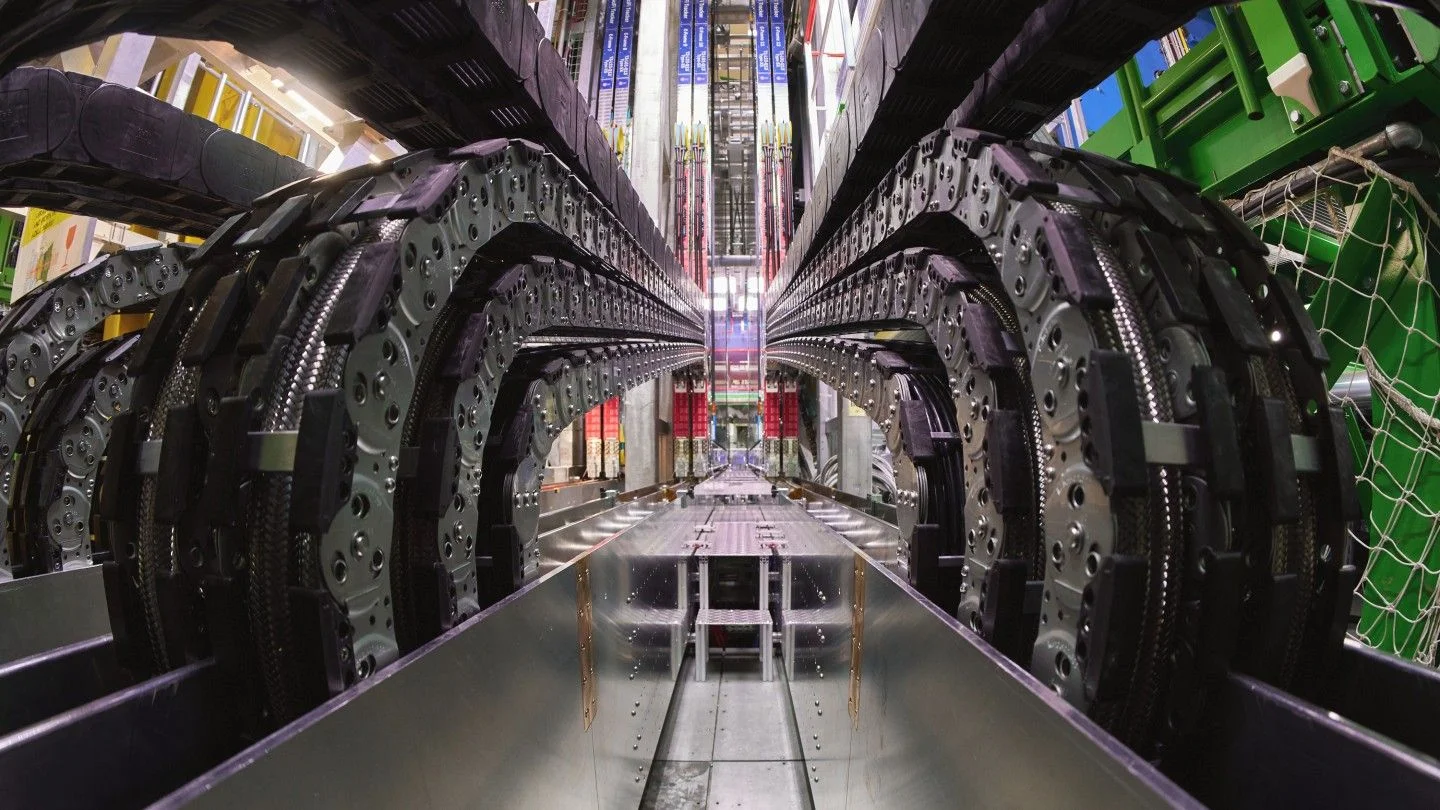
The first evidence of an exceptionally rare beauty quark decay gives physicists a new way to test the Standard Model at distances smaller than a trillionth of a nanometer. The result, reported by researchers at CERN on Nov. 3, agrees with existing theory so far; its significance lies in the precision measurements it may make possible. This is more significant than it looks: establishing a rare process gives researchers a specific phenomenon to measure, then compare against predictions as their data improves.
The study, available as a preprint, hasn’t yet been peer reviewed. It draws on data from LHCb, an experiment at the Large Hadron Collider near Geneva, which tracks beauty quarks produced when the collider smashes particles together. A preprint lets other researchers examine the work before formal review, but the result should still be read as an early finding. Its weight will depend on further analysis and on whether later measurements continue to match the initial evidence.
A decay seen once in 10 billion cases
Beauty quarks survive for about 1.5 trillionths of a second before decaying. They can break down in several ways, but the team found evidence for an exceptionally uncommon channel: B0 to μ+μ−. In this process, a beauty quark and its corresponding antiquark annihilate, producing a muon and an antimuon. Muons are heavier relatives of electrons, and their recognizable signatures help researchers identify the products of a decay amid the many other particles created in collisions.
“Only one in 10 billion beauty particles decay this way,” said study co-author Harry Cliff, a particle physicist at the University of Cambridge. The decay had eluded researchers for more than four decades. Theory predicts a complicated chain of interactions, which helps explain why it’s so difficult to observe: the sought-after events are exceptionally scarce, while ordinary collision activity can produce signals that resemble or obscure them. Researchers therefore need both a large sample and careful methods for separating a possible signal from background.
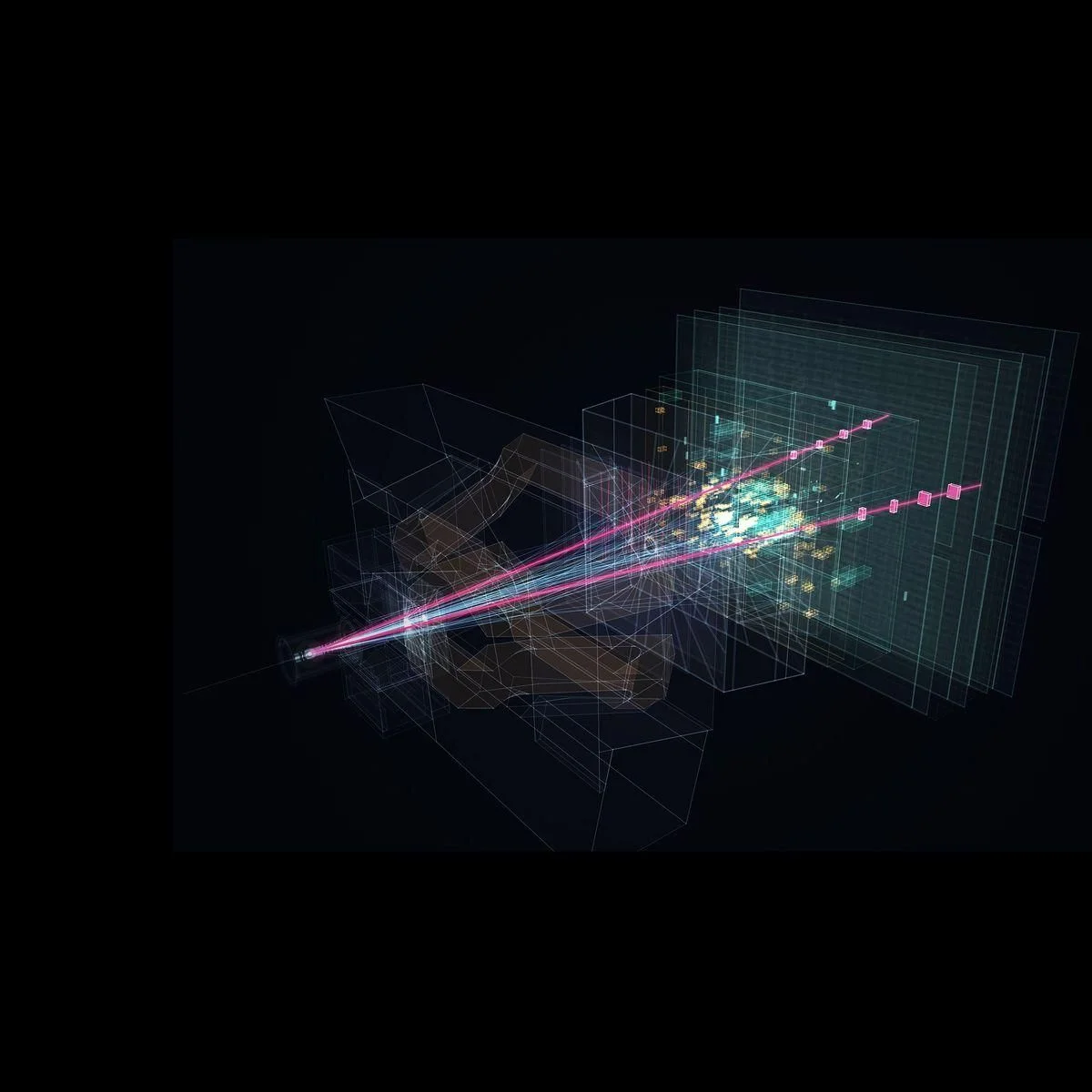
A 2024 upgrade to LHCb improved the experiment’s ability to distinguish particles. Researchers also used machine learning to filter out background events that could obscure the signal. These tools address different parts of the same problem: better particle identification helps classify what the detector recorded, while filtering can help isolate candidate events from a much larger set. The result is more evidence to examine, though the analysis still has to show that the signal is consistent with the rare decay rather than background.
“We’re now recording in a single year what took 10 years to record in the past,” Cliff said. That higher rate of data collection gives researchers more chances to catch rare events and compare their measured behavior with theoretical predictions. More data doesn’t automatically settle the question; it gives the team a stronger basis for testing whether the observed pattern holds up. A larger sample can also support measurements of the decay’s properties, which is where the result may become a more exact test of theory.
Testing physics at tiny scales
The finding is an early foothold in what physicists call the zeptoverse: the study of phenomena at zeptometer distances, or trillionths of a nanometer. That scale is far smaller than visible light’s wavelengths, which range from about 380 to 750 nanometers. The decay offers an indirect way to probe physics at such tiny distances: researchers study how particles behave and compare the results with calculations, rather than trying to image those distances directly.
Researchers hope that measurements at these distances could eventually reveal particles that existing experiments have missed. Such particles might help explain why the universe contains much more matter than antimatter, or clarify the nature of dark matter, which accounts for about 85% of the universe’s matter. Those are broad scientific questions, though, and this finding doesn’t answer either one. The link is prospective: if new particles affect the decay, sufficiently precise measurements might reveal a difference between the data and the Standard Model’s predictions.
For now, the decay appears to follow the Standard Model, the leading framework for describing particles and their interactions. The result therefore offers no evidence yet for new particles or physics beyond that model. That said, agreement is useful: it gives researchers a reference point for future measurements and helps them judge how large a deviation would need to be before it became persuasive. The numbers here are underwhelming if you’re looking for a discovery beyond the model. The process itself is a valuable new measuring ground.
“Seeing the evidence for this decay begins a new area of research where we can start to make precision measurements that will give us the best chance of finding new physics in the future,” Cliff said. The claim is measured, and it should be. A first observation establishes that researchers can pursue the channel; it doesn’t establish that the decay will expose a flaw in existing theory.
The next step depends on LHCb’s reach
Researchers want to upgrade LHCb so it can take full advantage of planned increases in the LHC’s luminosity during the 2030s. More collisions could yield many more examples of the decay, allowing physicists to test its properties with greater accuracy. Cliff said the team hopes eventually to collect hundreds of these events. That target points to the practical challenge: a process this rare demands both a high volume of collision data and detectors and analysis tools capable of finding the relevant events within it.
That plan faces uncertainty: the U.K. recently withdrew funding from the project, Cliff said, leaving researchers unsure whether the upgrade can proceed. The source doesn’t establish what will happen next, but the funding question bears directly on the experiment’s reach. If you’re working in this space, the key issue is whether LHCb can collect enough clean events to turn initial evidence into measurements precise enough to test theory. More data, if the upgrade proceeds. And this is the part most people overlook: the scientific promise depends on experimental capacity as much as on the elegance of the prediction.
What the evidence can establish
The immediate result is narrow: researchers report evidence for a decay that occurs about once in 10 billion beauty particles, and its observed behavior agrees with the Standard Model so far. Its broader value depends on what comes next. A growing sample could make it possible to check the prediction more precisely, while any lasting mismatch would need to be assessed against the quality of the data and the analysis.
That’s a long path from a rare decay to an explanation for dark matter or the matter–antimatter imbalance. For now, the result gives physicists a new process to measure and a reason to keep improving the experiment’s reach. The next evidence will have to come from more events, more precise comparisons and the capacity to collect them.
Discussion
Sign in to join the discussion.