Archaeologists have uncovered a significant tomb in Vulci, revealing impressive artifacts that highlight the Etruscan civilization's opulence.
A New Chapter in Etruscan Archaeology
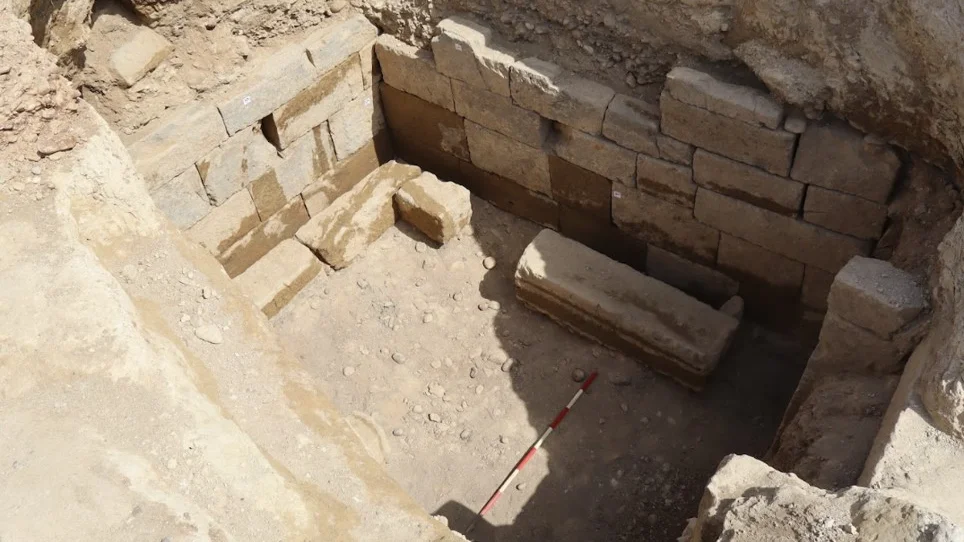
Archaeologists have made a remarkable discovery at the site of Vulci, an ancient Etruscan town located north of Rome, unearthing a monumental tomb that dates back 2,700 years. This significant find, despite centuries of interference from tomb robbers, has yielded an impressive assortment of grave goods that showcases the opulence of the era. The tomb contained weapons, gold and bronze items, chariot components, a rare pair of women's shoes, and a complete banquet set.
Such finds are pivotal. They provide not just material wealth but narratives of a long-gone civilization. The artifacts unearthed at Vulci help paint a picture of Etruscan society, where social status was intricately tied to burial practices. The presence of luxury items indicates a culture that valued craftsmanship and artistry, revealing layers of social hierarchy and familial connections among the Etruscans.
The Tomb and Its Historical Context
Dubbed the Tomb of the Stone Chamber, this burial site was excavated over the summer, as stated by the Italian Superintendency of Archaeology, Fine Arts and Landscape for the Province of Viterbo and Southern Etruria (SABAP-VT-EM). This find builds upon earlier work conducted by French archaeologists in the late 19th century, specifically by Stéphane Gsell, who initially identified the circular enclosure of the burial mound in Vulci's cemetery in 1889, though he did not complete the excavation.
The revival of interest in Vulci is not just a coincidence; it reflects broader trends in archaeological practices that favor collaborative international efforts. In this case, the Return to Vulci project team has reignited discovery at a site that had previously been overlooked. This underscores how historical narratives can be rebuilt through modern exploration techniques, revealing the dynamic relationship between past and present.
Significance of the Discovery
Now, the Return to Vulci project team believes they have successfully located the long-elusive burial chamber inside what is referenced as the "Gsell tumulus." This new chamber is proving to be significantly larger than previously anticipated. Christian Mazet, an archaeologist with the British Museum and co-director of the project, expressed confidence in the identification of this site: "This is the burial. We are absolutely certain of it," he remarked. The presence of ornate artifacts, including weapons, chariot remnants, and valuable ceramics, speaks to the high status of those interred within.
But here’s the thing: the sheer scale and opulence of the Tomb of the Stone Chamber could lead to new interpretations of Etruscan society. Instead of viewing burial practices as mere rituals, the wealth found suggests an entire economy built around death and remembering. What this means for you, the reader, is that these artifacts will reshape historical understanding and perhaps redefine the Etruscans' influence on the subsequent Roman culture.
Unraveling Etruscan Life Through Artifacts
The Tomb of the Stone Chamber dates from the seventh century B.C. and features three burial chambers with walls that remain well-preserved. Archaeologists have found numerous artifacts under the collapsed roofs, including jewelry, clothing, and shoes, contributing to the understanding of Etruscan burial practices.
Within the side chambers, among the rarer finds, is a bronze tripod sourced from Rhodes, a Greek island near modern-day Turkey, and an almost complete banquet set that retains its original arrangement despite centuries buried underground. Such items not only reflect the craftsmanship of the time but also suggest extensive trade networks that connected the Etruscans with other prominent ancient cultures. This opens up numerous avenues of research into how Etruscans interacted with their neighbors and incorporated foreign influences into their own customs.
The Broader Etruscan Cemetery at Vulci
The cemetery at Vulci is historically known for its wealth, with thousands of tombs uncovered during the 19th century. Despite the decline of the Indigenous Etruscan civilization in the fourth century B.C., after centuries of dominion in central Italy, the discoveries here provide valuable insights. Much of what is understood about the Etruscans comes from such archaeological sites, as their language remains only partially decoded.
Each excavation can change the understanding of these ancient people. The variety of artifacts suggests a complex society with distinct roles and statuses. Moreover, as researchers analyze the findings from this latest tomb, we may uncover links to larger historical narratives that have shaped our understanding of early civilizations in Italy.
Construction and Size of the Tomb
The Tomb of the Stone Chamber was constructed during Vulci's peak cultural period. Gsell had estimated the size of the tumulus to be around 102 feet (31 meters) in diameter, dubbing it a "new Cuccumella," which refers to the largest previously discovered burial mound. It is now believed, based on initial calculations from the Return to Vulci project, that the Tomb of the Stone Chamber may rival or even exceed the size of the original Cuccumella, which was approximately 230 feet (70 meters) across.
The sheer scale poses questions about the resources and effort required for its construction. Who was buried here, and what was their role in society? Were they leaders? Warriors? These inquiries highlight an essential facet of archaeological research—building a story from remnants. The implications of this discovery extend beyond mere artifacts; they challenge existing narratives about Etruscan societal structures.
What's Next for Etruscan Studies?
Reflecting on their findings, Mazet concluded, "Everything tells us that it is one of the most monumental at Vulci." Currently, the tomb and its burial mound have been preserved under cover to protect them, but further research is expected to take place in 2027, promising more revelations about Etruscan culture. This anticipation offers hope for a richer understanding of a civilization that has often been relegated to the margins of history.
As future researchers plan to excavate and analyze this monumental site, one can only speculate on what further treasures lie buried beneath the soil. The story of the Etruscans isn’t finished yet; it’s evolving with every new discovery. And this is the part most people overlook—history is not just a timeline; it's a living narrative waiting to be uncovered and reinterpreted.
Discussion
Sign in to join the discussion.