A newly identified species of armored dinosaur from Japan provides insights into its ancestors' migration across the Bering Land Bridge from North America.
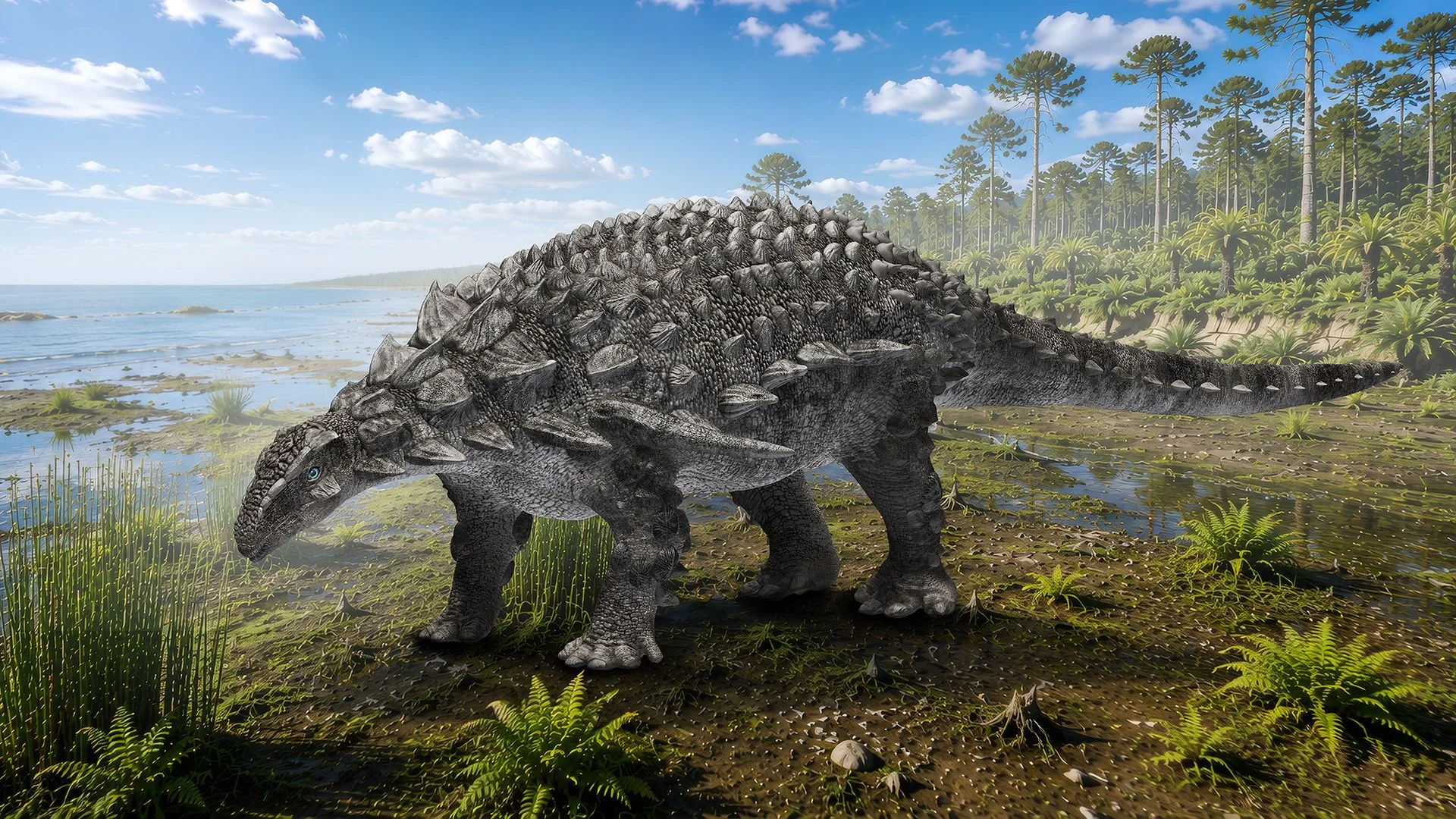
A recently identified species of armored dinosaur from Japan offers intriguing evidence of how its ancestors might have migrated from North America. This discovery ties back to fossils that were first uncovered over three decades ago, revealing the potential pathways of ancient species as they traversed continents.
The newly named dinosaur, classified as a nodosaurid, ranks among only three species in this category found in Asia. Its anatomical similarities to North American nodosaurids suggest a historical migration between these regions, likely via the Bering Land Bridge, an ancient land connection between present-day Alaska and Russia. The research findings were published in the February 2027 edition of the journal Cretaceous Research.
“It’s exciting to see this specimen reanalyzed and given a new designation,” commented Victoria Arbour, who is the manager of research and collections at Canada’s Royal B.C. Museum, though she was not part of the research team.
Characteristics of Nodosaurids
Nodosaurids are distinctive armored dinosaurs distinguished by their bony plates. Unlike their close relatives, the ankylosaurids, they do not have the large tail clubs that serve as defenses against predators. While most nodosaurid fossils have been unearthed in North America and Europe, instances in Asia are rare, amplifying the significance of this new find.
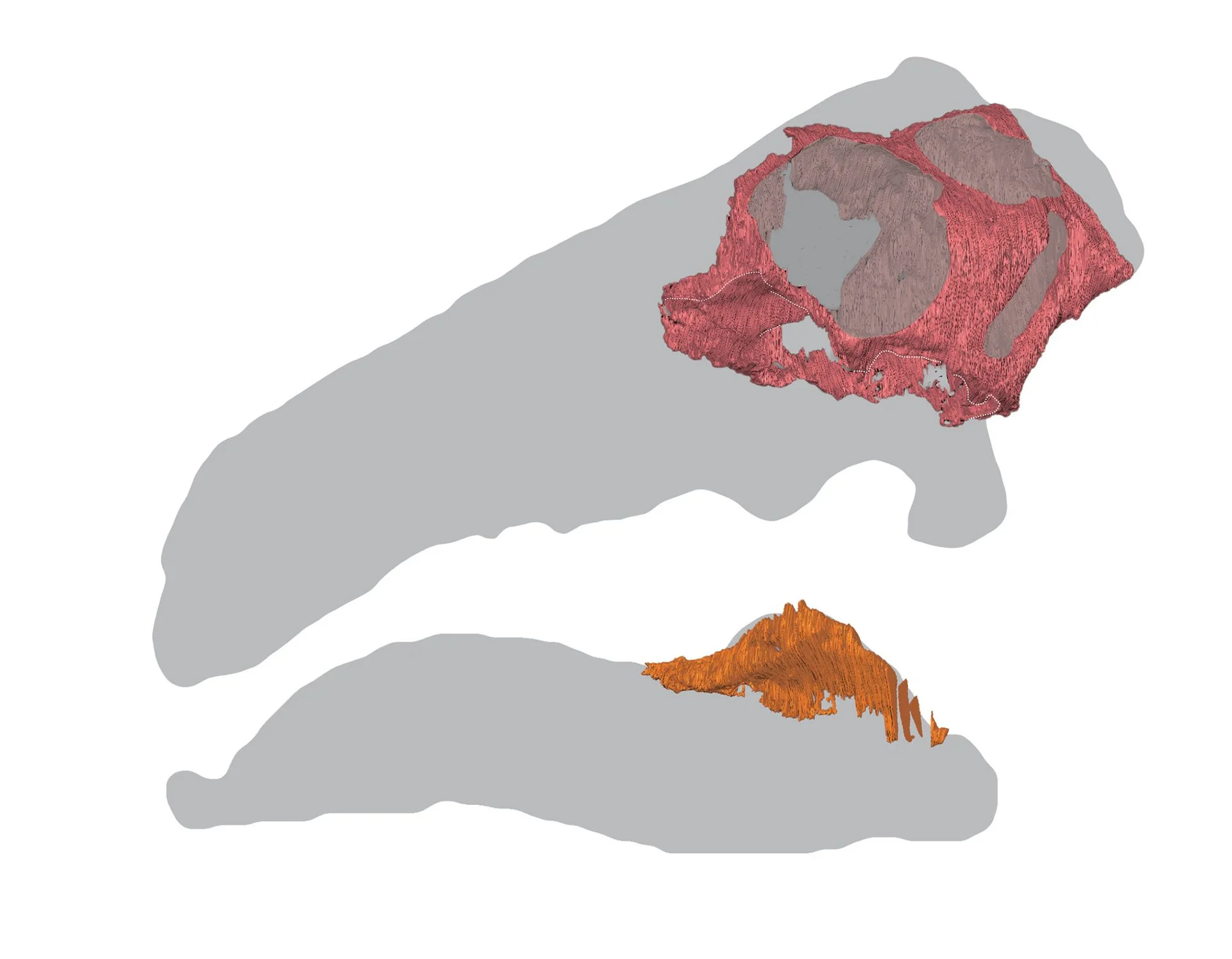
The recent study involved comprehensive examination of a fossil first found in 1995 on Hokkaido, Japan’s northernmost main island. Researchers utilized computed tomography (CT) to generate detailed 3D images of the fossils, which are estimated to be between 93 and 100 million years old, comprising parts of the skull, lower jaw, teeth, and bony plates.
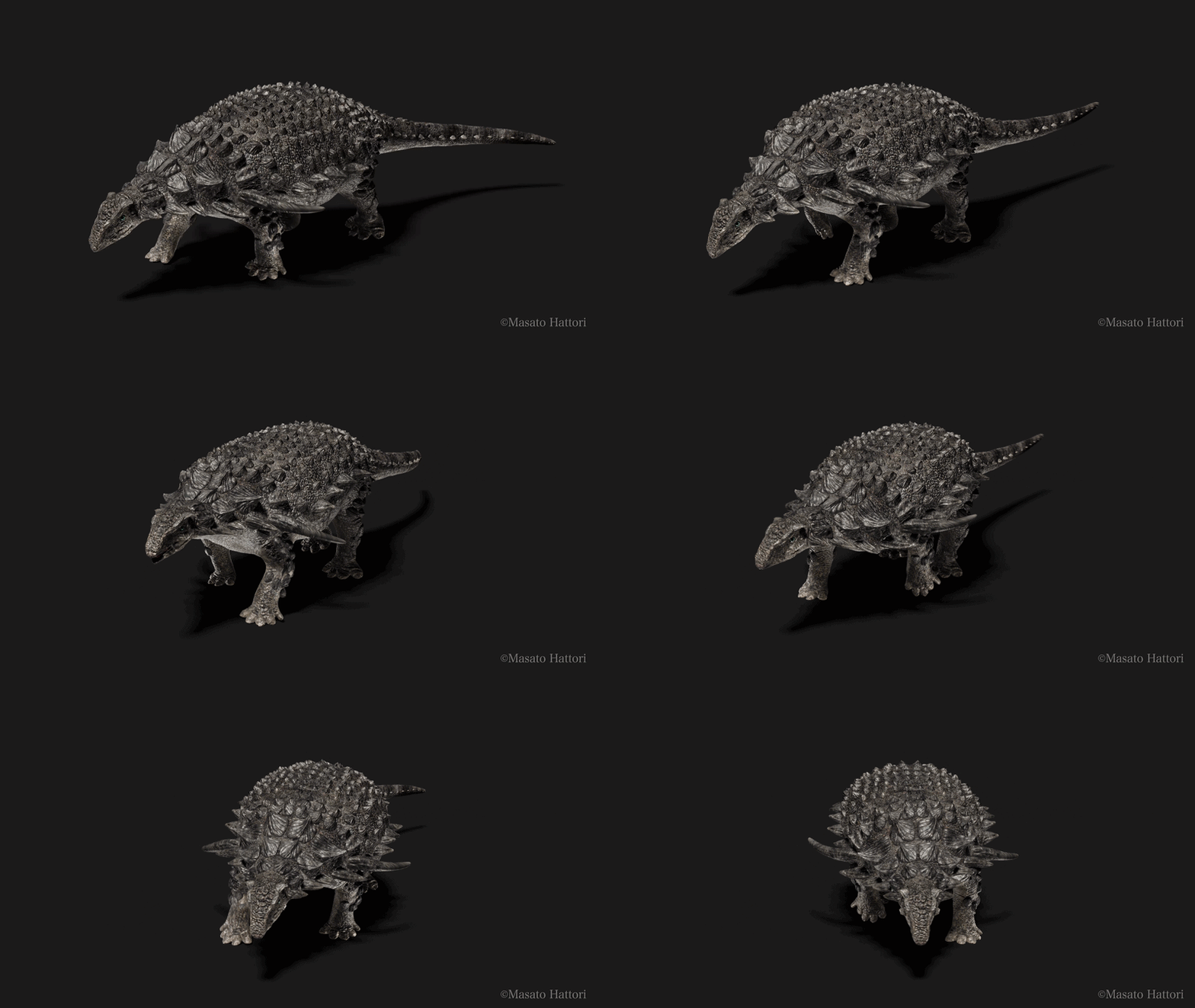
CT scanning allows paleontologists to visualize internal structures without damaging the specimens. Arbour noted that technology opens up avenues for uncovering new information about the fossils.
Through their analysis, researchers classified the fossils as a new nodosaurid species, naming it Nipponopelta yezoensis. The name derives from "Nippon," synonymous with Japan, and "pelta," which means shield in Greek. "Yezo" reflects Hokkaido's traditional name.
A Closer Look at Migration Patterns
The study concluded that N. yezoensis is genetically similar to nodosaurids from North America, potentially tracing its lineage back through migrations across the Bering Land Bridge around 100 to 110 million years ago.
Interestingly, the original discovery site of the N. yezoensis fossils was within marine sediments, which typically form under ancient bodies of water. Since nodosaurids weren't aquatic creatures, this raises questions about how the remains reached this location. It’s plausible they were carried out to sea after death by rivers or estuaries, eventually settling to the sea floor.
This observation parallels with other nodosaurid fossils found in similar marine deposits, suggesting that they might have thrived along coastal habitats. According to co-author Darla Zelenitsky, these coastal environments might have influenced their migratory patterns.
Yet, the presence of nodosaurid fossils in coastal regions doesn't exclude the possibility that they inhabited more inland areas. Jordan Mallon, a paleontologist from the Canadian Museum of Nature, pointed out that fossilization processes can be inconsistent, especially in elevated areas where erosion can erase traces of ancient life.
“The fossil record is inherently incomplete,” Mallon mentioned. “It’s a challenge to construct a full narrative with such fragmented information.”
Questions remain regarding the limited nodosaurid diversity in Asia compared to North America. According to Zelenitsky, while more ankylosaurid species are found in Asian fossil records, nodosaurid examples are scarce.
“It could be due to gaps in the rock record or an inability of nodosaurids to diversify in the Asian landscape,” Zelenitsky explained.
Looking ahead, Mallon expressed hope for further excavations. “Finding more of this species would deepen our understanding and allow us to refine our ideas about their evolutionary narrative,” he concluded.
Discussion
Sign in to join the discussion.