The discovery of GJ 3090 b, a retrograde exoplanet, prompts new questions about planetary system formation and the unique dynamics of star systems.
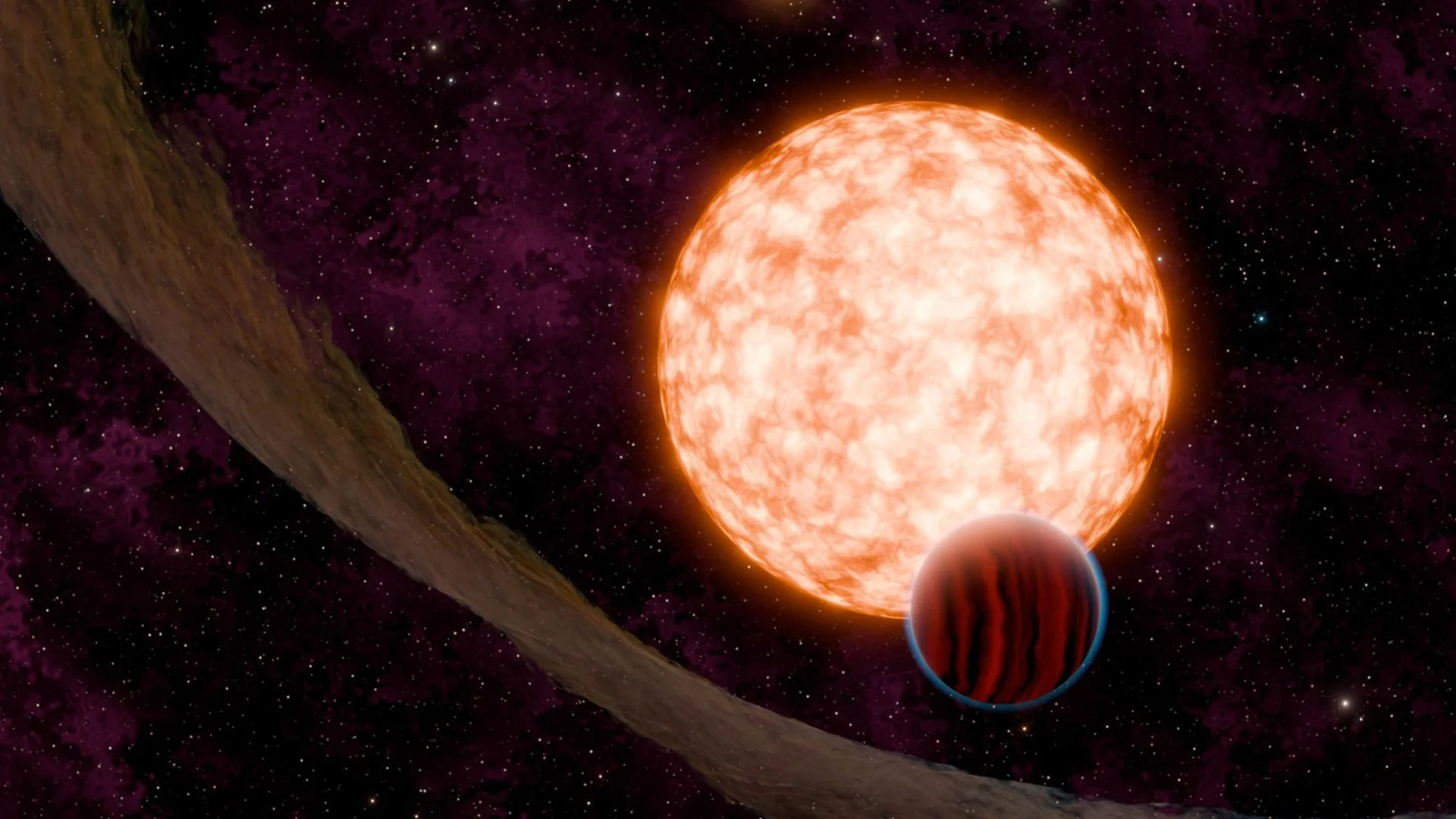
A recent discovery has revealed an exoplanet, named GJ 3090 b, that orbits its host star in a retrograde manner, posing significant questions about planetary formation. The behavior of this strange world, which revolves backward, is reminiscent of a rubber duck navigating a whirlpool, and it opens the door to new insights regarding the formation dynamics surrounding the most prevalent star types in our galaxy.
The Retrograde Enigma
Understanding why GJ 3090 b exhibits a retrograde orbit presents an intriguing puzzle; typically, stars and planets emerge from a rotating disk of gas and dust called a protoplanetary disk, leading to a consistent rotational direction among celestial bodies. However, changing this direction demands a substantial amount of energy, complicating the narrative for GJ 3090 b's atypical orbit. This anomaly raises questions about the physical processes influencing planetary formation, suggesting that our current models may be missing key elements.
Historically, a few exoplanets have been noted to possess retrograde orbits, often attributed to gravitational influences from massive neighboring objects that disrupt their paths. However, the research team analyzing GJ 3090 b, detailed in a study published on September 21 in the journal Astronomy and Astrophysics, found no substantial celestial bodies that could have altered the planet’s trajectory. As astronomer Yann Carteret from the University of Geneva noted, "We looked for the kind of massive companion that could have forced the planet into such an extreme orbit. We may need to think differently about how this system acquired its unusual architecture." The lack of neighboring gravitational influencers suggests that the planet's formation must have involved unique conditions or interactions that are not yet fully understood.
The Challenge of Observation
The team based their findings on 23 hours of detailed observations from two instruments mounted on a 12-foot-wide telescope located at La Silla Observatory in Chile. They detected GJ 3090 b crossing in front of its star 10 times, observing the starlight dimming during each transit. These variations in brightness allowed them to deduce not only the planet’s size but also vital data regarding its unique orbit. Such precision is critical; observing exoplanets, particularly those close to dim stars like M dwarfs, requires significant technical expertise.
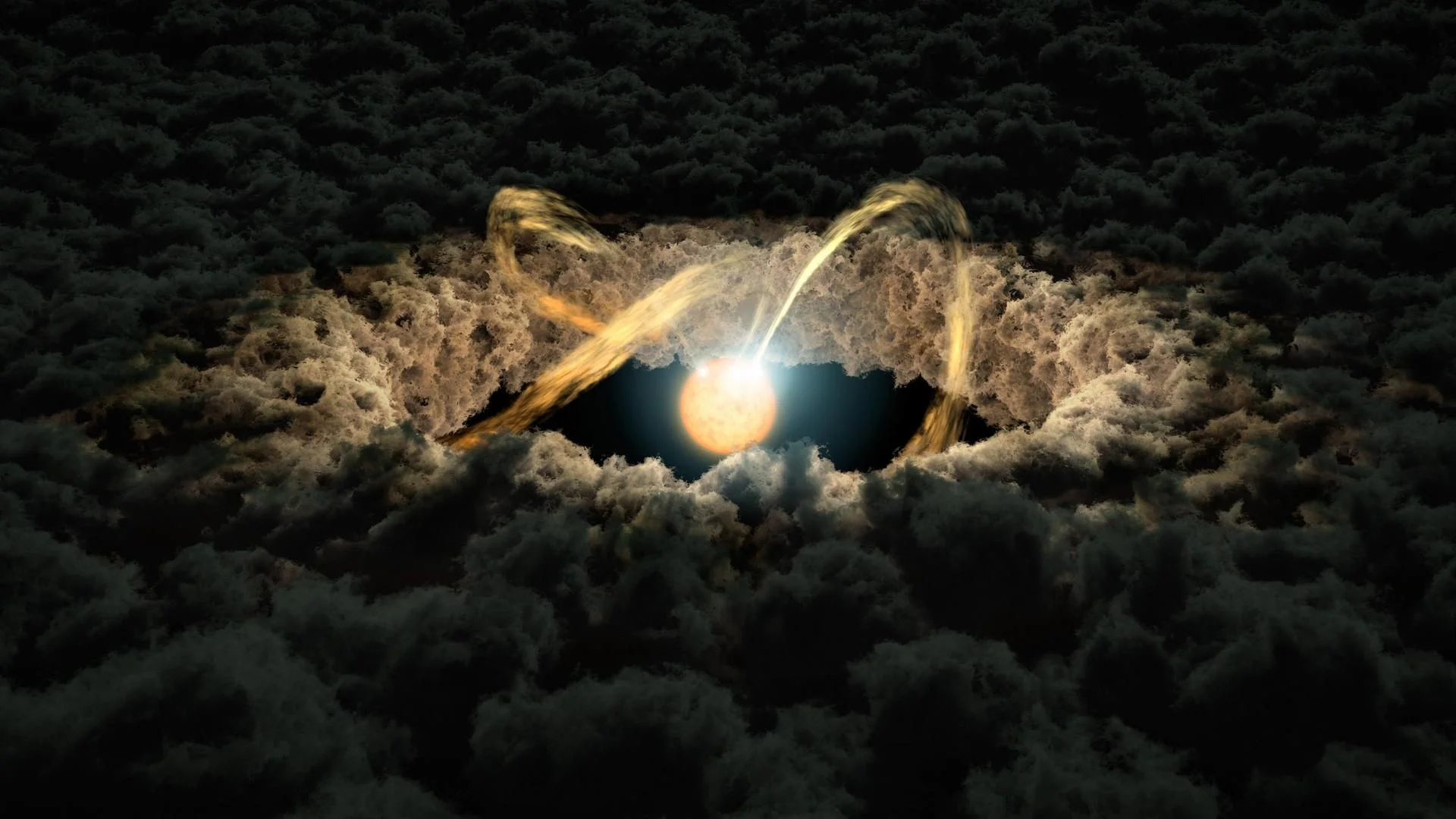
Observing GJ 3090 b is particularly challenging due to its host star, an M dwarf. These stars are relatively small and cool, emitting low light, which makes them difficult to detect with the naked eye even when they are relatively close by. Given that about three-quarters of stars in the Milky Way are M dwarfs, understanding their exoplanets is vital for broader astronomical studies. The challenges of studying these stars are manifold; not only must astronomers contend with their dimness, but the close orbits of their planets can mean that signals are often obscured by the residual light from the parent star.
Within this star system, potentially comprising two or three planets smaller than Neptune, GJ 3090 b is the closest to its star, completing an orbit roughly every 2.9 days. Its orbit, notably misaligned at 136 degrees relative to the star's rotation, resembles the unusual axial tilt of Venus in our own solar system. This degree of misalignment is significant. It not only suggests peculiar events in the planet’s early formation but may also indicate a complex history involving interactions with other bodies or material.
Given its proximity to the star, gravitational forces from distant companion bodies likely haven't affected GJ 3090 b's orbit. The researchers have proposed an alternative theory: perhaps this exoplanet originated in an atypical orientation. (And this is the part most people overlook.) If a substantial influx of gas and dust from outside the system occurred, it could have introduced a fresh, differently aligned protoplanetary disk. Such a condition might have facilitated the unique orbital characteristics observed, reinforcing the idea that planetary systems can have more complex developmental narratives than previously believed.
Vincent Bourrier, another researcher from the University of Geneva, remarked, "The idea that a planetary system could be rebuilt from a second, differently oriented disk is particularly exciting." This perspective does more than raise eyebrows; it suggests that the environment around a young star can play a much bigger role in determining the architecture of its planets. This could lead to a paradigm shift in how scientists view planet formation and migration, especially for those orbiting M dwarfs.
Implications and Future Outlook
This discovery of GJ 3090 b could have significant implications for the understanding of planetary systems, particularly those orbiting M dwarfs. If confirmed, the findings might challenge existing theories of planetary migration and formation, necessitating more nuanced models that take into account external factors influencing planet formation. If you're working in this space, be prepared for an intellectual shake-up.
Moreover, this observation highlights the importance of observing M dwarfs in future studies. With roughly three-quarters of stars in our galaxy fitting this classification, the potential for discovering more exoplanets like GJ 3090 b could provide invaluable data. Such insights would deepen our understanding of not just how these planets form, but also their potential habitability and the nature of their atmospheres. As research in this field continues, expect more planetary mysteries to emerge, challenging what we think we know about the universe and its vast array of celestial bodies.
Discussion
Sign in to join the discussion.