Artificial gravity may alleviate the health risks of microgravity for astronauts, but implementing it poses significant technical and budgetary challenges.
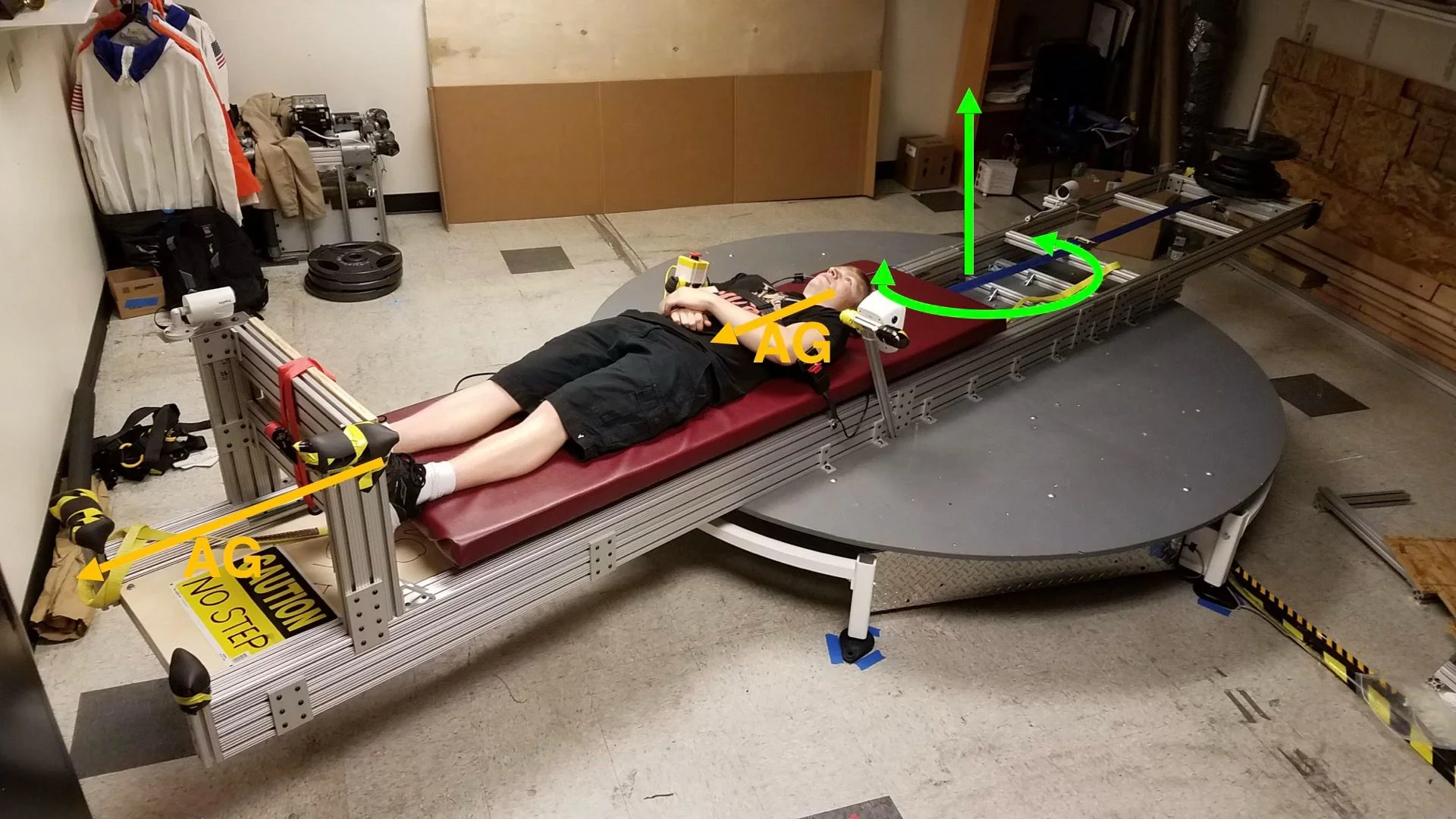
As humanity extends its reach into deep space, the health risks associated with prolonged exposure to microgravity have come into sharper focus. These include detrimental effects on vision, bone density, muscle strength, and overall physiological well-being. To mitigate these risks, the concept of artificial gravity has resurfaced, reminiscent of the rotating habitats showcased in Stanley Kubrick's film "2001: A Space Odyssey." However, the journey to realizing this concept in reality is fraught with complexities.
There's a growing consensus among experts that artificial gravity is feasible. Torin Clark, an associate professor of aerospace engineering at the University of Colorado Boulder, asserts, "There's really no reason it couldn't happen." Clark suggests that from a technical standpoint, the implementation of artificial gravity could be closer than we think.
Historically, attempts to bring artificial gravity into the realm of spaceflight have had a rocky history. The Centrifuge Accommodation Module, an ambitious but ultimately abandoned project intended for the International Space Station (ISS), illustrates the challenges faced. Despite its potential, NASA halted the project in 2005 due to budget constraints.
Ana Diaz Artiles, an associate professor at Texas A&M University, highlights a cyclical pattern in interest and funding related to artificial gravity research. "It's one of those things—like all of a sudden, it's super popular, and then it just dies," she explains, underscoring the volatility in support for such innovations.
Strategies for Implementing Artificial Gravity
Researchers in the field are investigating three primary methods to generate artificial gravity. The first, a large rotating ring, would simulate Earth's gravitational forces by creating centripetal acceleration as it spins. While this model allows for a larger radius—thereby requiring slower rotation speeds to generate gravity—it demands substantial resources and complex assembly in orbit.
In contrast, a short-radius centrifuge presents a more practical solution. This smaller apparatus, with a radius of around 6 to 10 feet (approximately 1.8 to 3 meters), would rotate passengers and could be operational in shorter intervals. "It's kind of like an exercise device," Diaz Artiles remarks, comparing it to the exercise equipment currently in use aboard the ISS.
Another avenue being explored involves linear acceleration, which mimics the sensation of gravity by continuously accelerating the spacecraft. Similar to the force you feel in a car during rapid acceleration, this method would require a capable propulsion system that can maintain thrust over extended periods—a technical hurdle we are still working to overcome.
Practical Challenges and Human Factors
Despite the apparent viability of these solutions, the road to implementing artificial gravity is not without complications. Fast rotation in a centrifuge can lead to disorientation and motion sickness. Clark's research indicates that, with gradual acclimatization, individuals can adapt to higher spin rates, but the training required adds another layer to the logistics of artificial gravity systems.
The essential question arises: will these artificial gravity solutions effectively mitigate the detrimental health impacts of microgravity? The research is ongoing, and while some studies suggest that even short exposure to gravitational forces can counteract muscle loss in environments mimicking space conditions, the exact parameters are still undetermined. Clark notes that the duration and intensity of exposure may need reevaluation, hinting that longer periods or higher gravitational forces might yield better results.
As the scientific community continues to probe the potential benefits of artificial gravity, one underlying challenge persists: funding. Securing the resources to explore this area has proven difficult, and as Diaz Artiles aptly states, “We know how to do this. As humans, we have done more difficult things... but we also need to understand the need.”
This exploration of artificial gravity remains pivotal for the future of long-distance space missions, particularly as we eye missions to Mars and beyond. The balance of technological capability and financial backing will ultimately determine how quickly, or if, artificial gravity will see application in spaceflight.
For now, our understanding of human health in space is evolving, but the technology to create an Earth-like gravitational experience for astronauts remains on the horizon.
Discussion
Sign in to join the discussion.