A rare two-headed diamondback terrapin has been discovered in Cape Cod, raising intriguing questions about its development and environmental factors.
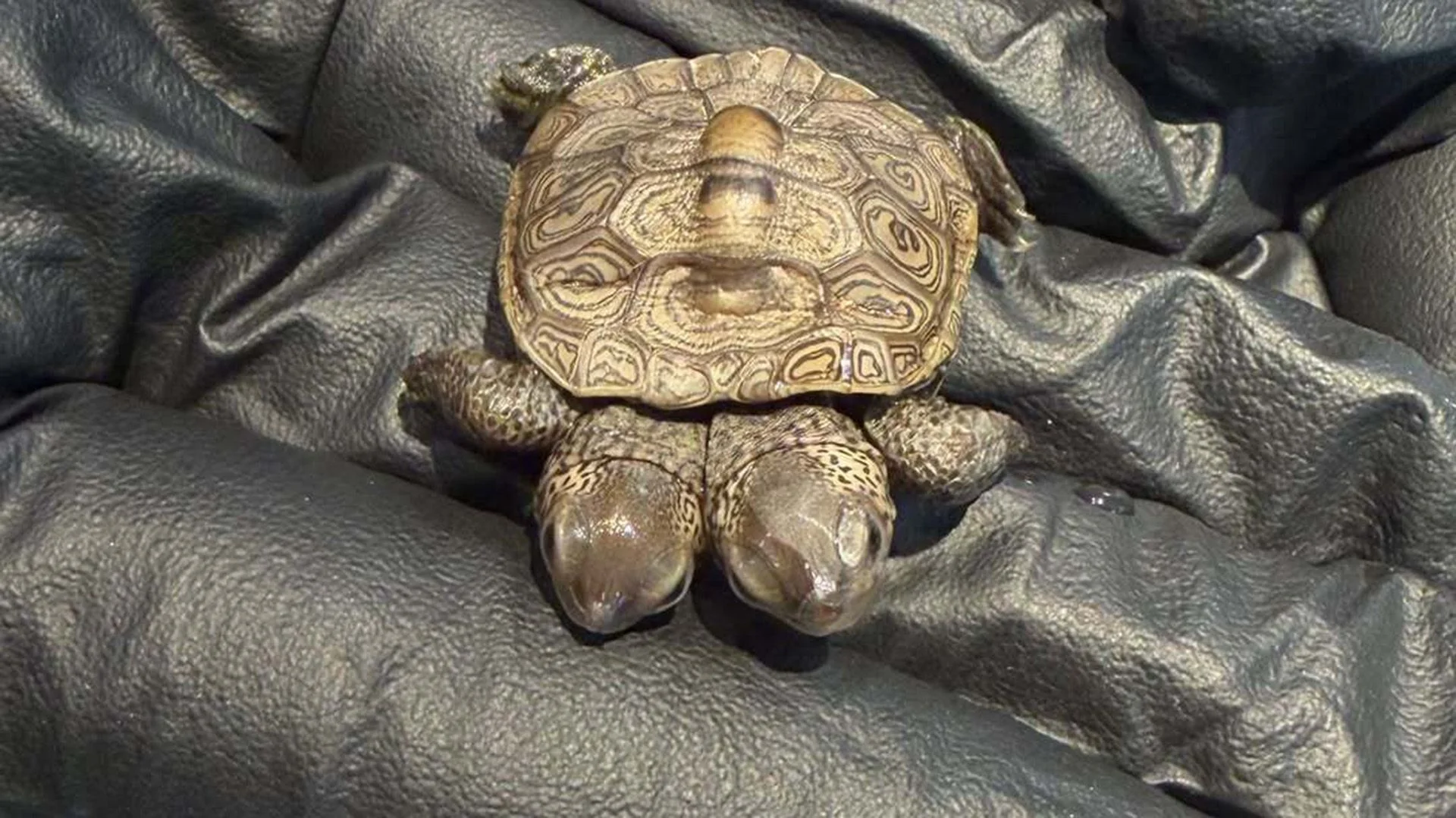
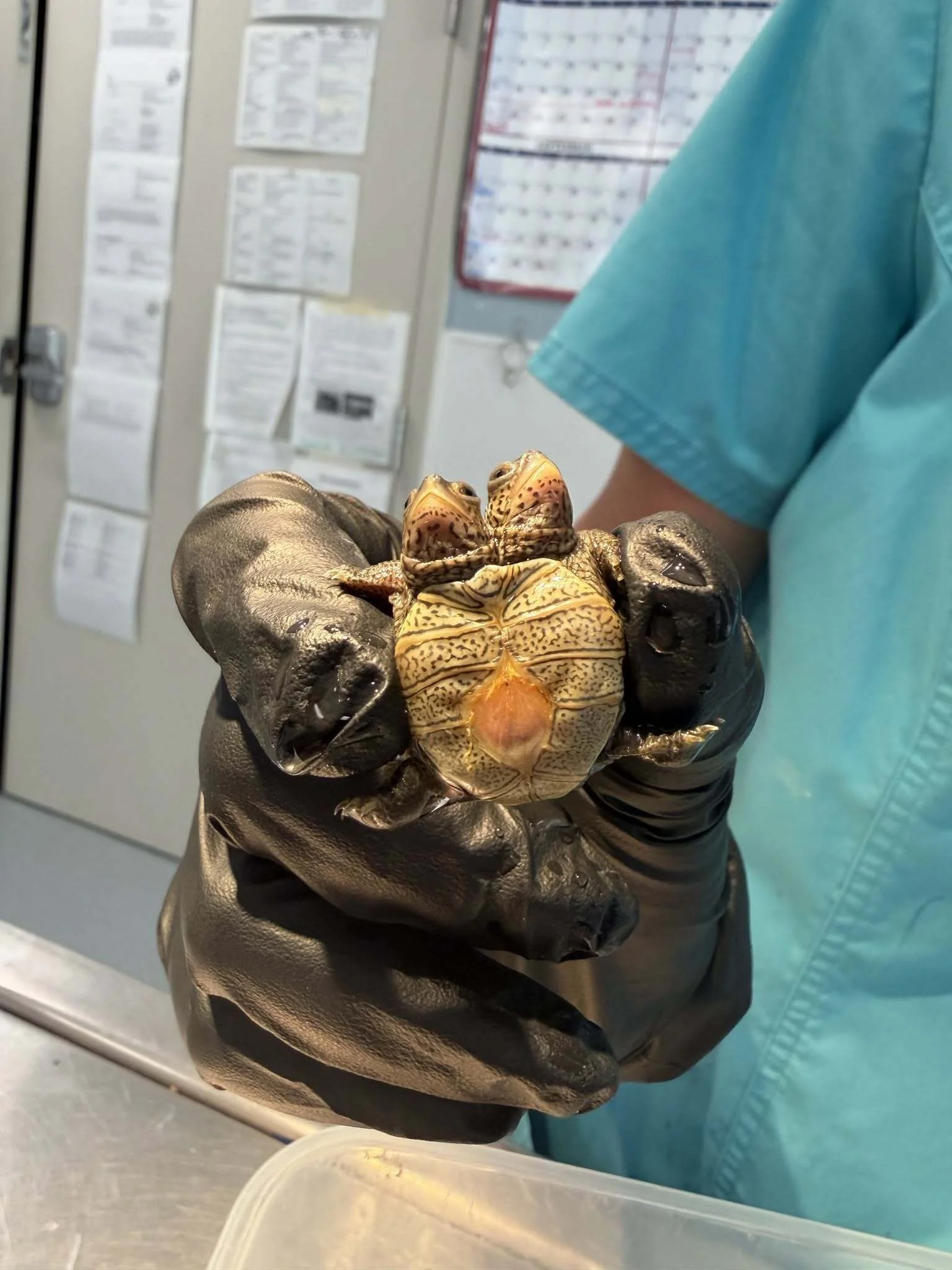
Cape Cod is renowned for its vibrant marine life, but the recent discovery of a rare two-headed diamondback terrapin adds a unique twist to its wildlife narrative. This hatchling, weighing just 0.18 ounces (5.2 grams), arrived at the Cape Wildlife Center on September 17, having been found by staff from the Mass Audubon Wellfleet Bay Wildlife Sanctuary at a protected nesting site in Wellfleet. The emergence of this extraordinary creature has sparked conversations about the biological quirks of nature and the environmental issues affecting marine life in the region.
Understanding Bicephaly: A Rare Developmental Anomaly
The phenomenon of bicephaly, characterized by two fully formed heads sharing a single body, is a developmental anomaly often resulting from the incomplete division of a single embryo during the formation of identical twins. While this condition is uncommon, it's not entirely unheard of in the animal kingdom. In fact, cases of bicephaly have been documented in various species, from reptiles to mammals, each presenting unique challenges and increasing vulnerability for the affected individuals. The two-headed terrapin’s existence brings forward a narrative not only about rarity but also about the implications of developmental anomalies on survival—think locomotion, feeding, and social interaction.
Survival in the wild is already tough for most species, but bicephalic animals face enhanced difficulties. For instance, having two heads may complicate the coordination necessary for swimming and foraging effectively. Such physical discrepancies can hinder their ability to compete for food among their peers, leaving them more susceptible to predation. What’s fascinating is how these physical challenges could lead to further insights about evolutionary biology and adaptation. The complexity of survival in these creatures makes their existence even more intriguing.
Genetic Factors Behind Bicephaly
Zak Mertz, CEO of New England Wildlife Centers, noted that this specific diamondback terrapin (Malaclemys terrapin) is an exceptional representation of bicephaly in turtles. Current research suggests a combination of genetic factors and epigenetics—how environmental influences interact with genes—may contribute to the occurrence of this condition in turtles. The implications of such findings extend beyond this single hatchling; they compel researchers to consider the impact of genetic diversity on species resilience.
Mertz expressed that contributing elements may include the turtles' extended lifespan, their habit of returning to familiar nesting grounds, and a diminished gene pool exacerbated by conservation challenges. Environmental conditions such as temperature and humidity during incubation, as well as parental exposure to specific toxins, are likely influential as well. (And this is the part most people overlook: the impact of environmental pollutants on genetic anomalies is often understated.) In short, there’s a complex interplay at work that warrants deeper investigation.
The Wider Context: Bicephaly Among Marine Life
While having two heads is an unusual occurrence, this terrapin is not the first of its kind in the region; it marks the third bicephalic terrapin recorded in the last five years. Other notable cases of bicephaly include a two-headed porpoise discovered off the Netherlands and a similar discovery involving a dolphin on a Turkish beach. Such instances raise questions about the environmental factors affecting these species, as well as whether these occurrences are on the rise due to altering habitats and genetic stresses.
A 2021 study highlighted that two-headed marine creatures, including turtles, often display craniofacial and spinal irregularities, making the individuals smaller and hindered in their ability to thrive. The study underlined the significance of monitoring such deformities since they may serve as indicators of broader ecological health. This makes the presence of bicephalic individuals a canary-in-the-coal-mine scenario for wildlife biologists—a signal of deeper issues in marine ecosystems.
Conservation Challenges
The diamondback terrapin inhabits brackish marshlands along the Atlantic and Gulf coasts, an ecological niche where freshwater meets salty marine environments. This habitat is critical not only for the terrapin but for a myriad of species that depend on it. Currently classified as threatened under the Massachusetts Endangered Species Act, their conservation status is under federal review. This ongoing evaluation reflects the threats facing their habitat, including pollution, habitat loss, and climate change. As pressure mounts on these ecosystems, every individual—including rare mutations like this two-headed terrapin—matters more than ever.
Veterinarians at the Cape Wildlife Center are closely observing the health of this intriguing hatchling. Mertz remarked, "This presents a fascinating opportunity for research that could enhance our understanding of these animals." The continuation of such studies promises to shed more light on the biology and ecology of bicephalic turtles. If you're working in this space or have an interest in wildlife conservation, the developments surrounding this two-headed terrapin could offer vital insights that extend far beyond its peculiar anatomy.
Implications and Future Outlook
The discovery of this two-headed diamondback terrapin opens up discussions not only about the peculiarities of nature but also the underlying environmental conditions that may be influencing such abnormalities. As scientists continue to study this particular hatchling, they might uncover more than just the biology of bicephaly. They could reveal critical data on the health of marine ecosystems overall.
What this means for you, whether you're a conservationist, a researcher, or a curious observer, is that there’s more at stake here than just one oddity of nature. The implications of this discovery could extend into broader environmental monitoring and conservation efforts—making this rare terrapin a metaphorical lens through which we could better understand our ecological responsibilities.
Discussion
Sign in to join the discussion.