A new model links Japan’s shifting subduction zones to faster rifting in the Gulf of California, with consequences for understanding plate boundaries.
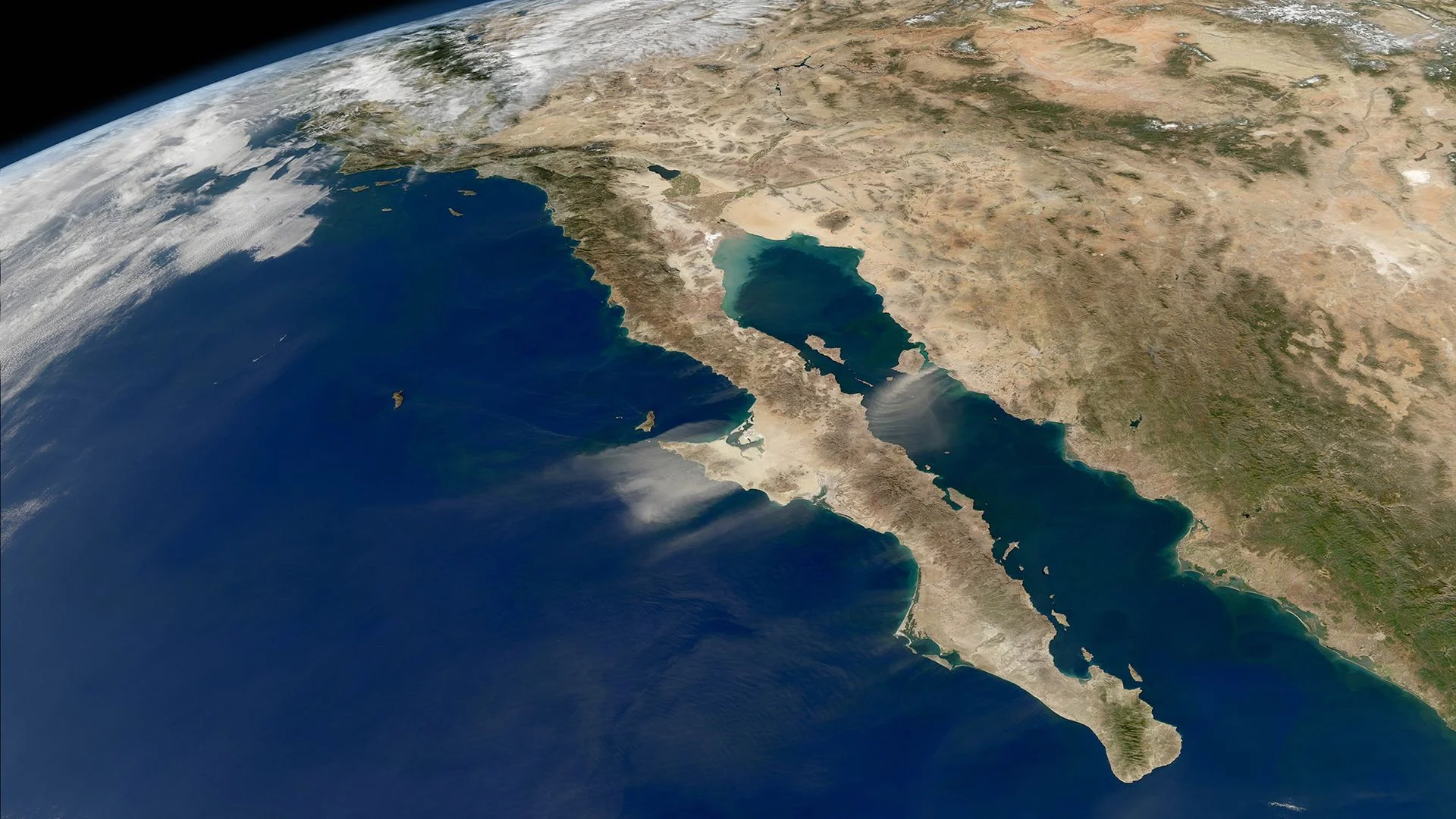
Changes in tectonic forces near Japan may have helped turn a slow opening in western North America into the Gulf of California—and set the stage for the Colorado River to carve the Grand Canyon. A study published Oct. 29 in Science argues that the connection spans more than 6,000 miles (9,600 kilometers) across the Pacific Plate.
The proposed link matters because rifts and subduction zones shape where tectonic plates meet, and those boundaries host many of the planet’s strongest earthquakes. “It's more than a regional curiosity,” study co-author Thorsten Becker, a geophysicist at the University of Texas at Austin, told Live Science. “It's a reminder of the global connectedness of mantle convection and plate tectonics.”
A distant shift, a faster rift
The Gulf of California began opening as the Baja California region pulled away from Mexico roughly 6 million to 8 million years ago. That process transferred Baja California to the Pacific Plate and created a low basin that filled with seawater. The rift also gave the developing Colorado River a route toward the sea; over time, the river carved the Grand Canyon.
Rifting can accelerate, stall or stop. In this case, it proceeded in an estimated 6 million to 13 million years, far faster than the typical 30 million to 80 million years. Geophysicist Guido Gianni of the Czech Academy of Sciences wanted to know what could account for that pace. Earlier work had not fully explained why the Gulf continued opening so quickly.
Gianni, Becker and Becker’s doctoral student Xiang He used a global plate tectonics model, run on supercomputers at the Texas Advanced Computing Center, to test whether forces far from Baja California could have affected the rift.
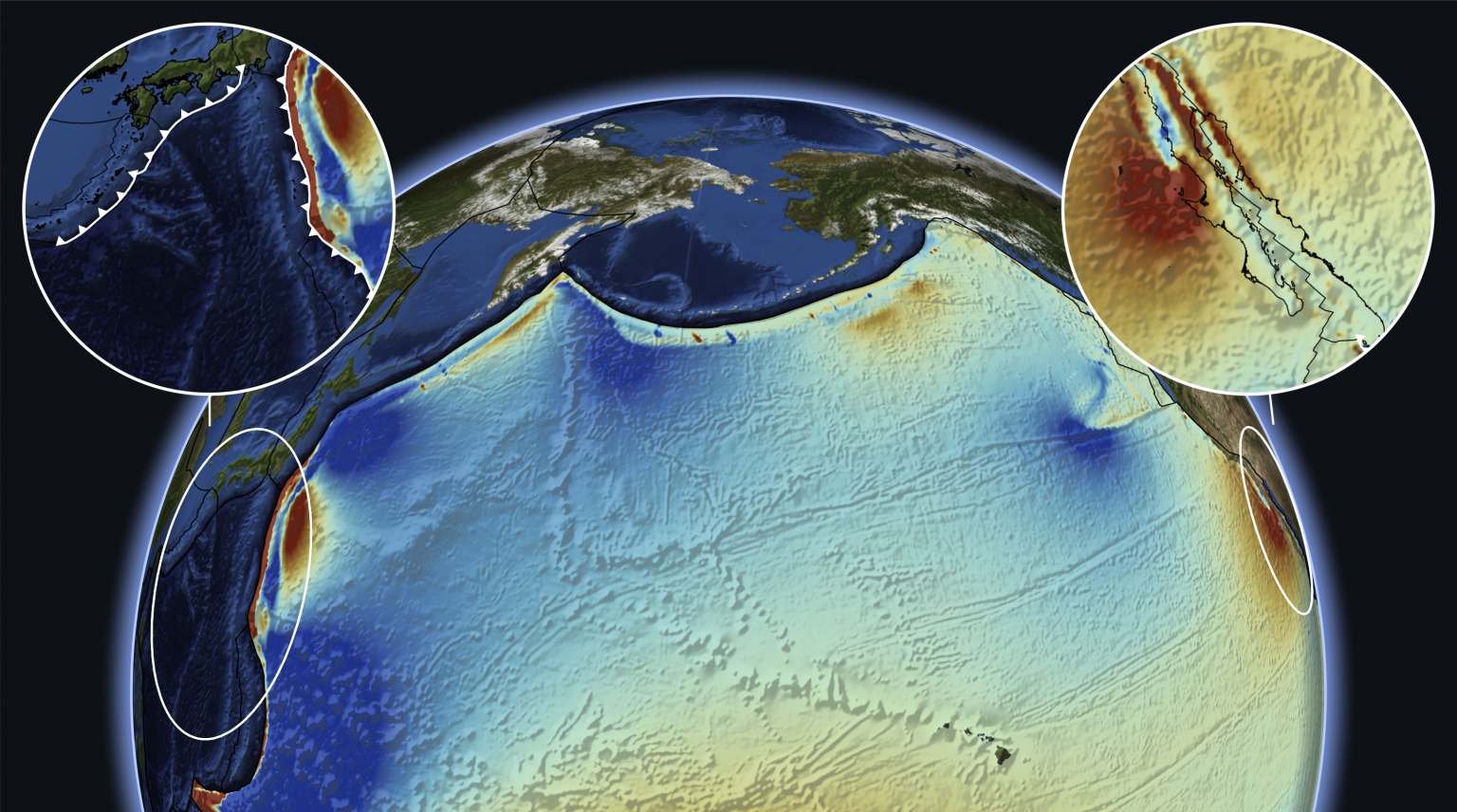
While the Gulf was opening, the Pacific Plate was also changing near Japan. There, the plate sinks beneath the Eurasian Plate. About 10 million to 12 million years ago, a single subduction zone off Japan divided into two. The team’s model indicates that this change altered pulling forces across the Pacific Plate, affecting Baja California as well.
Becker said the result surprised the researchers: “It turned out — ta-da! — [with] the change in this pulling stress, Baja California was one of the few places outside the Japan region that were affected.” He called the finding “unexpected and sort of a little bit too good to be true.” The team varied assumptions about stress and mantle properties, and the result persisted.
Why the connection matters
The Japanese reorganization did not start the Gulf of California rift. That process had already begun because the Farallon Plate was subducting beneath the western edge of North America. As the Farallon slab moved, it stretched and thinned the North American crust. The researchers’ account is that forces transmitted from the Pacific Plate added enough extra pull to speed up rifting that might otherwise have ended in a smaller valley or basin.
For Becker, the broader implication is that scientists may need to account for distant tectonic changes when studying how plate boundaries develop. That could affect models of earthquake-producing systems such as California’s San Andreas Fault and the Cascadia subduction zone in the Pacific Northwest. Cascadia is a megathrust boundary capable of producing earthquakes greater than magnitude 9.
“If I'm asking what is the mantle doing underneath Cascadia so I get our megathrust correct,” Becker said, “I need to include these effects.” The study’s central takeaway is that tectonic forces can travel across an entire plate, linking geological changes in places that appear far apart on a map.
Discussion
Sign in to join the discussion.