A reanalysis of InSight data links a major Mars quake to a deep fault beneath Valles Marineris, suggesting the canyon’s crust can still move.
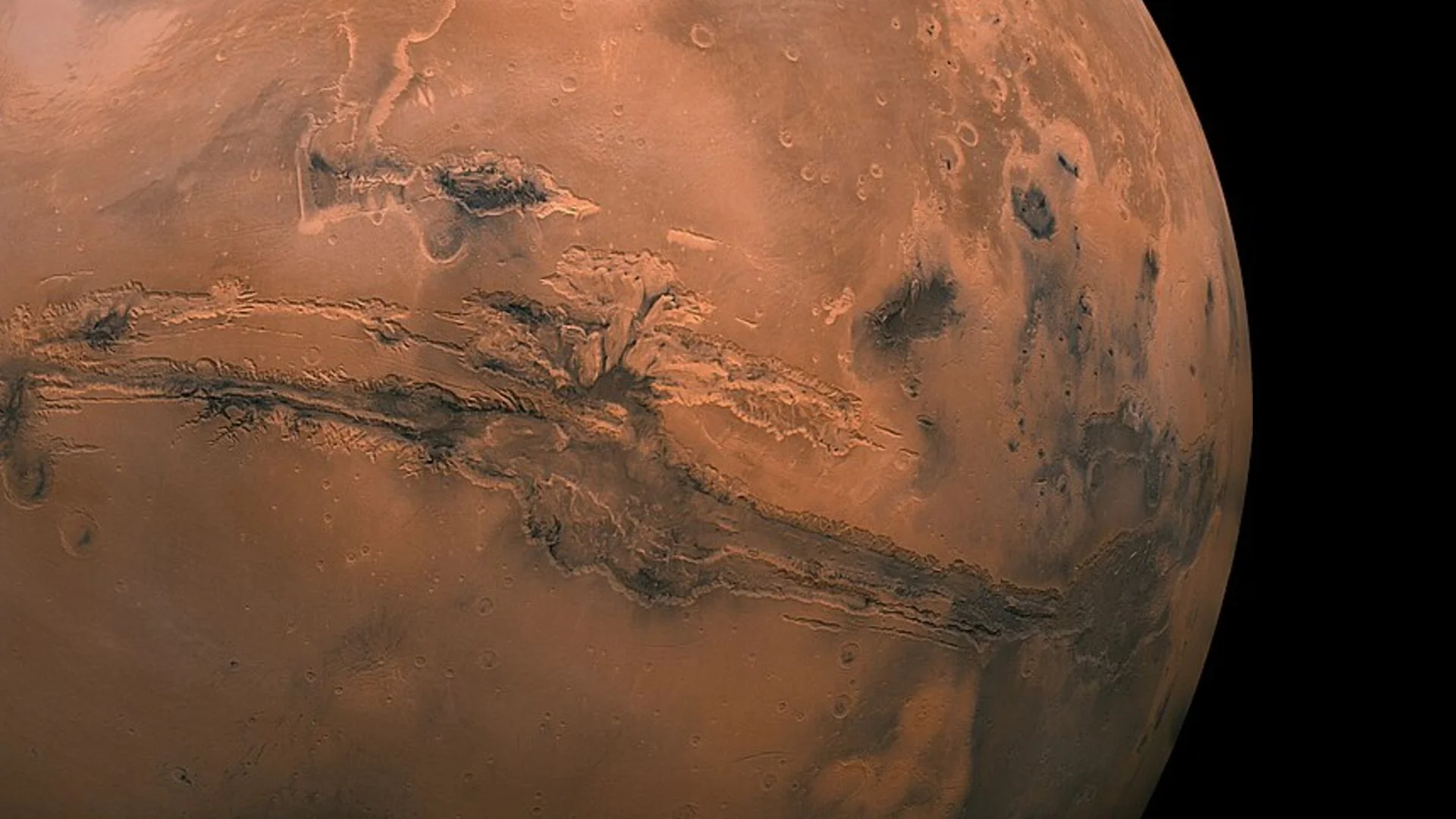
The strongest evidence yet that Mars can still shift along ancient faults comes from a quake recorded on the planet’s opposite side from NASA’s InSight lander. A new analysis traces the event to a deep crack beneath Valles Marineris, the solar system’s largest known canyon. The result suggests that parts of Mars remain seismically active even though the planet’s surface has changed relatively little for billions of years.
The quake, designated S0976a, struck on Aug. 25, 2021, and registered magnitude 4.2. At the time, it was the most powerful marsquake detected by InSight or any other Mars lander; a magnitude 4.7 event in May 2022 later took that record. S0976a remains the second-largest marsquake on record.
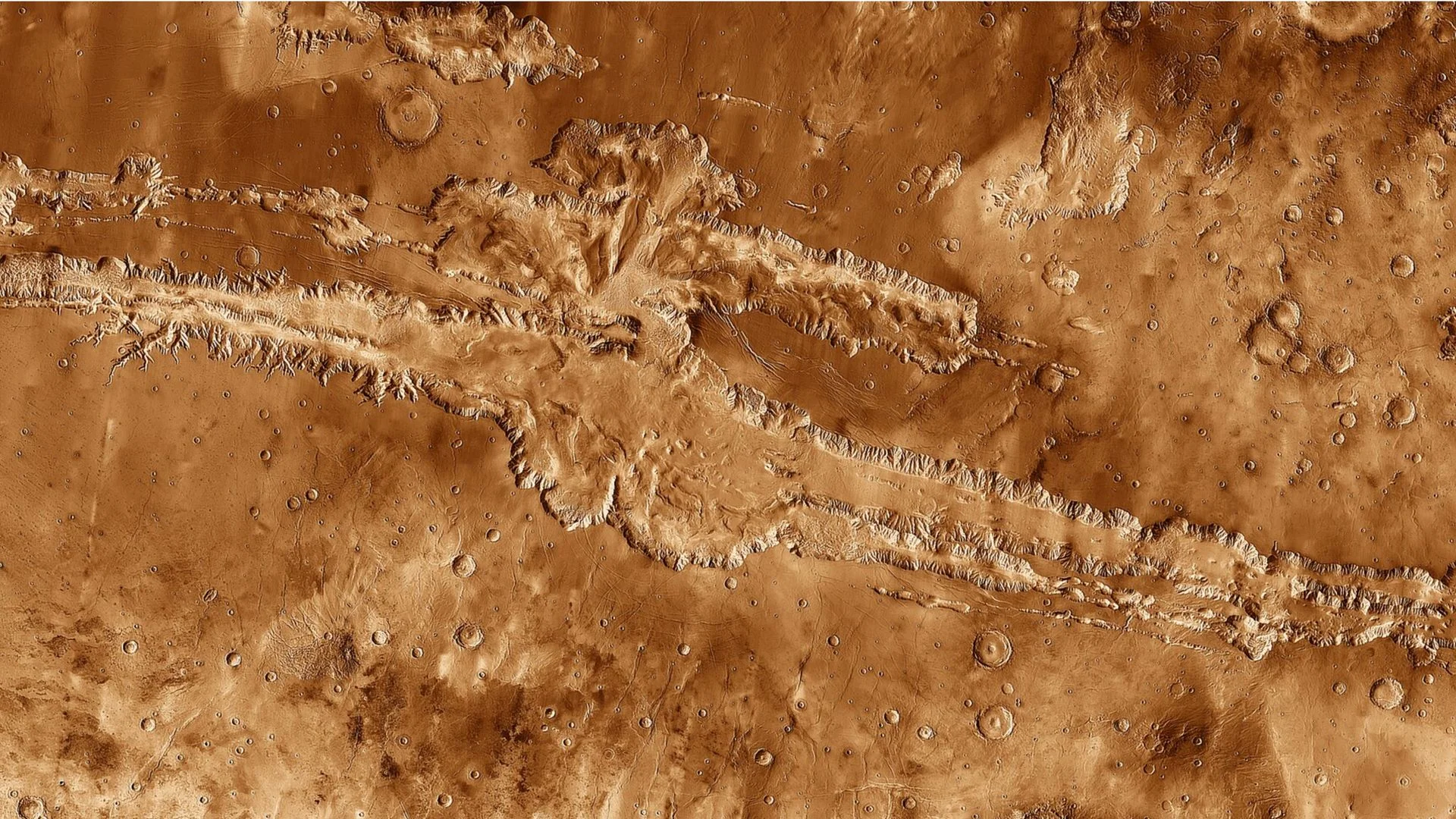
Most marsquakes detected by InSight were small tremors associated with impacts near the lander. S0976a was different: its waves came from the western half of Valles Marineris, far across Mars. Researchers reanalyzed those seismic signals and concluded that the quake began along a fault beneath the canyon. Their findings appeared Oct. 15 in Nature Communications.
A fault beneath the canyon
The team describes the event as a strike-slip marsquake: blocks of crust moved sideways past one another along a steep fault rooted deep underground. Based on the seismic data, the movement likely occurred 12 to 25 miles (20 to 40 kilometers) below Valles Marineris.
The researchers tested other explanations, including a large asteroid impact and a landslide within the canyon. Neither matched the patterns in the quake’s seismic waves as well as movement along a fault. The agreement between different lines of evidence is central to the team’s interpretation.
“What we see is that this is not just a ‘dead’ fossil landscape, as faults deep beneath the canyon can still slip and generate marsquakes, long after the geological processes that originally formed them have ceased,” study first author Jung-Hun Song, a researcher in Earth science and engineering at Imperial College London, said in a statement.
Why the “dead Mars” label is complicated
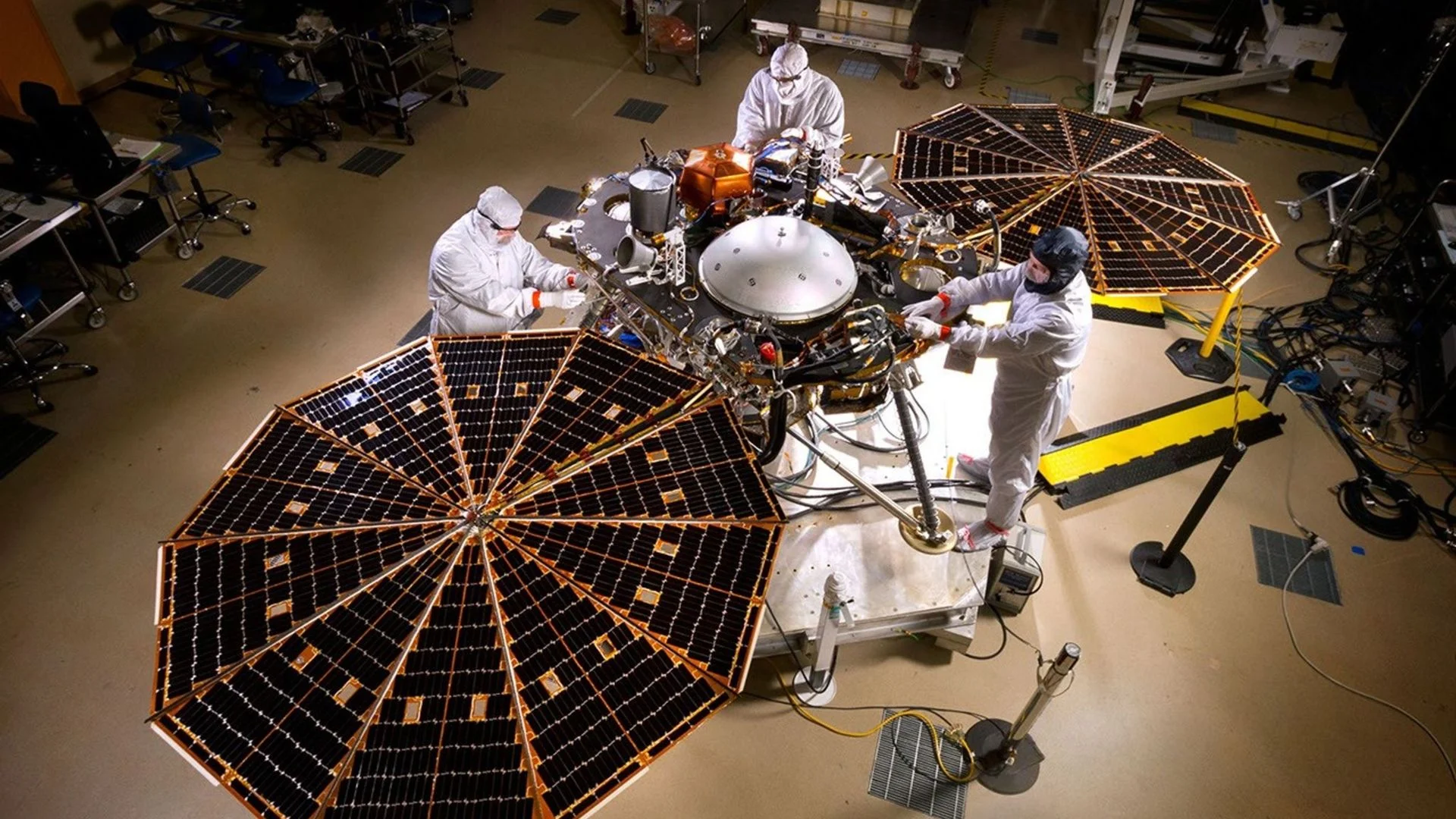
Valles Marineris is a network of connected gullies and ravines that stretches as far as 2,500 miles (4,000 kilometers), about 10 times the length of the Grand Canyon. It is up to 20 times wider and five times deeper. The canyon takes its name from the Mariner 9 spacecraft, which helped reveal it in 1971. Its scale is visible from orbit, as is the nearby Tharsis region, home to Mars’ giant volcanoes, including Olympus Mons, at least three times taller than Mount Everest.
Those features record a more active past. But Mars is thought to have undergone little surface change for nearly 3 billion years, according to the European Space Agency. Two differences from Earth help explain that slowdown. Mars is smaller, so its core and mantle cooled faster. And it lacks Earth-style tectonic plates, the moving sections of crust whose boundaries drive much of Earth’s seismic activity.
Instead, Mars’ outer crust is largely intact, forming a lid over its cooling interior. That doesn’t mean the crust is free of faults. Some are visible at the surface; others remain buried. The new analysis points to one of those hidden faults beneath Valles Marineris, where movement can still produce a measurable quake.
One quake, two views of Mars
S0976a also illustrates the scientific value of seismic records. Its waves traveled through Mars’ core, helping researchers investigate the planet’s interior. The same data now offer clues about the quake’s source and the fault beneath the canyon.
“From a single marsquake, we can learn both about the center of the planet and about an active fault beneath one of its most remarkable landscapes,” said study co-author Doyeon Kim, head of Imperial College London’s Terrestrial and Planetary Seismology Lab.
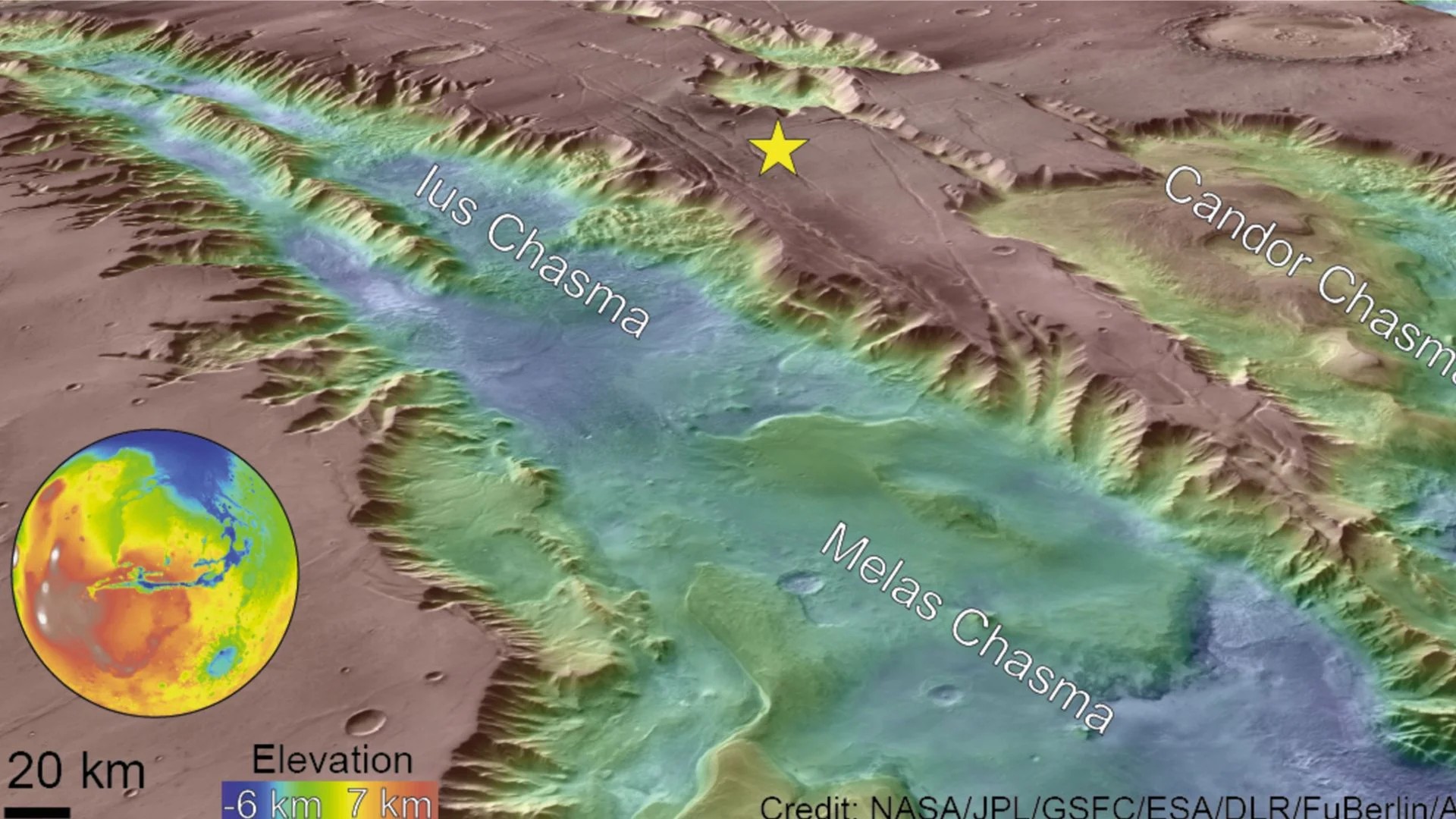
Scientists first officially detected marsquakes in 2019, using InSight. Researchers have also found evidence of older quakes in data collected by the Viking landers in the late 1970s. Since then, InSight’s seismic measurements have helped map Mars’ interior and prompted investigations into possible remnants of ancient protoplanets, the planet’s uneven hemispheres, a potentially active mantle plume and a large underground water reservoir.
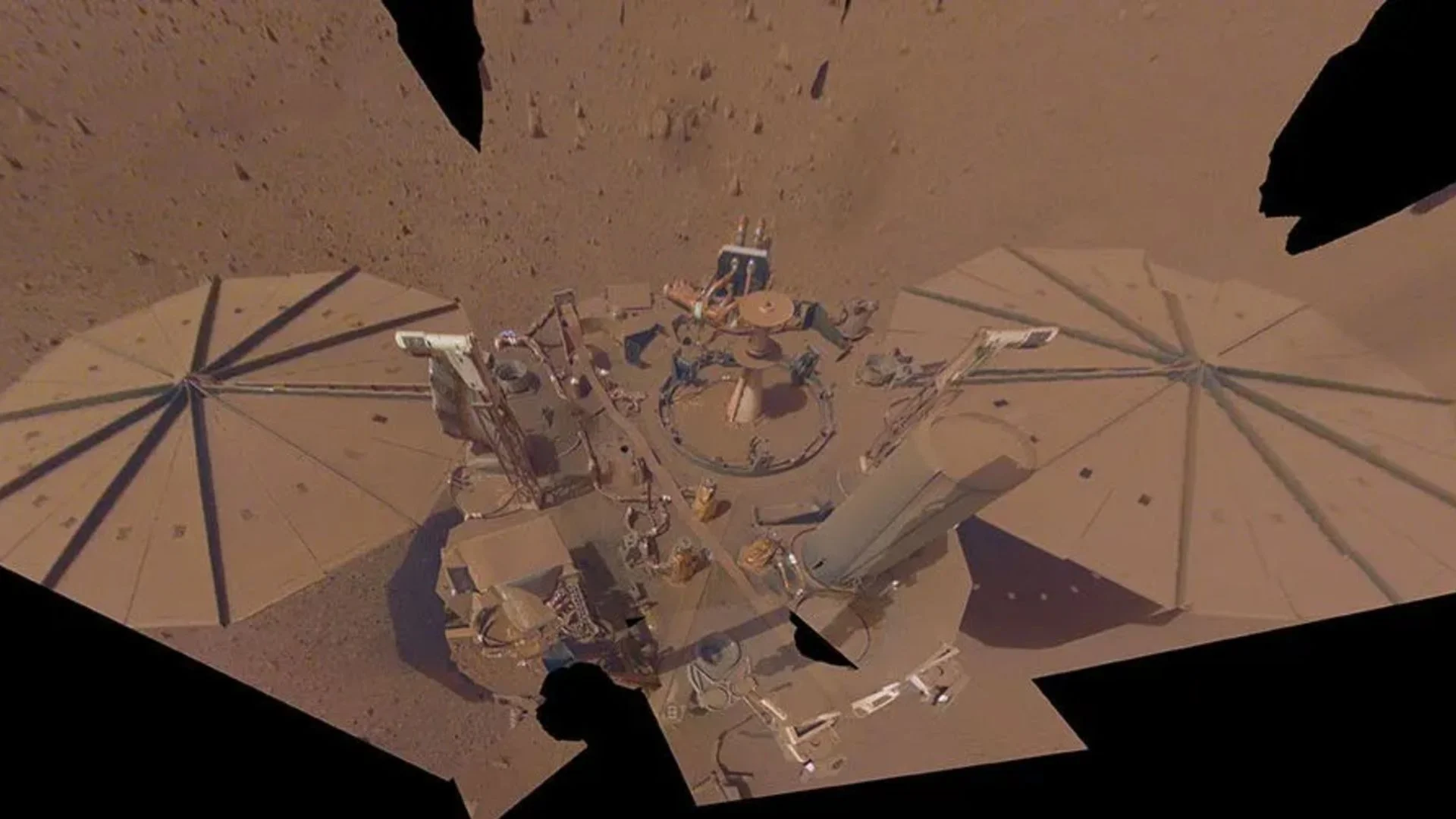
InSight’s mission ended in December 2022, after dust accumulated on its solar panels and prevented it from sending signals back to Earth. The lander can no longer record new marsquakes, so the S0976a analysis relies on archived measurements. Those records have already proved useful well beyond the initial discovery, and they may help researchers look for seismic activity on other worlds thought to be geologically quiet.
The finding gives researchers a more specific target for understanding Mars’ remaining seismic activity: faults that may be hidden beneath ancient terrain. Valles Marineris formed through processes that have long since ceased, Song said, but the fault beneath it appears capable of slipping today. InSight’s data show that a planet can preserve signs of motion long after its most dramatic geological era has passed.
Discussion
Sign in to join the discussion.