Julie Elie's experiments suggest zebra finches grasp the meaning of their calls, and she thinks birds may be the first species we can interact with vocally.
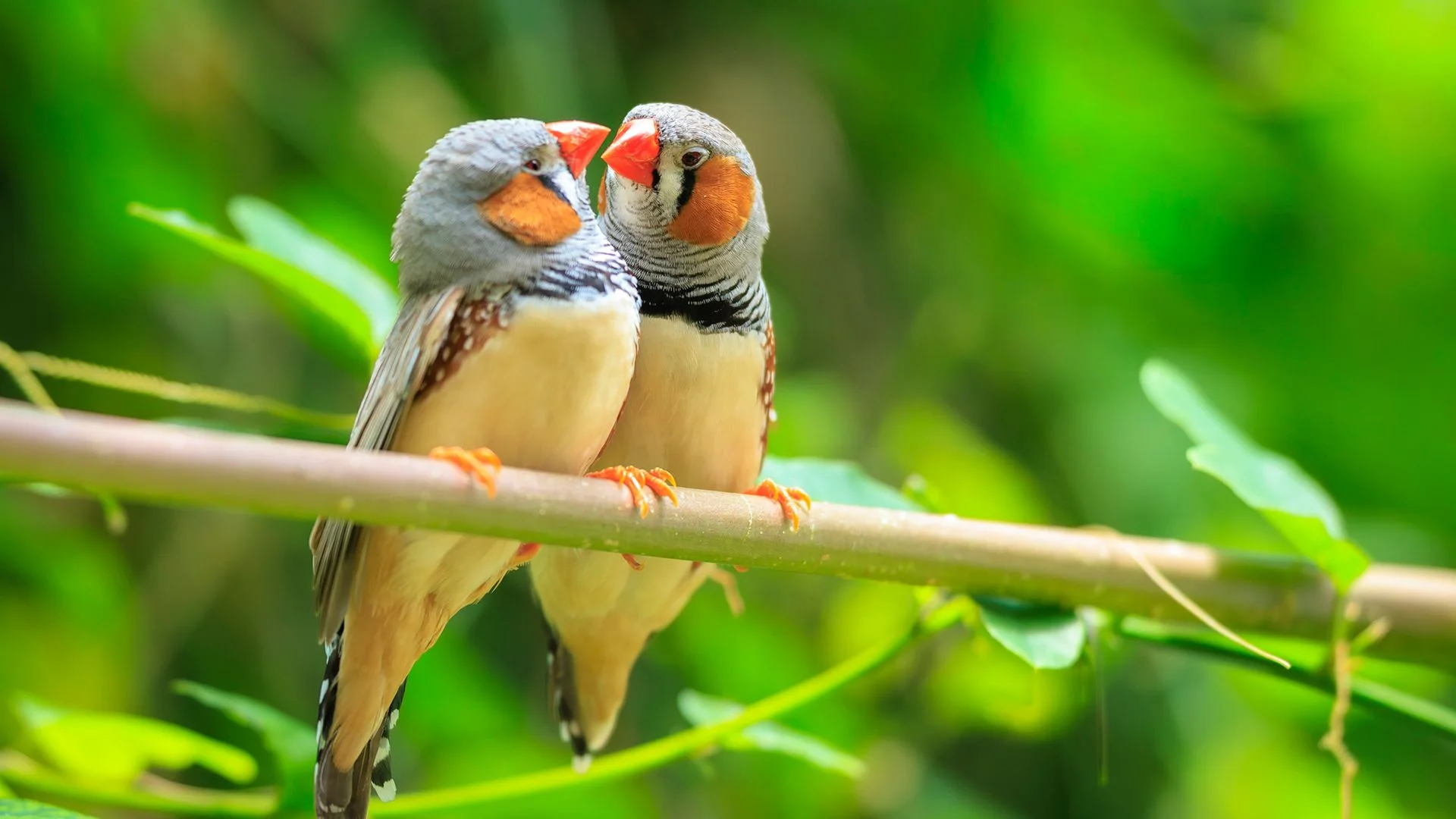
Most of us hear birdsong and keep walking. Julie Elie, an animal behavior researcher at the University of California, Berkeley, has spent more than a decade listening much more closely, and her findings point to something unexpected: a small songbird may understand what its calls mean. That shifts the question from whether animals make noise to whether they share something close to a vocabulary, and it puts birds in a strong position for the next phase of interspecies communication research.
Elie recently won the 2026 Coller Dolittle Challenge for Two-Way Interspecies Communication for her work decoding zebra finch vocalizations. The award honors research into communication between species, and her zebra finch experiments are a big reason her name is attached to that question right now.
Why she chose birds over the usual suspects
Elie's path into birds wasn't a straight line. Her interest in animal behavior started with mammals, the animals people relate to most easily, like dogs, cats and horses. Her doctoral work pushed her toward the social lives of animals, specifically how they interact and what kind of social organization they build. When someone suggested the zebra finch, she admits she had never really taken the time to watch birds closely. She decided it was a good time to start.
The problem she ran into is that wild birds are hard to study. They flit in and out of view and go wherever they please, so a researcher sees only fragments of their lives. Zebra finches kept in cages gave her a fuller picture, with their vocal and social interactions visible from start to finish.
That access led to a finding that cut against the prevailing view. Zebra finches were previously thought to organize themselves around dominance hierarchies. Elie saw something different. The most important relationship in a finch's life is its partner. The species forms pair bonds, with males and females pairing for life, and that bond sits at the center of their social world.
What birdsong says about cognition
Elie's core question is neurological. How do birds listen to a sound, copy it, produce it, and then compare their output with what they heard? Zebra finches sit in what she calls a "just-right middle ground" of cognitive ability. They show the copy-and-produce pattern clearly enough to study, without the tangle that comes with more complex species.
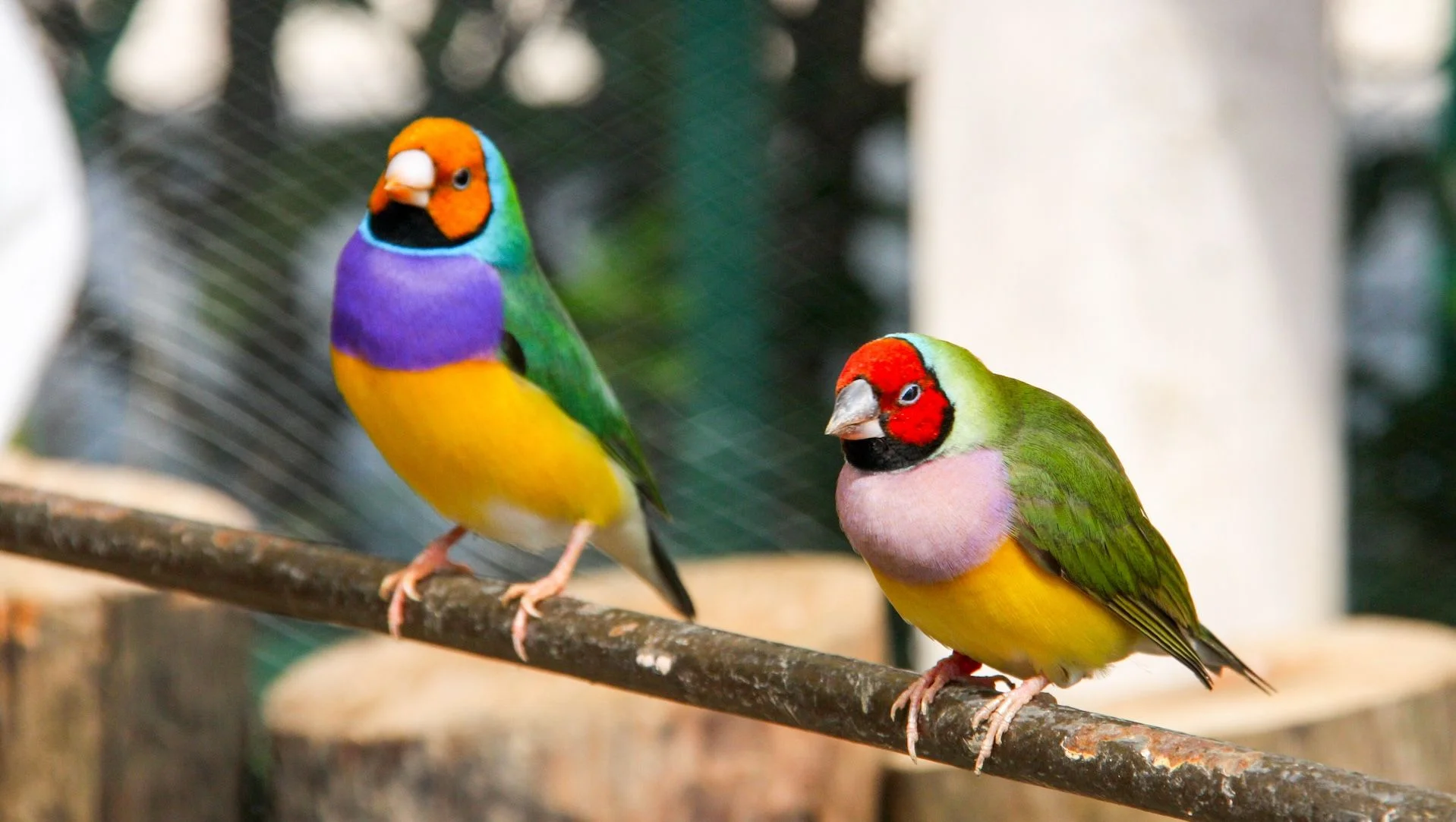
Look across the avian world, though, and the picture gets more interesting. Mockingbirds, which Elie points to in California, are known for reproducing a wide range of sounds and working them into their own vocalizations. Parrots go further. They can reproduce human speech even though their vocal tract is smaller and built differently from ours. For Elie, the real signal of intelligence isn't mimicry alone. It's using a borrowed sound for a purpose. Parrots do this when they ask a person for something, or, as she puts it with some amusement, when they ask the dog to be quiet.
Studying these communication systems, she argues, gives us a window into what other animals can do mentally and how sharp they really are.
Building a dictionary from observation
Her method started with patience. She spent countless hours watching zebra finches and began matching the social contexts she saw with the acoustic features of the sounds they produced. Over time, specific calls became recognizable, and she could say what they seemed to mean.
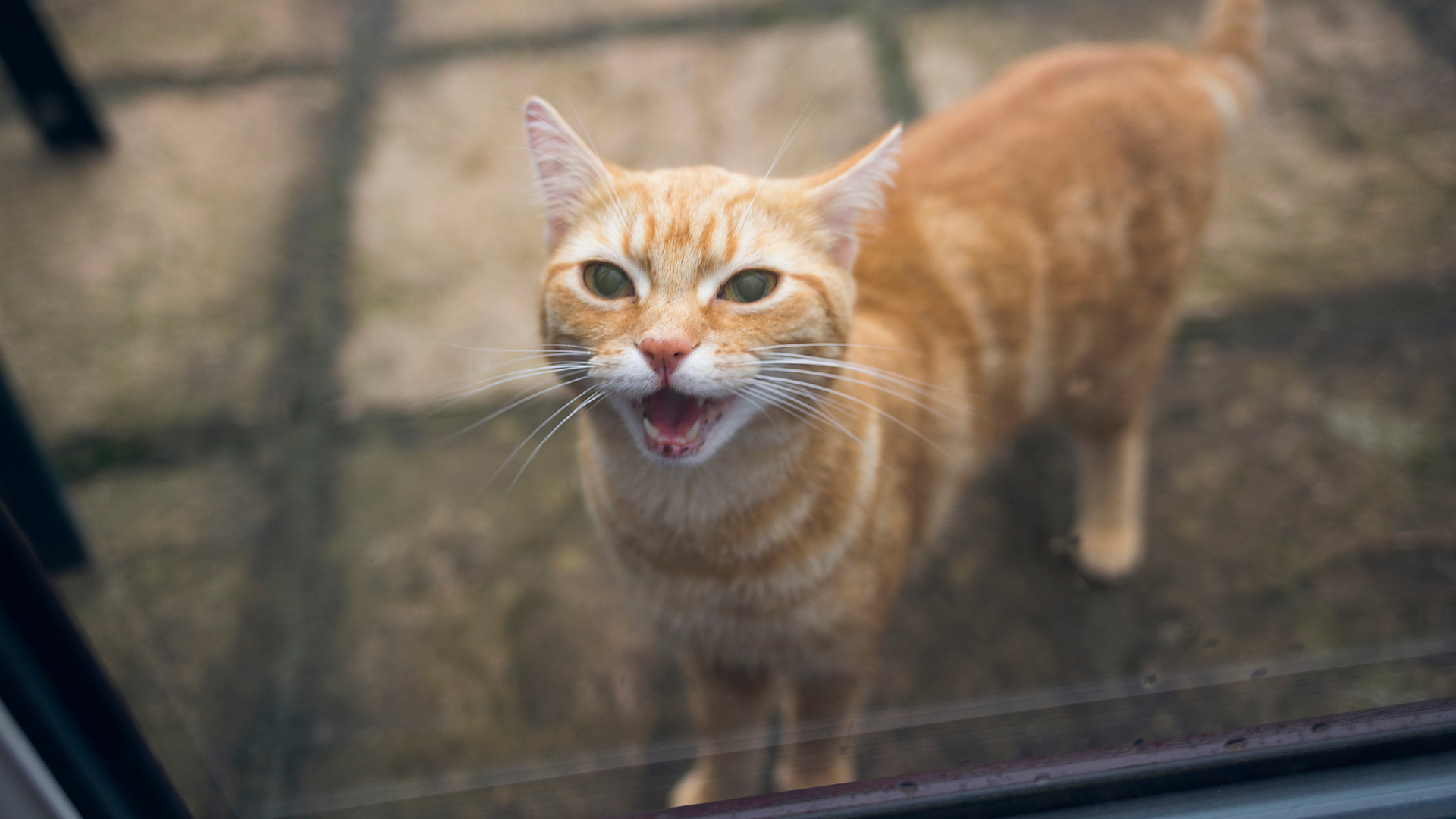
She compares the process to the way pet owners learn their animals. Within a couple of months, a cat owner can tell that one particular meow means hunger, another means a request to go outside, and another means a desire for affection. Elie did the same thing with birds, and the result was what she describes as the first acoustic dictionary of zebra finch calls.
But here's the catch: an observer's dictionary can be wrong. Elie wanted a test the birds themselves could answer.
Testing the words with the birds
Until now, nobody had a systematic way to go through an animal's vocal repertoire and check whether each call type was actually perceived as a word in that species' language. Elie's team built an operant conditioning experiment to do exactly that.
The birds classify recordings of calls from other zebra finches, and the rules are simple. Each day, only one call type earns seeds. Every other call type in the repertoire goes unrewarded. The birds can also skip ahead whenever they want, much like skipping tracks in a music app.
The setup works like this. A bird pecks a button or triggers a small infrared sensor with its beak, and a randomly chosen vocalization from the library plays. Four times out of five, that playback is a call that pays nothing. Because the birds are slightly food deprived, they quickly learn to skip the unrewarded calls and wait for the one that pays off. Each day, the team tests a different call type.
The logic is clean. If the birds couldn't pick out the rewarded call, the call type the team had identified probably wasn't part of their language. They could, and they did, which confirmed the categories. The birds, in effect, told the researchers their dictionary was right.
The mistakes that mattered
The real surprise came from the errors. Birds made rare but systematic mistakes, and Elie wanted to know why. Were they tripped up by acoustic similarity, the way a listener might mishear "glove" as "love" or "hurt" as "heart"? Or were they confusing calls that share a meaning?
The errors were better explained by meaning. Birds appeared to be remembering the general sense of the day's rewarded call, so a call with a meaning close to "love" could slip past them as a match for "heart." That points to something more than sound matching. "That is a big discovery in the field of animal communication," Elie says.
How far can interspecies talk go?
Elie is careful about expectations. Her zebra finch vocabulary doesn't carry over to a crow, and "birds" covers an enormous range of species, each with its own system. She frames talking with birds as many separate problems, not a single language to crack.
Still, birds have a practical advantage: they're extremely talkative. They use vocalizations constantly with each other, and that gives researchers a lot of material to work with. In her words:
I'm thinking that the first species we might be able to communicate with, interact with vocally, might be a bird.
Julie Elie
Finding the words is only part of the work. Elie says the next challenge is understanding how words get strung together and whether a response actually makes sense in context. Birds also use body postures and displays while they vocalize, and full communication would have to account for those signals as well. "It's not tomorrow for sure, it's probably not next year," she says. She puts the horizon at roughly 10 years and points to fast progress in artificial intelligence and robotics as a reason for optimism.
What this asks of us
Elie's main takeaway is aimed at people outside science. Research into animal behavior keeps uncovering intelligence in species we tend to overlook, and that changes how we see the animals around us. We aren't the only smart species on this planet, she argues, and that should shape how we develop and expand our presence in the natural world.
It also raises a question about responsibility. Animals have internal lives of their own, and the more we learn about how they think and communicate, the harder it gets to justify treating them as background. Elie's hope is that people will start extending them more respect.
If the next decade delivers on her timeline, the question won't be whether a bird has something to say. It will be whether we're ready to listen when it does.
Discussion
Sign in to join the discussion.