Fossil CO2 emissions are projected to fall 0.4% in 2026, but the price shock from the Iran conflict is doing much of the work, and total emissions are still rising.
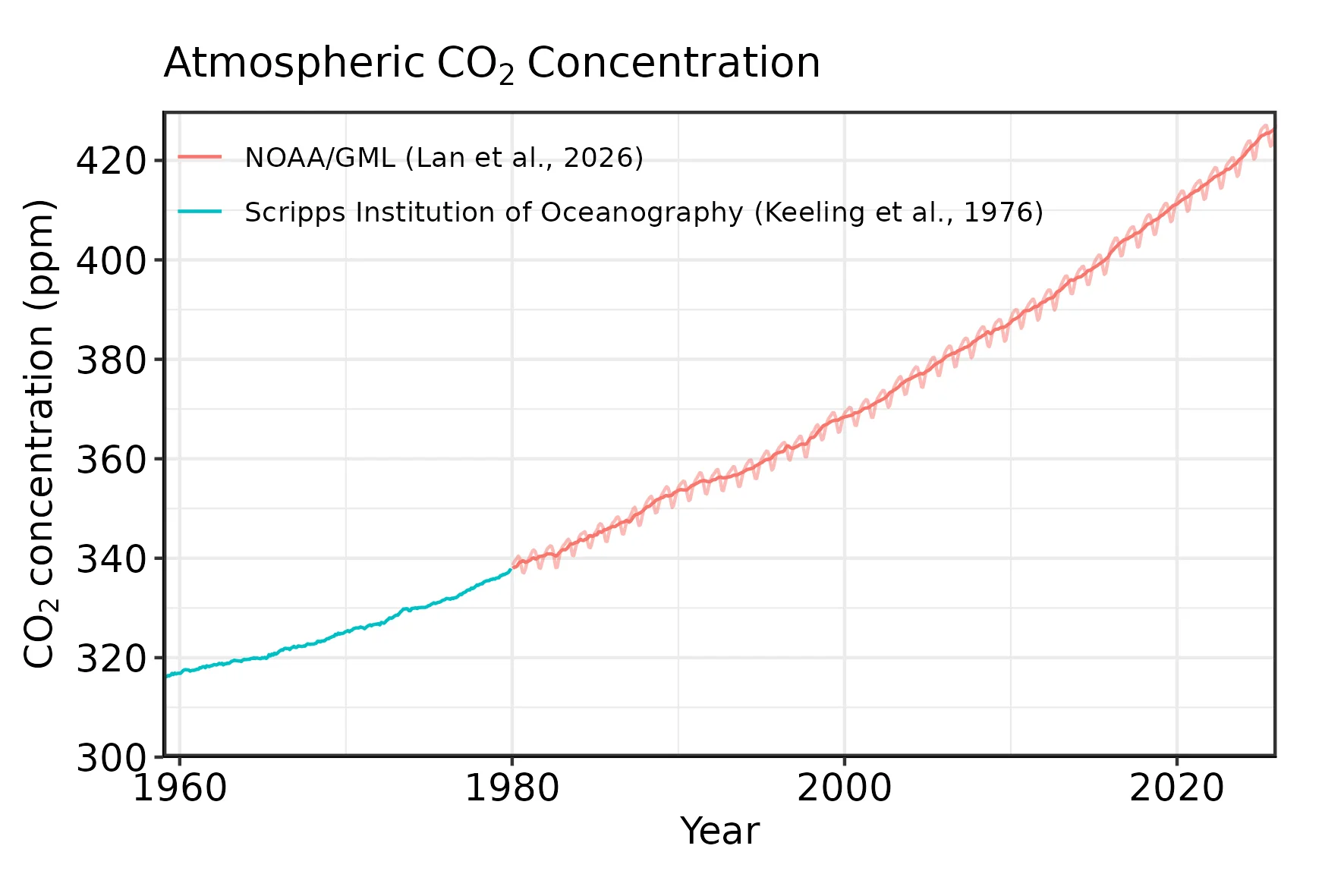
Global fossil fuel emissions are projected to slip 0.4% this year, the first annual decline since the pandemic year of 2020. That's the headline number in the 2026 Global Carbon Budget, published in Earth System Science Data on Nov. 10 and set for presentation at the U.N. climate talks in Antalya, Turkey, this week. The catch is in the cause. Solar and wind capacity keeps expanding, but a large share of the drop comes from fuel scarcity and price spikes tied to the Iran conflict, and the broader emissions picture still points away from the world's climate targets.
A small dip with a big asterisk
The report projects 38.2 billion metric tons (42.1 billion U.S. tons) of carbon dioxide from fossil fuels this year. That's a shrinking number, but only just. Measured against the scale of the global economy, a 0.4% decline is a rounding error, and the researchers aren't framing it as a turning point.
"It is an encouraging sign that the growth of emissions is slowing and decarbonisation efforts are starting to make a difference," said Joeri Rogelj, a climate scientist at Imperial College London who wasn't involved in the research. "However, at 0.4%, the projected decline is very small," he told Live Science.
Carbon dioxide traps heat in the atmosphere. As concentrations of greenhouse gases rise, so do average global temperatures, which in turn shift weather patterns and push up sea levels. Any year without a meaningful drop in emissions adds to that load, and this year's dip is too shallow to change the trajectory on its own.
The war with Iran has resulted in restricted fuel availability and high prices, with a corresponding reduction in demand
Joeri Rogelj, climate scientist
Where the cuts are coming from
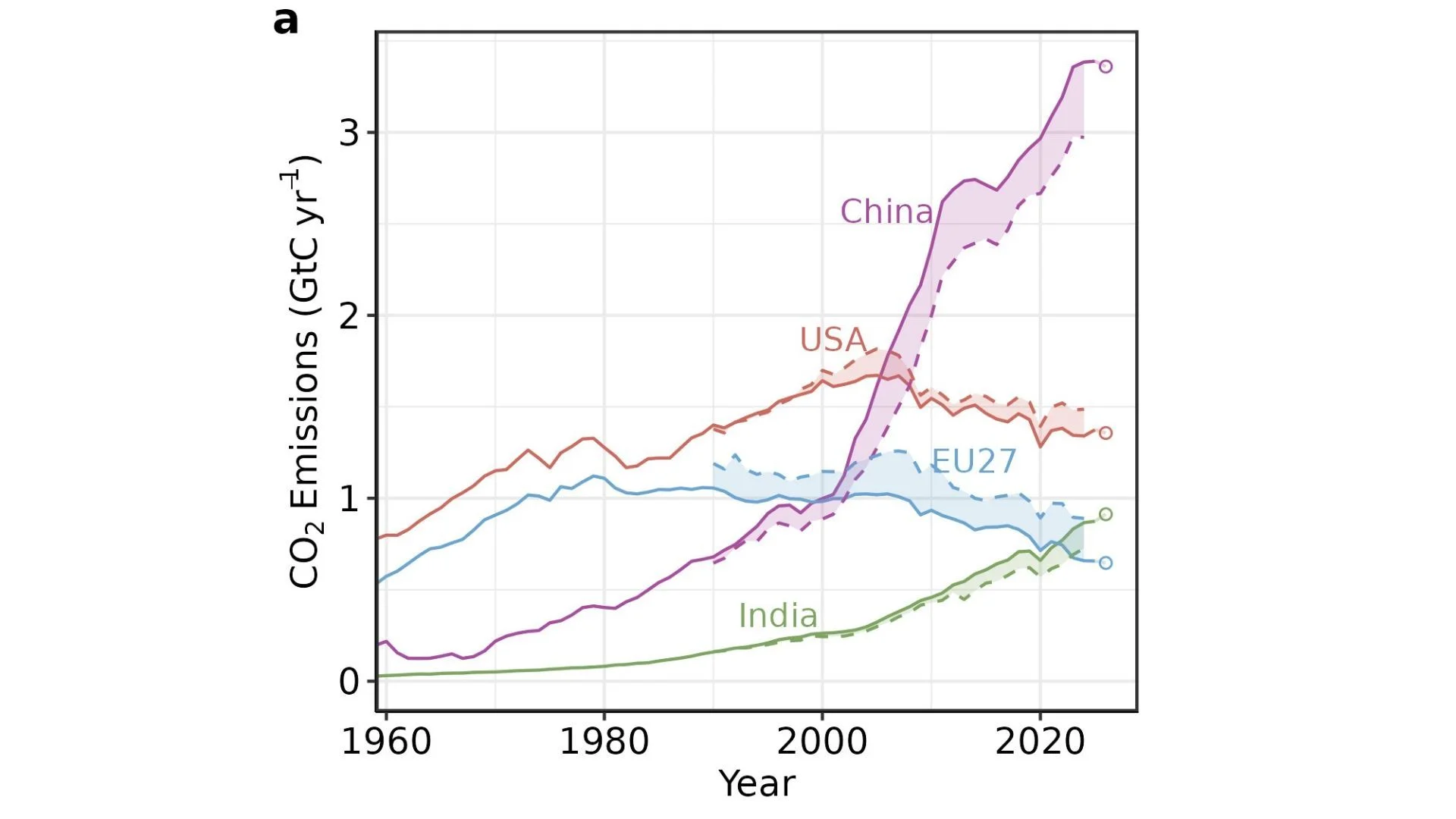
Roughly 40 countries have managed to cut emissions over the past decade while still growing their economies. The list includes the U.S., Australia, New Zealand, South Korea, the United Kingdom, Japan, and about 30 members of the European Union. That's a meaningful pattern, because it shows economic growth and emissions can separate, even if the separation is still incomplete.
The biggest emitters tell a mixed story. Annual CO2 emissions are projected to fall 0.9% in China, 1.3% in the U.S., 1.5% in the European Union and 1% in Japan. India runs the other way, with projected growth of 4.4%. Given how much India's energy demand is expanding, that figure deserves more attention than the global average does.
Emissions from the rest of the world are projected to fall 0.7%, driven mainly by a 1.9% drop in oil-related emissions. The authors read this as a short-term reaction to tight global supply and higher prices triggered by the Iran conflict, not a structural shift in how those economies run.
Demand is growing, and clean power is catching it
Here's the tension at the center of the report. Global energy demand is still rising, yet fossil fuel emissions are falling. Judith Hauck, a biogeoscientist at the Alfred Wegener Institute in Germany and a co-author of the study, puts numbers on it. Based on energy demand growth alone, fossil CO2 emissions would have risen by about 0.8 gigatonnes this year.
About two-thirds of that extra demand is being met by solar and wind power and electric vehicles, Hauck said. That's a real result, and it reflects years of deployment. But the energy price spike linked to the Iran conflict also cut demand by 0.4%, and that reduction did the rest.
"So only together with the energy crisis did we bring the change in emissions down to negative," Hauck told Live Science. She expects emissions to rebound if the conflict ends, much as they did after the temporary drop during COVID-19 lockdowns. A dip produced by scarcity isn't the same as a dip produced by cleaner infrastructure, and the difference matters for planning.
Is the peak in sight?
Rogelj is cautious. The unusual conditions in energy markets this year make it hard to read the small projected decline as proof that emissions have peaked. Still, he sees signs of deeper change underneath.
"Despite my muted enthusiasm about whether these lower emissions for 2026 represent the start of a long-term decline, the analysis shows encouraging signs of deeper long-term structural changes," he said. "But this shift must accelerate to ensure it is not outpaced by energy demand growth."
The report concludes that clean energy growth hasn't yet reached the pace needed for a steady, sustained decline in fossil CO2. Hauck expects that threshold to be crossed within a few years, provided the push to deploy solar, wind, batteries and electric vehicles continues. That's a conditional forecast, and it depends on policy and investment choices that the report can't guarantee.
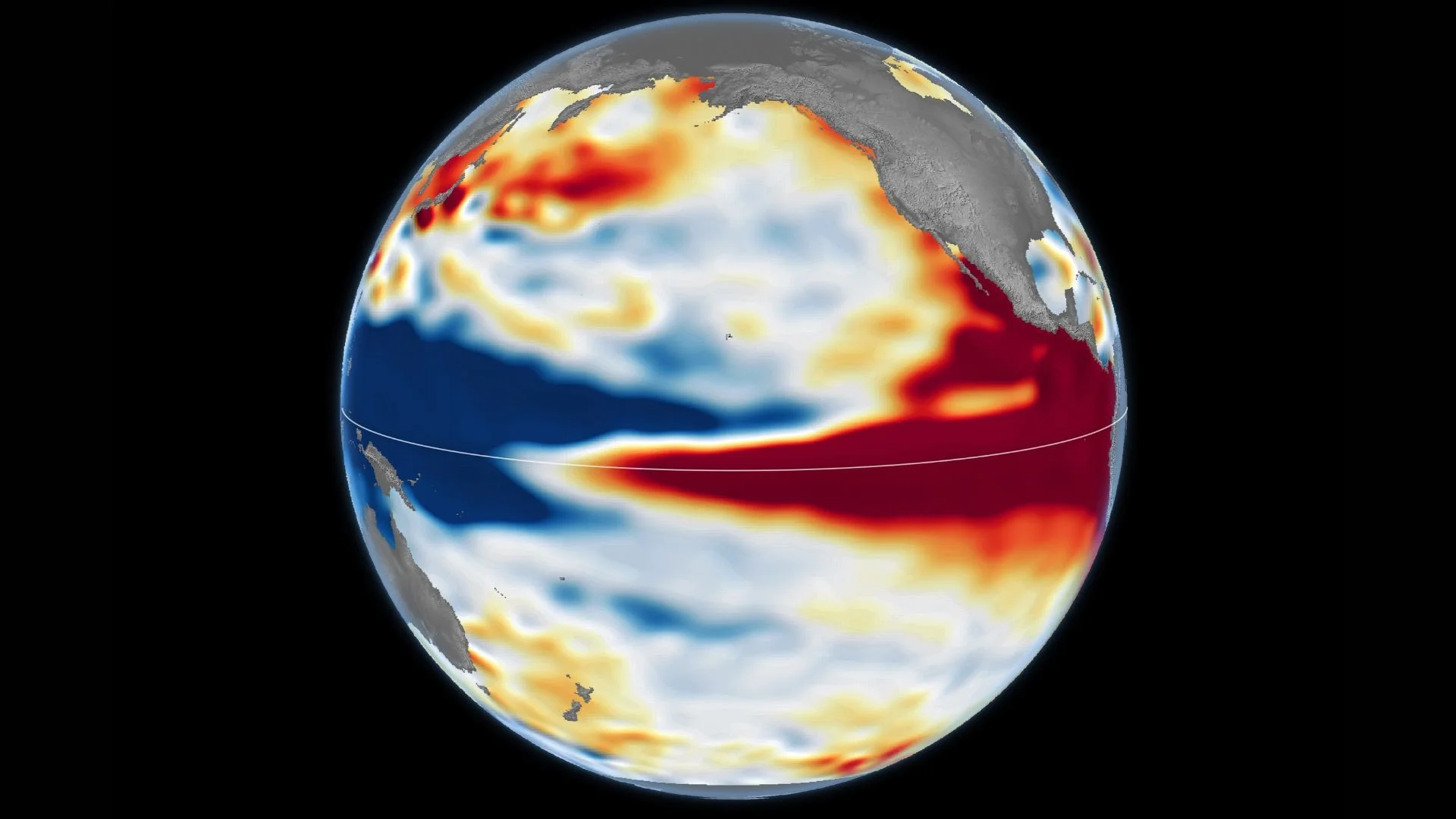
Fossil fuels aren't the whole picture. Human-caused peat fires, deforestation and forest fires linked to dry El Niño conditions are pushing total emissions from all sources up. The report projects that combined CO2 output will rise slightly from 42.8 billion metric tons (47.2 billion U.S. tons) last year to a record 43.3 billion metric tons (47.7 billion U.S. tons) this year.
The remaining budget is nearly spent
The most sobering figure may be the carbon budget. The amount of CO2 the world can still emit before global warming passes 1.5 degrees Celsius (2.7 degrees Fahrenheit) above preindustrial levels is now about 150 billion metric tons (165 billion U.S. tons). At current rates, that's less than four years of emissions.
Hauck, like many climate scientists, believes the 1.5 C target is already slipping out of reach without large-scale removal of CO2 from the atmosphere. "I'm still hopeful for something between 1.5 and 2 C [3.6 F]," she said. "But for 1.5 degrees, we would need to see such a drastic strong drop in emissions. Based on what we've seen in the past years, even with this strong increase in avoided emissions, I don't think we can make that."
Rogelj argues the world needs far more ambitious cuts, with annual emissions eventually brought to zero. Otherwise, future generations will face two burdens at once: rebuilding economies to produce less pollution while also coping with the damage from a warming climate. This year's small dip is worth noting, but it doesn't yet change that arithmetic. The real test is whether next year's numbers fall for reasons that have nothing to do with a fuel shortage.
Discussion
Sign in to join the discussion.