A 1,600-year-old Nasca infant with cyclopia was buried in a shared urn, suggesting her community didn't set her apart in death.
The most striking detail in this find isn't the defect itself. It's where the baby ended up. A female infant with cyclopia, a condition that leaves a single central eye socket, was buried in a shared ceramic urn with another infant, and her community gave her the same treatment as everyone else.
Researchers excavating Jauranga, in Peru's Palpa Valley, recovered the pair during work on the site of the Nazca Lines. The burials date to the Middle Nazca period, roughly A.D. 325 to 440. Excavators have uncovered several dozen burials from that stretch, but this one stands out. Genetic analysis confirmed a chromosomal abnormality caused the condition, and the team reported the findings Monday in PNAS.
What the skull shows
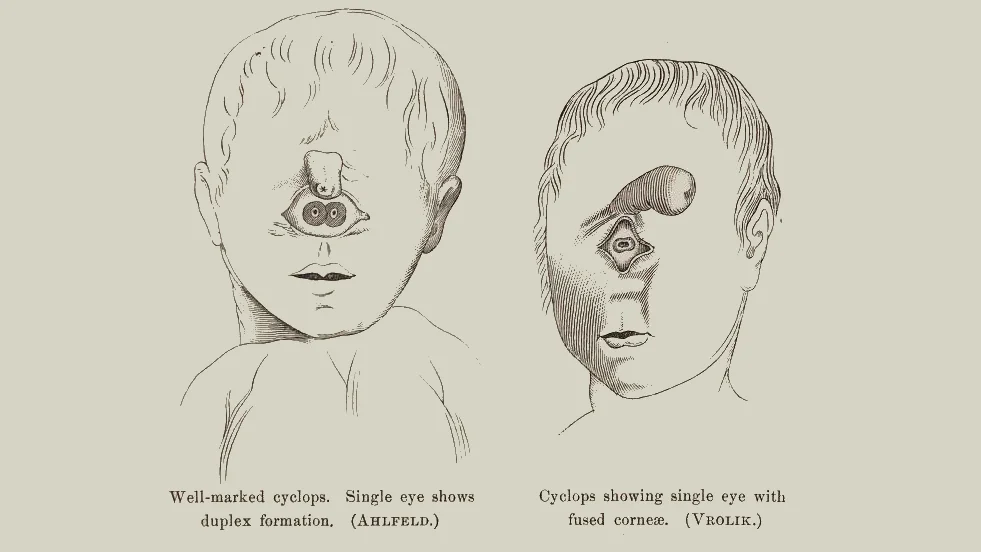
The infant had a very small skull, a single eye socket set in the middle of her face, and other irregularities in the cranial bones. Those features match modern clinical descriptions of cyclopia. The condition starts when the front of the fetal brain fails to split into left and right hemispheres. It can also alter the nasal structures, producing either no nose or a tube-like projection above the eye.
Elsa Tomasto-Cagigao, an archaeologist at the Pontifical Catholic University of Peru and the study's first author, put the timing this way: the cause was present at fertilization, but the malformation shows up around the fourth or fifth week in the womb, when the frontal lobe has to divide. In other words, nothing about the infant's fate was decided after birth.
Cyclopia is rare, occurring in about 1 in 100,000 births. To learn more about the infant's short life, the team sequenced her genome. The data indicated two X chromosomes, consistent with a female.
The genetic cause
The sequencing revealed an extra copy of chromosome 13, which means the infant had trisomy 13, also called Patau syndrome. Trisomy 13 is a known major chromosomal cause of cyclopia. Still, only a small share of trisomy 13 cases involve the condition, so the link is strong but far from automatic.
Trisomy 13 is associated with advanced maternal age. Whether that applied here remains unclear, according to co-author Lars Fehren-Schmitz, an anthropologist at the University of California, Santa Cruz. Ancient DNA can tell you what went wrong in the genome. It can't tell you much about the mother's circumstances.
Outside experts see the find as significant for a different reason. Siân Halcrow, a bioarchaeologist at Durham University who wasn't involved in the study, said the condition has appeared in historic and modern anatomical collections, but this appears to be the first archaeological example she knows of.
A life that lasted longer than expected
Fehren-Schmitz is cautious about how long the infant lived. "We cannot really say how long this individual survived," he told Live Science. Halcrow's reading of the age estimate suggests she may have survived several weeks or months after birth. That's a meaningful window for an infant with such profound congenital differences, and it raises a question archaeology rarely gets to answer: how did a community care for a child like this?
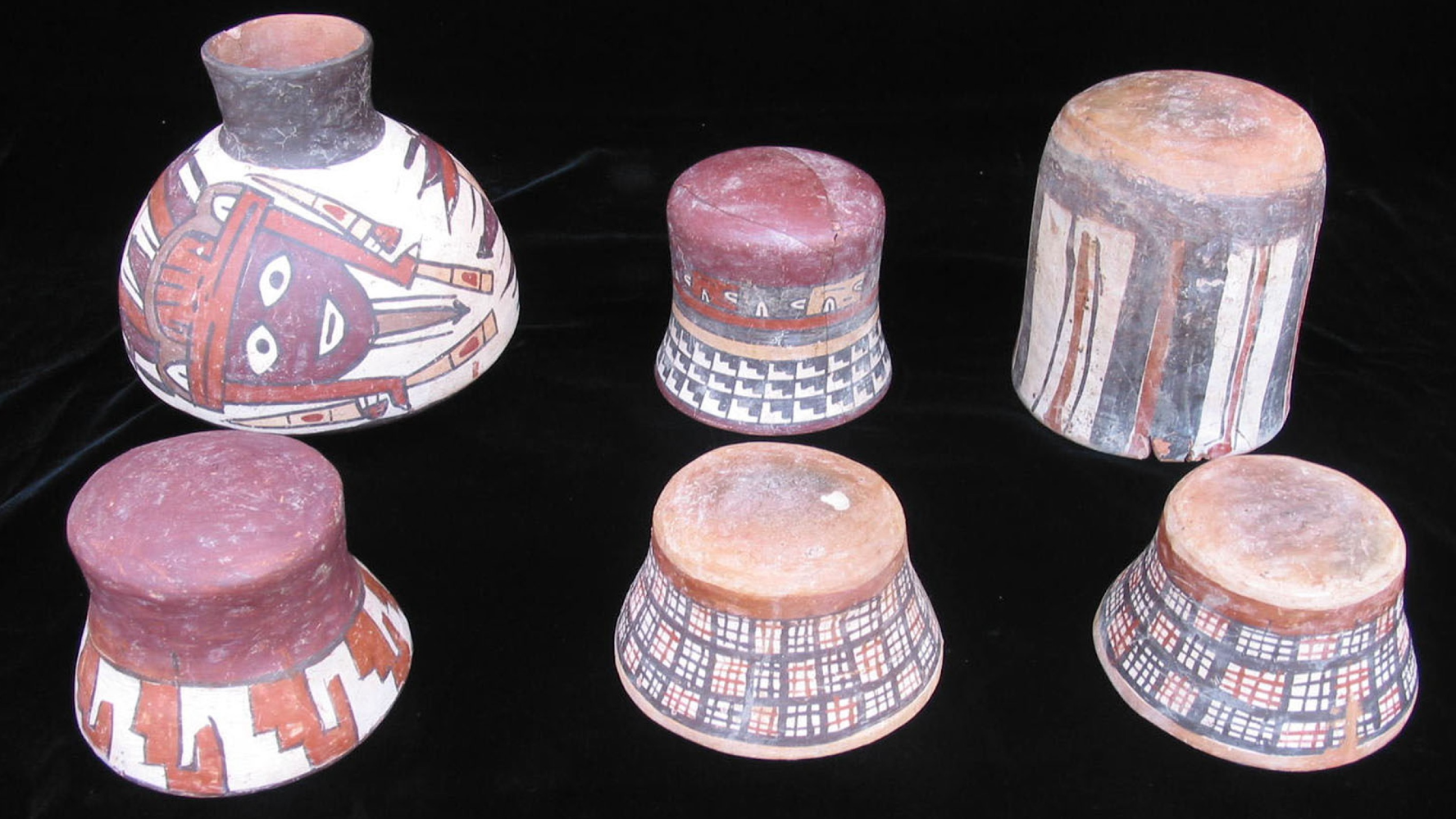
The burial offers some clues. The infant was placed in the bottom of the urn, with the other baby on top. Tomasto-Cagigao said the pair appear to have been interred in a single event. Genetic work showed the two infants did not share a mother, which makes the joint burial more interesting. Placing unrelated infants together in one urn is unusual for this culture, and the team found no evidence that the infant with cyclopia received a different kind of burial. Urn burial itself was a common practice in the Nazca period.
That said, the grave itself is modest. There were no special grave goods. "It was neither 'excluded' because of it nor treated in a 'special' way," Fehren-Schmitz said. For an infant who was almost certainly never going to thrive in the usual sense, that's a notable outcome.
Andean societies did sometimes give people with disabilities specific social roles, some tied to religious practice. Fehren-Schmitz is careful about extending that to the Nazca as a whole. "If that reflects Nasca society as a whole, we can't say based on one case," he said. "But it does reflect the community this infant was part of, even if only briefly."
The next question is whether other cemeteries in the region hold similar cases. Ancient DNA work at Nazca sites is still early, and one burial can't settle a question about an entire society. Still, this skeleton shows that medical history and social history can be read from the same bones, and that a short life can leave a clear mark on how a community chose to bury its own.
Discussion
Sign in to join the discussion.