Astronomers confirmed 2026 QQ8, a rock about 2 meters wide, is temporarily orbiting Earth until January 2027 and poses no real threat.
A new moon, briefly
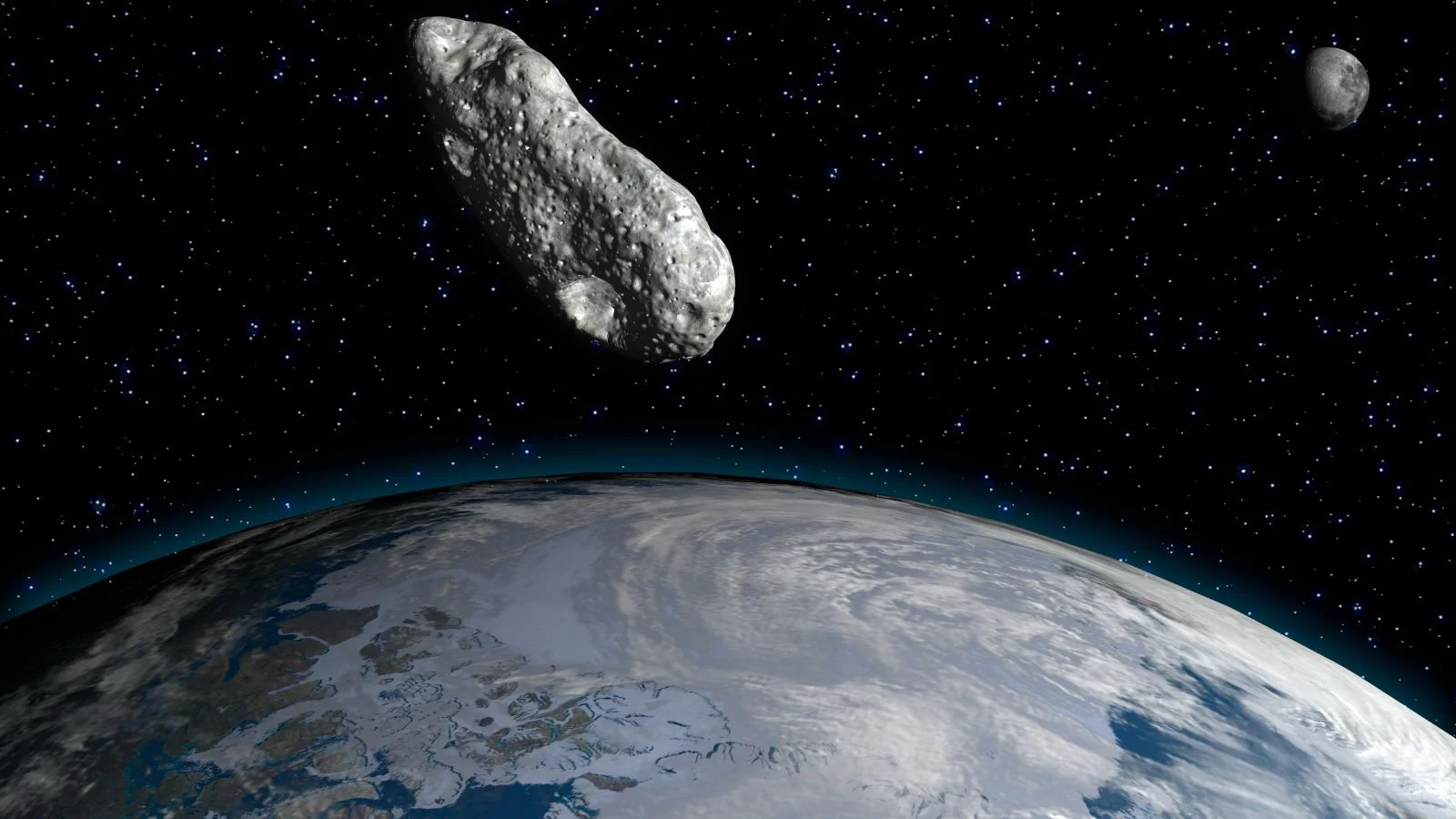
Earth picked up a new companion in April, and it's keeping it through the holidays. Astronomers have confirmed that a "minimoon" called 2026 QQ8 is in temporary orbit around our planet, and it isn't expected to leave until January 2027. The word "moon" oversells it. Minimoons are small, short-lived captures, and most of the drama is in the name.
From sighting to confirmation
Hungarian researcher Krisztián Sárneczky first spotted the object in August. The International Astronomical Union's Minor Planet Center, which logs and verifies new solar system objects, made the discovery official on Oct. 29. That gap matters more than it looks. A single sighting is a lead, not a finding, because an observer needs enough positions over time to work out whether an object is really bound to Earth. The process is slow by design, and it's the reason an August spotting became an October announcement. If you follow these stories, don't read the delay as a failure. Read it as the system doing its job.
Small, distant, and no threat
At roughly 6 feet (2 meters) across, 2026 QQ8 is tiny. Get close enough and it would likely burn up in the atmosphere. Researchers see little chance of that, since the object currently orbits at around one and a half times the moon's average distance. Distance alone isn't a guarantee, because orbits can shift over time. For this object, though, the current picture is benign: far enough away to be no hazard, and small enough that even a close pass would be brief. Small. Distant. Mostly invisible to anyone without a serious telescope. That's the real story here, and it's why most people never hear about objects like this at all.
An Aten asteroid with a near-year-long lap
The rock takes 359 days to circle the sun, almost a full Earth year. It comes back near our planet about every 10 years, which is the detail I find more interesting than the orbit itself. It belongs to the Aten class, asteroids with semimajor axes smaller than Earth's, so they usually orbit closer to the sun than we do and only occasionally cross into our path. The big ones worry astronomers most, because they can disappear in the sun's glare before closing in. This one is far too small to matter.
Not the first, and probably not the last
The record belongs to 1991 VG, roughly 30 feet (10 meters) across when it was detected in November 1991. That's not a huge object by modern standards, but it was a rare catch at the time, and the fact that one object from 1991 still gets cited tells you how few of these were on the books. Astronomers now think Earth captures minimoons fairly often, and we likely have at least one at any given time. Most stay for less than a year, though a few linger for decades. The uncomfortable part is that we've only been counting them for a short while, so our sense of how common they are is built on a thin record.
Better telescopes, more catches
The Vera C. Rubin Observatory in Chile scans the entire Southern Hemisphere sky every few days. It has already flagged what may be a new dwarf planet in the outer solar system, along with a new satellite galaxy of the Milky Way. Over its planned 10-year mission, it's expected to detect millions of previously unknown moving objects. My read is that minimoons like 2026 QQ8 are common, and we've mostly been missing them. Expect the catalog of these short-lived companions to grow fast.
What the bigger catalog will and won't tell us
If you're working in observational astronomy, or just following the field closely, the practical upshot is that discovery will outpace understanding for a while. A bigger catalog means more objects get provisional orbits, and many of them will leave as quickly as they arrived. That's useful, but each individual detection will matter less than the statistics across thousands of them. Here's the thing: the bottleneck isn't only the telescope. Follow-up observations and orbit calculations take time, and the Minor Planet Center has to process everything that comes in.
That said, I'd be cautious about reading any single record, or any single minimoon, as a signal of something bigger. The field has a habit of treating each new catch as a turning point, and most of them turn out to be ordinary. What's changing is the volume and speed of the data, not necessarily what the objects are. And that's the part worth watching.
Discussion
Sign in to join the discussion.