New findings suggest that mammal ancestors may have given live birth 90 million years earlier than previously believed, reshaping our understanding of evolution.
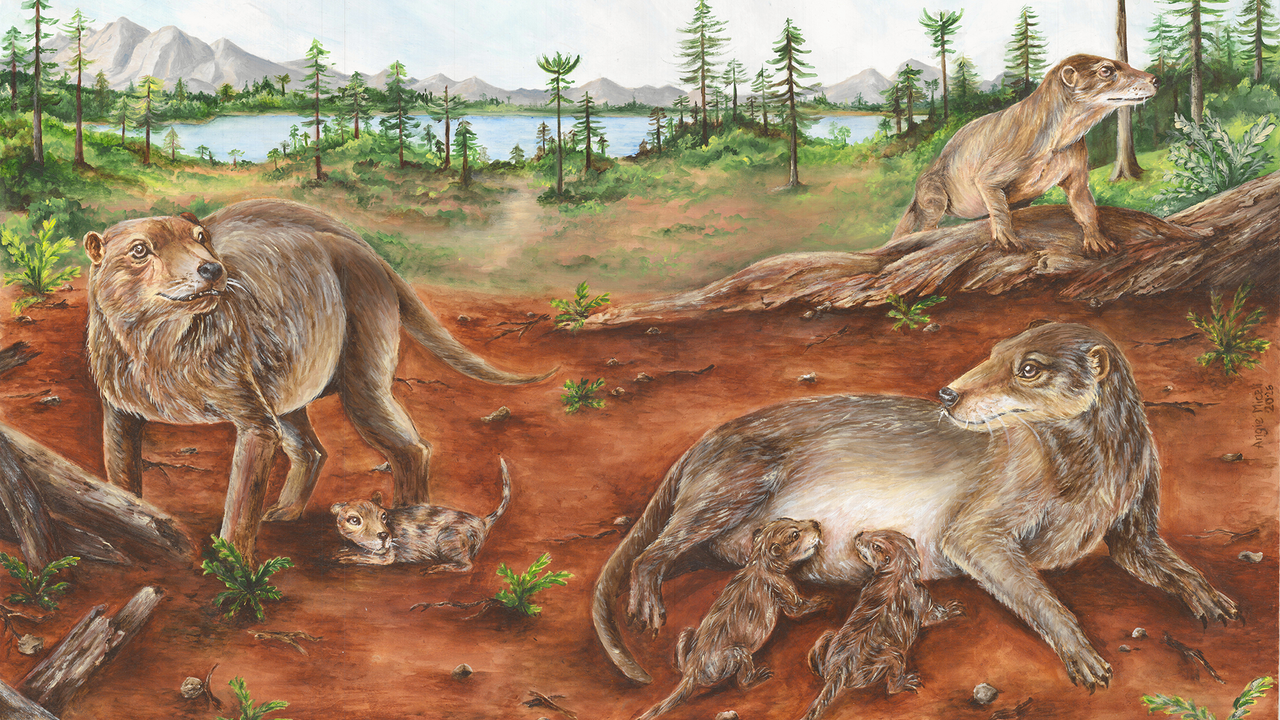
A newly published study reveals that a dog-sized ancestor of mammals, known as Chiniquodon theotonicus, may have engaged in live birth approximately 236 million years ago. This contrasts sharply with past estimates that positioned viviparity — the practice of giving birth to live young — significantly later in evolutionary history. The implications of this discovery suggest a need to reconsider our understanding of mammalian reproductive practices.
First author Leandro Gaetano, a paleontologist from Argentina’s National Scientific and Technical Research Council, remarked on the significance of these findings, published on August 13 in the journal Frontiers in Mammal Science. “This is the first time we have evidence on how these mammalian ancestors reproduced,” he stated, illuminating a pivotal element in the mammalian story.
Cynodonts: The Early Predecessors of Mammals
The study focuses on cynodonts, a group that emerged around 260 million years ago during the Late Permian period. After the catastrophic Great Dying extinction about 252 million years ago, cynodonts thrived and diversified into various forms. These creatures are central to understanding the evolutionary transition from reptiles to mammals. The fossil of C. theotonicus, found in northwestern Argentina, provided the vital data to assess reproductive strategies in this lineage. What this means is that the traits we associate with modern mammals may have begun far earlier than previously thought.
Decoding the Fossil Evidence
Analysis of a fossilized bone from C. theotonicus revealed a unique growth mark indicative of rapid growth, known as a neonatal line. Gaetano elaborated, “When you’re in an egg or in your mom’s belly, you grow slowly. But when you’re born, you start growing very quickly.” This statement underscores a critical aspect of the mammalian life cycle that has evolutionary implications. The team estimated that the newborn C. theotonicus weighed only about 1.7 kg at birth, roughly 14% of its estimated adult weight of 12 kg. Such size ratios suggest a connection in the evolutionary path leading to modern mammals, which often produce larger offspring relative to their size than reptiles do.
Comparative analysis of over 5,000 species across mammals, birds, and nonavian reptiles identified patterns in neonatal size. For instance, reptiles of similar adult weight typically produce hatchlings around 0.1% to 0.6% of their own mass. In contrast, some mammals can produce young weighing up to 20% of their adult size, echoing the findings from C. theotonicus. Notably, the bay duiker antelope, for example, gives birth to similarly sized infants, reinforcing the hypothesis of live births in this ancestor. This data isn't just about size; it also offers a window into the evolutionary pressures that might have shaped these reproductive strategies.
The Evolutionary Advantages of Viviparity
Researchers speculate that live birth may have been advantageous during the competitive Triassic period, a time marked by ecological turmoil following extinction events. According to Gaetano, giving birth to live young potentially offered better protection for developing embryos compared to egg-laying species in precarious environments. “A young animal can move away from a predator, which is a huge advantage,” noted Anne Weil, a vertebrate paleontologist who pointed out the adaptive benefits in the context of survival. The survival of the fittest isn't just about strength; it’s also about reproductive strategies that can adapt to challenges and hazards.
The implications of these findings extend beyond just C. theotonicus. Until recently, researchers believed live birth was a relatively modern trait in mammals, thought to have evolved from egg-laying ancestors. However, evolving evidence suggests that viviparity may date back even further than previously believed, predating the divergence of marsupials and placental mammals. This shifts our understanding of mammalian evolution significantly, indicating that the capacity for live birth may have deep evolutionary roots, possibly providing earlier mammalian species with increased survival advantages in changing environments.
Need for Further Research
While the new evidence is compelling, both Gaetano and Rayfield caution that additional research is necessary to strengthen these conclusions. “We need more evidence to really nail down our understanding of this evolution,” Rayfield noted. There's still much to uncover. The broader picture suggests that many traits associated with mammals today may have deeper evolutionary roots than previously assumed. Gaetano stated, “We usually think of mammalian ancestors as small, reptile-like creatures. But we’re finding evidence that they exhibited more mammalian characteristics than we ever thought.” This point reveals the potential pitfalls of underestimating early mammalian ancestors; they could be more complex and capable than merely primitive reptiles.
Implications for Evolutionary Biology
What this means for you, especially if you're working in this space, is that our longstanding views of mammalian evolution may need a radical rethink. The findings about C. theotonicus underscore an important narrative in evolutionary biology and could prompt further exploration into other ancient species that might exhibit similar reproductive traits. As scientists continue to investigate the genetic, environmental, and ecological influences at play, we might find that the evolution of mammals is characterized by richer and more intricate storylines than a straight line from reptiles to contemporary forms.
In sum, this study not only enriches our understanding of C. theotonicus but it also opens the door to a plethora of questions regarding the adaptive advantages of viviparity and how it has shaped the path of mammalian evolution. The more we uncover about these ancient creatures, the more we recognize the complexity of life's history on Earth.
Discussion
Sign in to join the discussion.