ETH Zürich researchers report that magnetic microbots helped clot dissolving drugs restore blood flow more effectively in pigs. Safety studies remain ahead.
Magnetic motion redirects blood flow
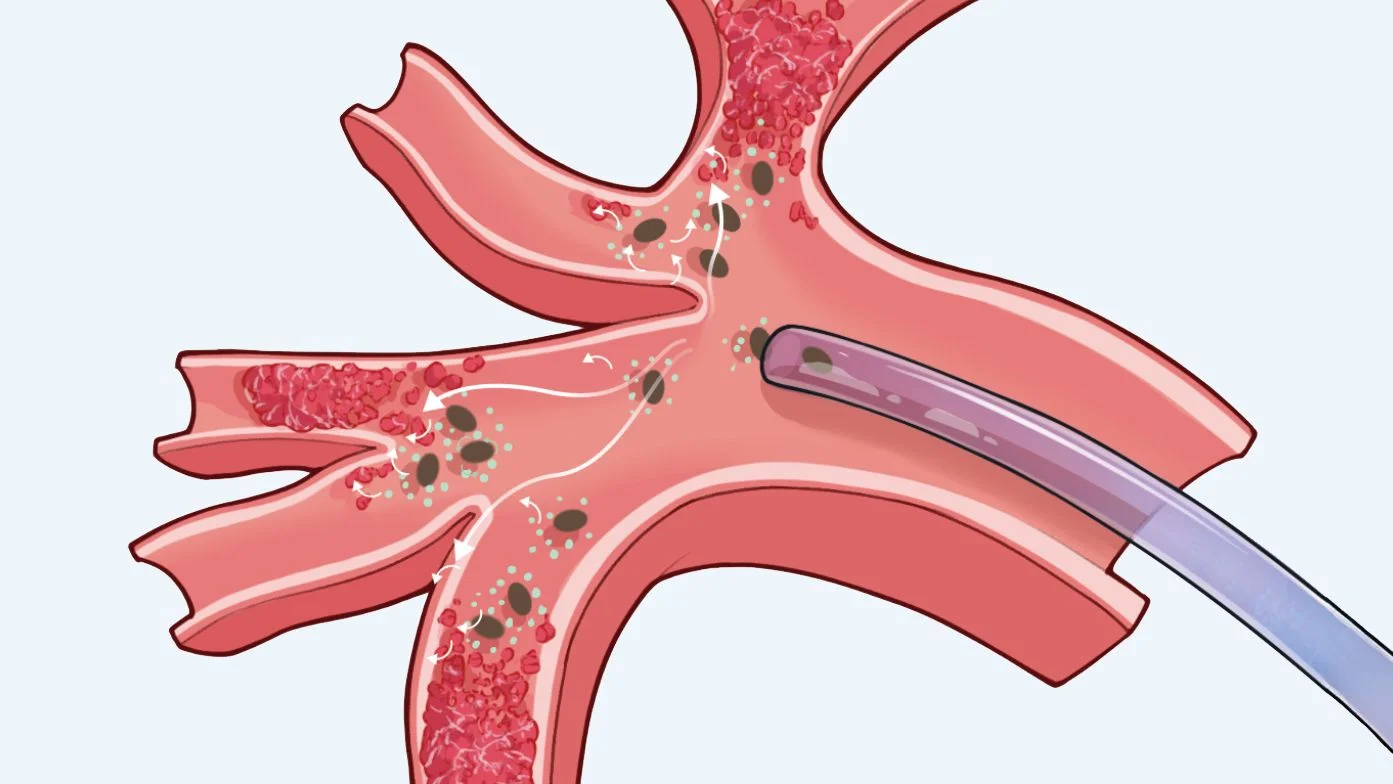
Getting clot dissolving drugs through the final millimeters to a blockage can be difficult: blood often diverts around the obstruction instead of carrying medicine into it. In early tests, ETH Zürich researchers used magnetically steered microbots to push drug carrying flow into clots, dissolving them about 10 times faster than medication alone in a vessel model and restoring blood flow across a larger area in pigs. The idea targets a stubborn gap between placing a drug near a clot and getting enough of it to the clot itself. That distinction matters because a treatment’s effect can depend on where the medicine travels, not just on whether it’s present in the vessel.
How the microbots steer medicine
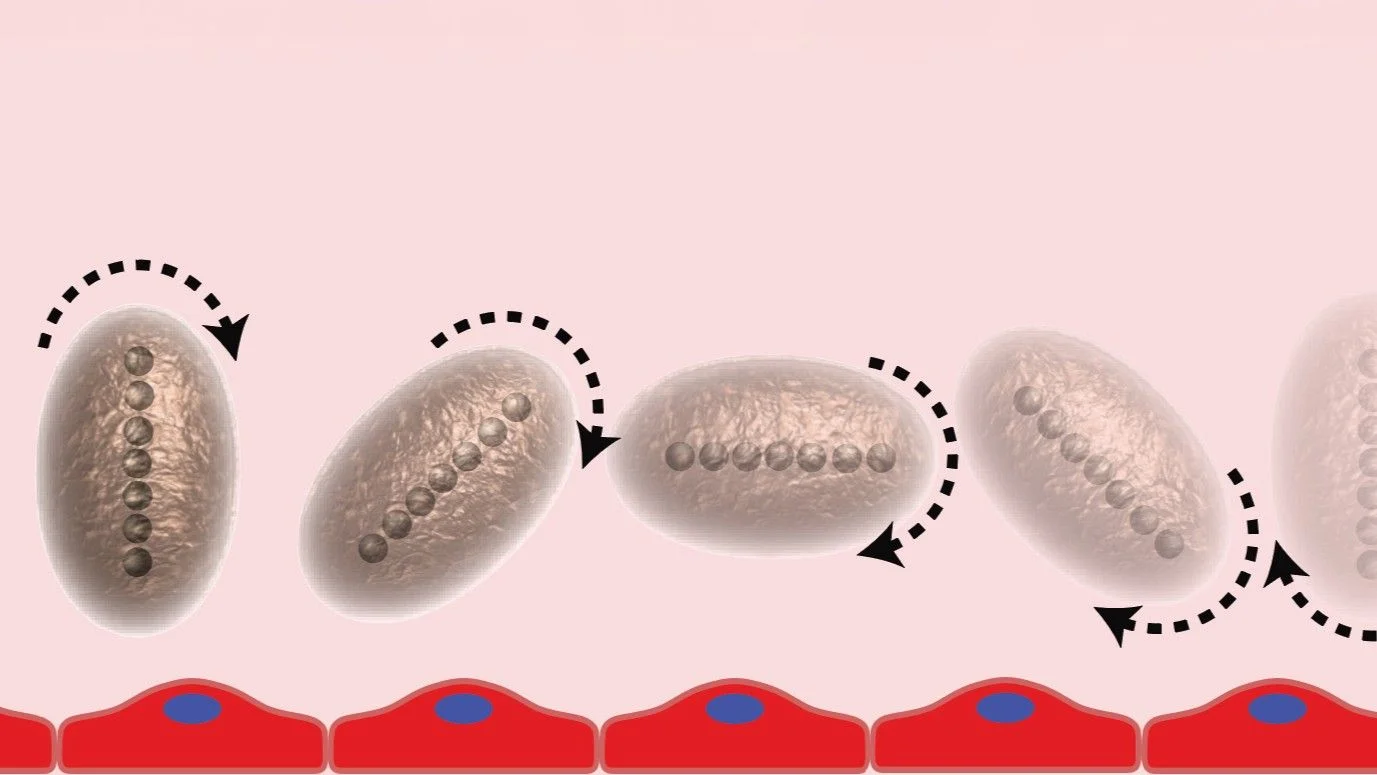
The approach pairs a thrombolytic drug with tiny bullet shaped particles guided by external magnets. Each particle has a backbone made from iron oxide nanoparticles and a protective hydrogel sheath. A rotating magnetic field makes the particles tumble through a vessel, generating small vortices that can draw drug carrying fluid toward a blockage. The particles aren’t described as carrying the medicine inside them; their proposed job is to change how fluid moves around the clot. That makes the flow itself part of the delivery system.
The design borrows from magnetically oriented bacteria, said lead researcher Simone Schürle, a professor of medical microsystems at ETH Zürich. The rigid iron oxide backbone helps the particles spin predictably, while the gel coating keeps them from sticking together. Those choices address two practical demands at once: the particles need to respond to an external field, and they need to remain separate enough to move as intended. In a system this small, material design and motion aren’t separate engineering questions.
That movement targets a familiar delivery problem. When a clot blocks one branch of a vessel, blood follows routes with less resistance. The drug can therefore struggle to reach the clot’s surface, even when clinicians deliver it nearby. The microbots are designed to change the local flow and carry medicine into that difficult final stretch. Here’s the thing: a clever way to redirect fluid only matters if it can work reliably in the complicated conditions of a living body.

Promising results, with safety still to establish
In a silicon vessel model containing clots made from pig blood, the microbots helped a thrombolytic dissolve blockages roughly 10 times faster than the drug alone. That result suggests the particles can improve drug access under controlled conditions, though a vessel model can’t capture every feature of treatment in a living animal. The team then placed clots in kidney vessels in live pigs. With the microbots and a conventional clot dissolving drug, researchers restored blood flow to a larger area than they did using the drug by itself, Schürle said. This is more significant than it looks: the animal result moves the work beyond a bench model, but it still doesn’t establish how well the approach will translate to people.
The animal results don’t yet show how the particles break down or how the pigs recovered after treatment. Earlier mouse studies found that the iron oxide and hydrogel components broke down in the body within a few weeks. That finding offers an early indication about what happens to the materials, but it doesn’t answer the longer term safety questions raised by the pig experiments. The next step, Schürle said, is longer safety testing in larger animals before any human trials can be considered. More evidence is needed.
What the early findings leave open
ETH Zürich announced the work on Nov. 9, and the research has not yet appeared in a peer reviewed study. That limits what outsiders can assess: the announcement describes encouraging results, but readers don’t yet have a published study to examine for details about methods and evidence. The team hopes the particles could eventually be injected with thrombolytic medicine and steered by targeted electromagnets, fitting into existing clot treatment procedures. If you're working in this space, the appeal is clear: a delivery technique that works alongside familiar treatment could be easier to integrate than one that requires an entirely different clinical pathway. Whether it can do so safely and consistently remains unproven.
Production is another part of the project: the researchers have applied for a patent covering a droplet based microfluidics method to make the particles. Schürle described it as a low cost, high throughput process. Those are goals for a manufacturing method, not evidence that large scale production has already been achieved. And this is the part most people overlook: a treatment concept has to be made reproducibly as well as shown to work, particularly when its behavior depends on tiny particles with specific physical properties.
Why the next phase matters
The central question is whether the particles can safely deliver that improved drug access in larger animals over longer periods. Longer testing could help clarify how the particles behave in the body and whether their effects hold beyond the early experiments; the source doesn’t yet provide those answers. The project’s promise rests on a specific claim: magnetic motion can help a clot dissolving drug reach a blockage that blood flow might otherwise bypass. That’s an appealing target, but the current evidence remains early. The next results will need to show that the delivery effect and the safety profile stand up together.
Discussion
Sign in to join the discussion.