A team has created a DNA-powered computer that utilizes molecular interactions to perform calculations, marking a significant step in biocomputing.
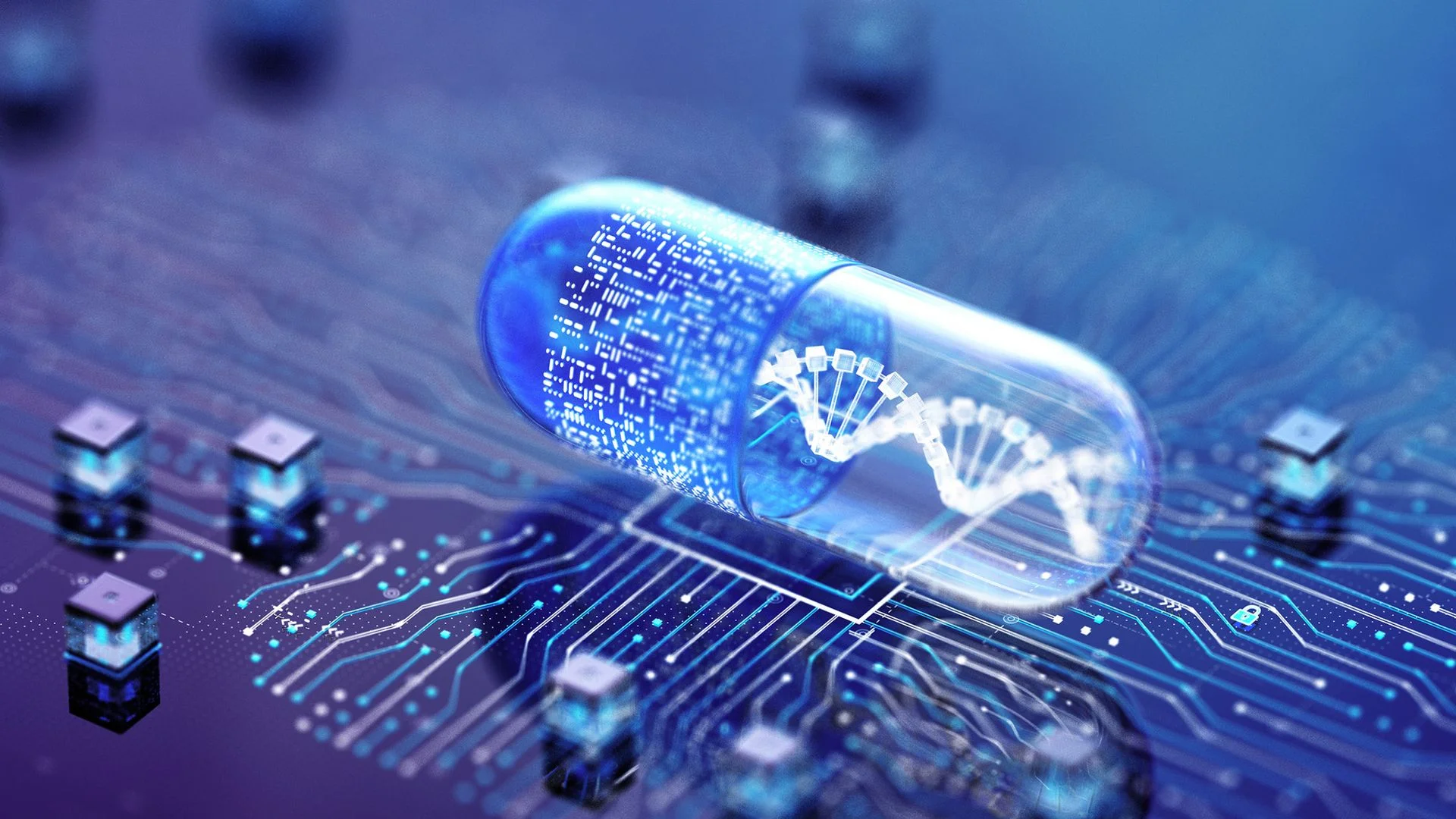
Scientists have unveiled a new DNA computer that operates through the interaction of billions of DNA molecules suspended in a tiny droplet of water. This system stands out by harnessing principles from physics to achieve computational efficiency that outstrips traditional computing methods.
Instead of relying on a constant input of energy to guide calculations step-by-step, the DNA computer is structured so that the most energetically favorable condition directly represents the solution. In simpler terms, it requires less energy than conventional biological computing systems, which combine living cells with traditional hardware for their computations.
Prof. Damien Woods of Maynooth University, a lead researcher in the project, elaborates on the mechanism: “The clever part is that the binding process is competitive: the DNA molecules compete to select a winner, which then binds to the scaffold; all the jostling and competition process information and execute a computation.” The final arrangement of these strands signifies the answer to the calculation.
The Scaffolded DNA Computer
Named the Scaffolded DNA Computer (SDC), the system's workings were detailed in a study published on September 16 in Nature. Through testing on ten different programs, including computations of 100 bits, the SDC demonstrated its capabilities effectively. For instance, a simple addition like 10 + 3 could be computed in around 30 seconds.
While the researchers acknowledge several speculative long-term applications for the SDC, they emphasize that the potential lies in energy-efficient computation, molecular data storage, and even in the realm of biological systems, where the SDC could function within living cells. Prof. Abeer Eshra, another co-author of the study, points out, “Molecular computers like this are not trying to replace electronic ones, but they could be valuable in biological environments, smart materials, and archival DNA data storage.” The DNA structure lends inherent error correction properties that could enhance data reliability.
How the DNA Computer Operates
The SDC comprises short strands of DNA interacting with a constructed longer DNA scaffold. When mixed in a saltwater solution and subjected to a cycle of heating and cooling, these strands assemble into specific structures based on programmed rules that dictate the computation.
Essentially, the DNA sequences function as small molecular puzzle pieces; their arrangement determines which fragments can connect with one another as well as with the longer scaffold. Researchers are able to program different computations simply by selecting alternative DNA strands, illustrating the flexibility of the approach. As the strands dynamically interact and compete, the system moves toward energetically favorable configurations that yield the correct result.
According to Eshra, “A small droplet of liquid contains billions, and sometimes trillions, of DNA strands. These strands interact with one another to produce a result.” This enormous complexity allows for significant computational potential within a very small physical space.
Performance and Reusability
Throughout their experiments, researchers managed to carry out over 700 computations using the SDC, ranging from basic addition and multiplication to division and parity detection, a commonly applied error-checking technique in computing. Smaller calculations were considerably quicker, completing in less than a minute—impressive given the chemical reactions involved that could take equally long or longer. However, more intricate calculations could extend processing time; for instance, a task requiring up to 34 million operations took as long as 14 hours.
It's notable that the SDC displays reusability, differing from many previous molecular computers which were single-use. Eshra noted, “Our DNA computer works by mixing the molecules together and allowing them to naturally relax towards equilibrium.” This ability to reuse the same molecular components for multiple computations signifies a substantial development in molecular computing capabilities.
In fact, researchers achieved successful repetitions of three of their programs up to 24 times. They even managed to recreate one experiment 1.5 years later by simply adding water back into the dried system, showing the endurance of the SDC over time.
While the findings indicate promising uses for thermodynamics in computational processes, the road ahead is paved with opportunities for refinement and exploration of novel applications. Eshra expressed excitement for further developments, stating, “We are already working on questions like designing scaffolds more suitable for computation and improving system readout.”
As this realm of research continues to evolve, advancements like the SDC may redefine our understanding of computing and its intersections with biology and molecular science.
Discussion
Sign in to join the discussion.