Recent excavations in Paris reveal the remains of a Celtic fort, providing vital evidence of the historical settlement referred to by Julius Caesar.
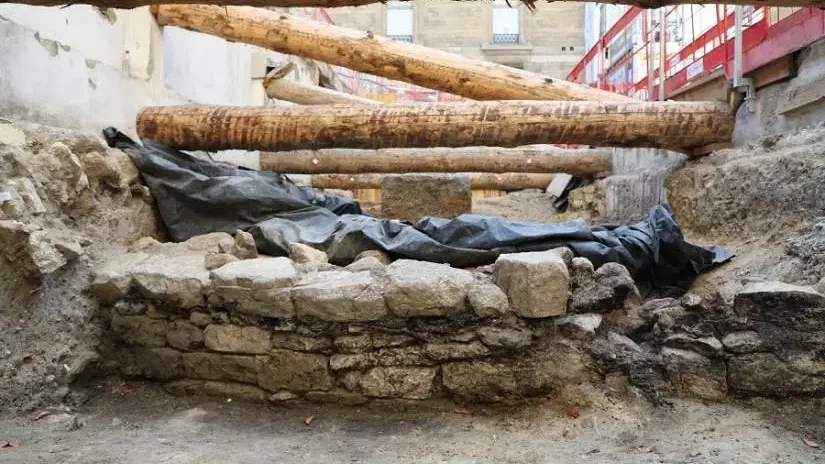
Excavations beneath the courtyard of the Hôtel-Dieu hospital in Paris have unearthed the first confirmed remnants of a Celtic fort that Julius Caesar attempted to capture in 52 B.C. This discovery not only sheds light on the ancient settlement of Lutetia, but it also supports historical accounts that the Gauls scorched their own town to prevent its fall to Roman forces.
"The architecture of the walls, featuring large stones and an interlocking beam system, indicated its construction by the Gauls," said Dorothée Chaoui-Derieux, chief curator of heritage at the Île-de-France Regional Archaeology Service, about the find. The archaeological team hopes these walls further substantiate narratives of Lutetia depicted in Caesar's Gallic Wars.
Historical Context of Lutetia
During the first century B.C., Lutetia thrived as the capital of the Parisii tribe, situated strategically along the River Seine. The city was more than just a settlement; it was a hub of trade and culture within the region, drawing influences from both Celtic and Roman civilizations. In the midst of the Gallic Wars, which transpired from 58 to 50 B.C., Julius Caesar engaged the Gauls at Lutetia. Although the Romans achieved a notable victory, the defenders set fire to their city, preserving their autonomy by denying Caesar access.
The prior history of Lutetia is somewhat vague due to the scarcity of archaeological evidence and historical records. Scholars often relied on Caesar's own writings, but these accounts, written from a Roman perspective, could be biased. By uncovering this fortification, archaeologists have begun to fill in the gaps, revealing more about how the Gauls lived and fought. What these ruins highlight is not just the military conflict but the cultural resilience of the Gauls. It shows they were willing to destroy their homes rather than let them fall into enemy hands.
Recent Excavation Findings
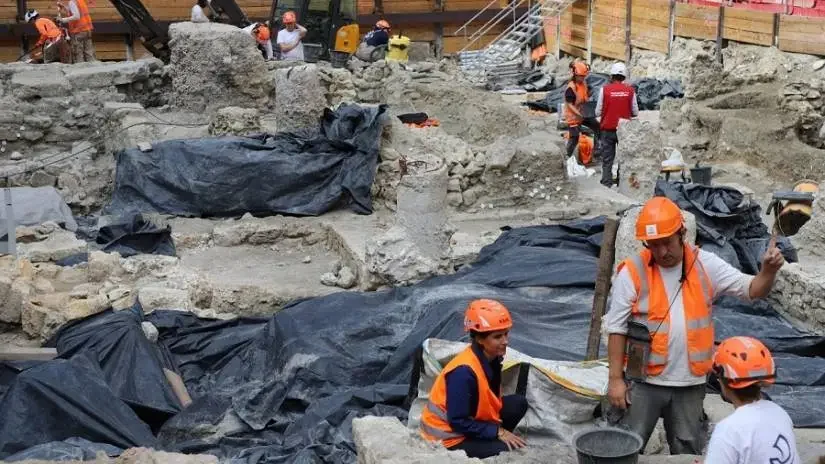
In February 2026, a team of archaeologists commenced work at the site, located on the Île-de-la-Cité, and quickly identified a 65-foot stone and timber wall resembling Celtic fortifications. The structural integrity of these walls suggests not just functionality, but also an impressive level of craftsmanship that hints at the Gauls' architectural capabilities. The team's findings did not end there; the presence of charred structures and burnt seeds indicated that a significant fire had devastated the site. Initial assessments using carbon-14 dating of the wooden remains suggested a time frame for the fort's use dating back as far as 200 to 10 B.C., with additional findings including a Gallic spearhead.
This evidence presented confirms that Lutetia indeed occupied the Île-de-la-Cité, and supports the historical narrative of intentional destruction to thwart Roman conquest, as detailed in Caesar’s writings. Charred remnants provide a vivid image of the events that unfolded, illustrating a community that chose destruction as a means of maintaining freedom. The fire that consumed the site was not just a result of conflict—it was a statement of resistance.
"This discovery fills an archaeological gap. For centuries, the location of Lutetia has been debated," remarked Stéphane Deschamps, a regional curator of archaeology, highlighting the significance of the findings. "Today, with this wall and its context, we may hold the key to the mystery." This assertion underscores the importance of this excavation—not only does it answer questions about Lutetia’s location, but it opens the door to broader understandings of Celtic identity and resistance strategies.
Due to the fragile nature of the remnants, archaeologists plan to create a 3D photogrammetry replica to preserve the historical context and ensure public accessibility. This approach to preservation reflects the growing trend in archaeology to employ digital technologies as tools for engagement and education. Engaging the public with these findings can only enhance their understanding and appreciation of ancient cultures.
Test your knowledge about the Celts with our Celtic quiz!
Future Implications and Significance
The implications of this discovery extend far beyond historical accuracy. It raises questions about how we view the interactions between native cultures and invading forces. If you're working in this space, you might consider how narratives are constructed in both academic and popular contexts. The Gauls’ decision to burn their own city might reinforce the idea of resistance against imperialism—a theme relevant in many discussions today.
Moreover, the methods used in this excavation indicate a shift in archaeological practice. The intention to utilize digital representations signifies a recognition of the importance of accessibility. Archaeology can no longer be solely the domain of specialists. Making these finds understandable and relatable to the general public helps cultivate a shared interest in history. Rest assured, the ongoing developments at this site will likely influence future archaeological endeavors across Europe.
As new techniques in excavation and analysis become more prevalent, they promise to unravel even more stories from the past. The narrative surrounding Lutetia may evolve drastically as further investigations continue, potentially reshaping our understanding of not just this specific location but the Celtic world as a whole. The stakes are high; the story of Lutetia is not just about ancient stones and walls but about the heritage and identity of peoples long gone.
Discussion
Sign in to join the discussion.