Recent research reveals that delamination beneath Italy's Apennine Mountains drives significant seismic activity in the region.

The tectonic dynamics beneath Italy are undergoing a fascinating transformation, with new research revealing that the crust is experiencing a process known as "delamination." This phenomenon is contributing significantly to the seismic events in the Apennine Mountains, the prominent mountain range stretching along the Italian peninsula.
The Significance of Delamination
Stefano Tavani, a geoscientist from the University of Florence and lead author of the study, emphasizes that this is a pivotal moment in the geological history of the region. "We're witnessing the very late stages of subduction, influenced by this unzipping of the crust," Tavani noted. The term 'delamination' refers to a tectonic process where the lower section of the Earth's crust separates from the upper crust. This shift represents a departure from traditional views of subduction processes, suggesting an evolution in the tectonic forces at play. As researchers like Tavani examine these processes, they're challenging long-held beliefs about how seismic activity occurs.
When the world thinks about natural disasters, earthquakes often draw the most attention. However, understanding the mechanics behind these geological shifts—like delamination—provides insights not just into Italy's seismic activity but also into global tectonic behavior.
The Geological Context of the Apennines
The Mediterranean area between Africa and Eurasia is characterized by a complex tapestry of tectonic microplates and mountain formations, making its geology notably intricate. The overarching geological narrative reveals that the African plate has been pushing northward for about 50 million years, pressing against the surrounding continental crust and driving the ancient Tethys Ocean into the mantle beneath the Apennines. This action is more than just interesting geology; it’s altering how seismic activity is generated. If you're working in this space, you'd realize that this interaction defines regional topography, geological stability, and, by extension, the safety of inhabitants in the zone. (And this is the part most people overlook.)
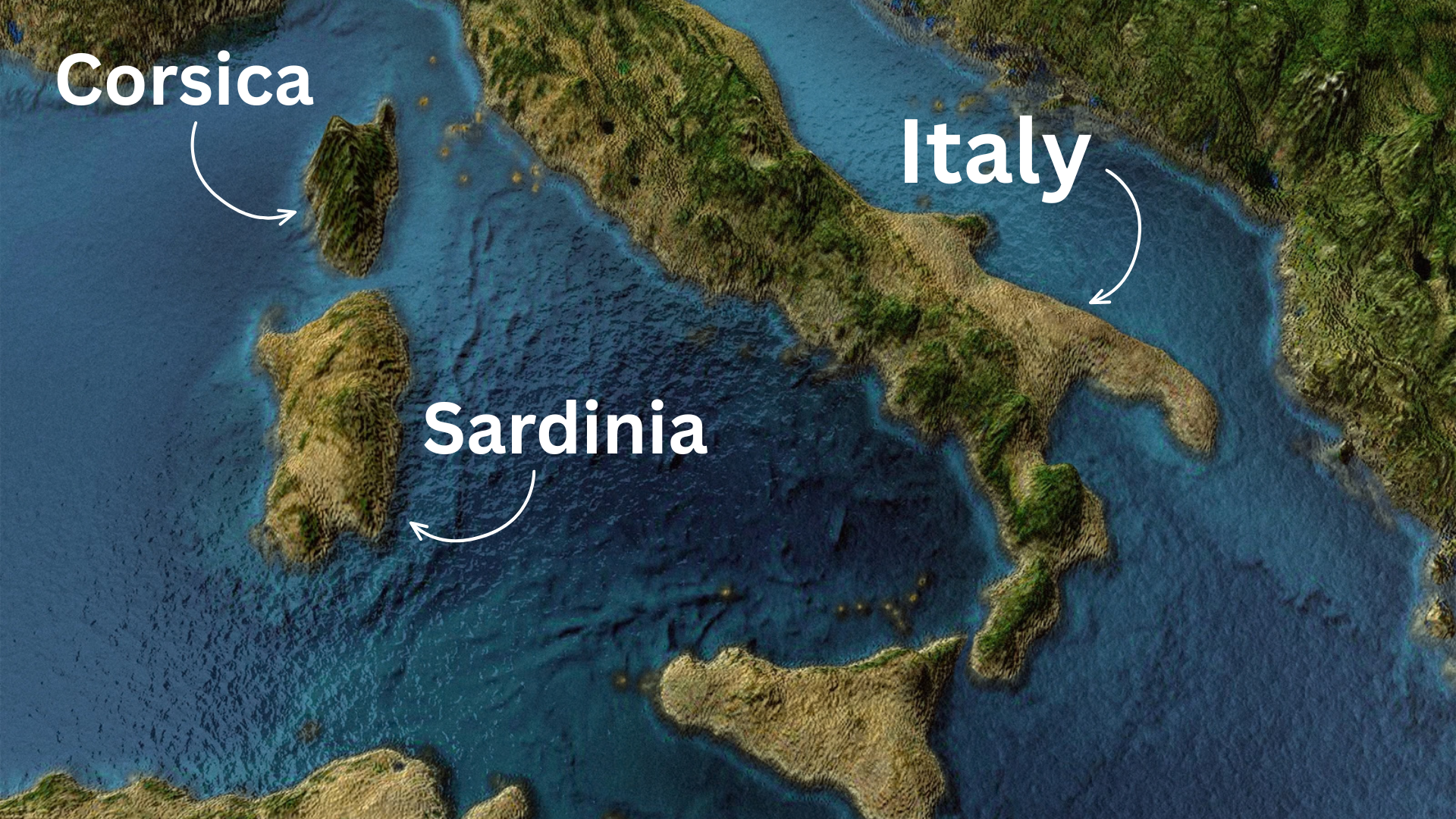
The interplay of geological forces in the Apennines has been complex. As the African plate delaminates beneath the Eurasian plate, it causes both stretching and thinning of the crust. Two significant basins emerged from this activity: the Mediterranean Sea basin west of Corsica and Sardinia, and the younger Tyrrhenian Sea to its east, which has been forming over the last 10 million years. Until now, the mechanics driving the extension of these basins and the compressional forces that have shaped the Apennines were poorly understood. The ongoing transformations in this region could redefine existing geological theories.
Research Methods and Findings
To investigate the extent of these processes, Tavani and his research team utilized an extensive dataset, combining earthquake records with GPS and satellite measurements. Using advanced technology, they mapped the movements within the crust in unprecedented detail. They found that beneath the Apennines, the lower crust is indeed peeling away and descending into the mantle—marking a significant shift from previously understood plate interactions. This study, recently published in the journal Communications Earth & Environment, underscores the idea that delamination is the primary cause of seismic activity in this typical yet unique geological context. The integration of various data sources adds another layer of credibility to their findings, suggesting that this isn't a one-off observation but part of a larger pattern.
Future Implications of Delamination
Looking to the future, Tavani anticipates that in several million years, the remaining lower crust will complete its transition downward, leading to the two plates melding together. This potential melding raises pressing questions about the geological stability of the region and its long-term seismic risk profile. Such tectonic interactions are observable globally, for instance, in the Hellenic trench south of Greece. It means that what’s happening in Italy might also resonate with broader tectonic movements being monitored elsewhere. The findings emphasize that this process is a prime example of late-stage tectonic activity, with implications that might extend to other tectonic systems worldwide. Geoscientists must consider these findings as they develop predictive models for seismic risk and tectonic evolution.
Discussion
Sign in to join the discussion.