The unique composition of comet 3I/ATLAS reveals essential chemicals that may inform the search for life elsewhere in the galaxy.
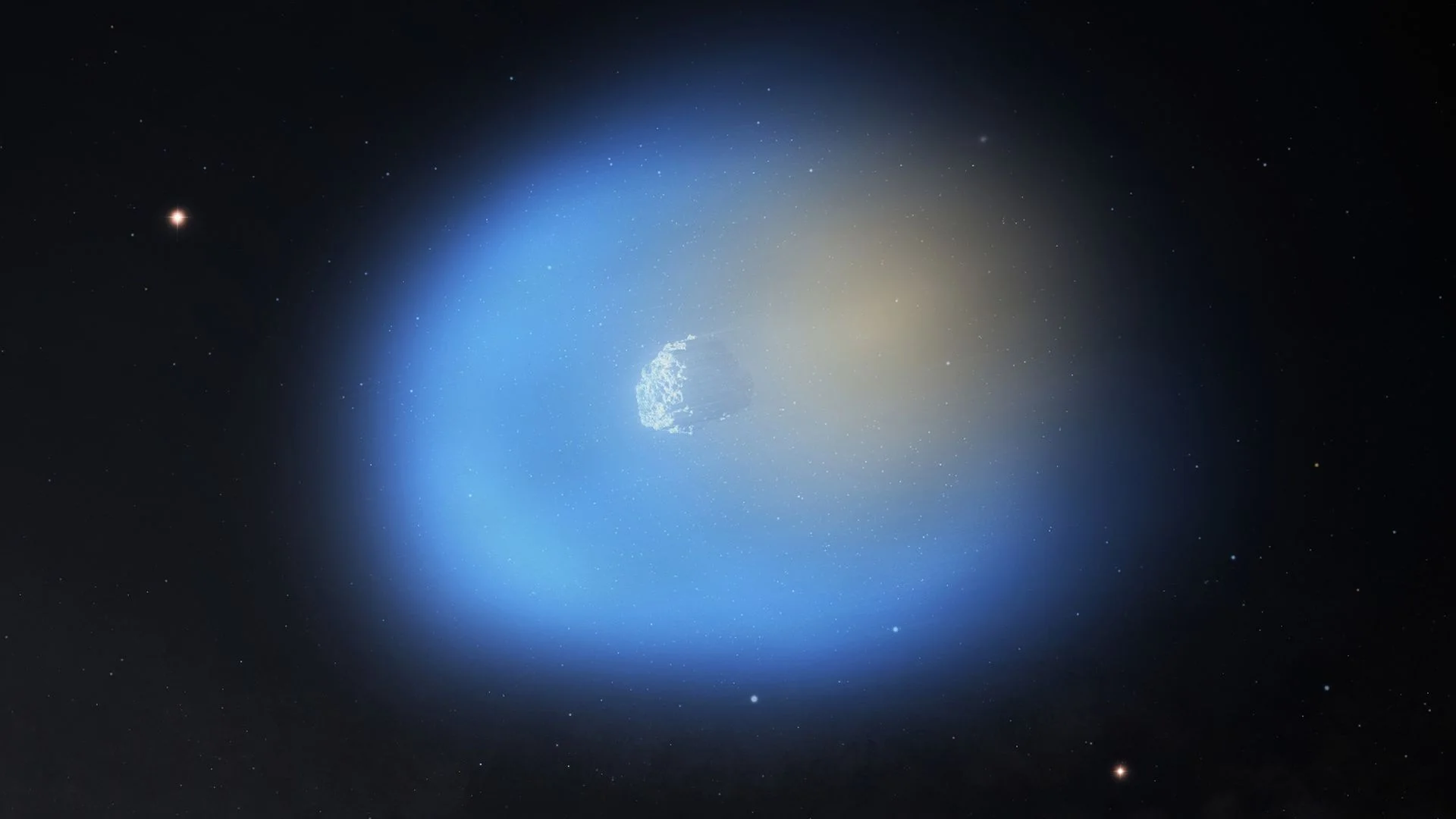
In July 2025, comet 3I/ATLAS, a rare visitor from beyond our solar system, captivated scientists as it passed through the inner solar system for about four months. This third known interstellar object garnered attention not only for its bright appearance but also for speculative claims about possible extraterrestrial technology. However, more grounded scientific inquiry suggests that 3I/ATLAS holds potential insights into the manner in which life’s fundamental ingredients are distributed throughout the universe.
According to Martin Cordiner, an astrochemist at NASA's Goddard Space Flight Center, 3I/ATLAS is likely an ancient fragment of a planetesimal from a distant star system. Its chemical makeup could provide vital clues regarding the abundance of life's building blocks in other planetary systems. Some astronomers speculate that this comet may help refine our understanding of how life could emerge in various corners of the galaxy.
The Role of Comets in Life's Origins
Comets like 3I/ATLAS are thought to play a crucial role in "seeding" planets with essential carbon-based compounds. Darryl Seligman, an assistant professor of astronomy at Michigan State University, highlighted how these compounds, from simple methanol to complex amino acids, serve as the foundational elements for vital biomolecules such as proteins and nucleic acids, which are integral to life.
The notion that comets can transport these organic materials across cosmic distances finds support in studies of nearby celestial bodies. For instance, samples collected from the asteroid Bennu during NASA's OSIRIS-REx mission not only contain all five nucleotide bases—critical for nucleic acid formation—but also 14 of the 20 amino acids naturally occurring on Earth. Such findings bolster the idea that the materials necessary for life might also be widespread beyond our solar system.
These space rocks often act as time capsules, emerging from the same primordial gas and dust disks that birthed the planets. Therefore, studying their composition can inform us about the potential for similar organic compounds existing in exoplanetary systems. Seligman pointed out that simulations show that comets could transfer organic molecules to nascent exoplanets, further supporting the idea that these chemicals are not uncommon throughout the universe.
Analyzing the Chemicals of 3I/ATLAS
A variety of instruments on Earth and in space are diligently studying 3I/ATLAS to decipher its chemical story. As the comet neared the Sun, it shed gas and dust, creating a distinctive halo called a coma, which has facilitated observations. The data collected thus far reveal a fascinating array of essential chemicals.
Among the compounds detected is hydrogen cyanide (HCN), identified by the Atacama Large Millimeter/submillimeter Array (ALMA). Historically known as a toxic substance, HCN is nonetheless instrumental in synthetic processes that lead to amino acids. Further findings indicate that 3I/ATLAS also released substantial amounts of formaldehyde, methanol, and methane—organic compounds that play significant roles in prebiotic chemistry.
The presence of methane is particularly intriguing. If similar quantities existed on the planets within 3I/ATLAS's home system, they could have provided a warming effect, thereby enhancing the conditions for liquid water and potentially fostering life. Observations from the James Webb Space Telescope have confirmed these methane emissions, adding another layer to our understanding of the comet's chemistry.
Cosmic Implications of 3I/ATLAS's Composition
The chemical findings associated with 3I/ATLAS underscore a significant point: the elemental building blocks essential for life are abundant across the galaxy. Despite the extensive knowledge obtained from this comet, it's crucial to note that these chemicals merely provide insights into one specific planetary system. Still, when viewed alongside data from various astronomical observations, it becomes apparent that these life-compatible chemicals seem plentiful in the cosmos. Dominant molecular clouds harbor nitriles and sugar acids—precursors that could form amino acids, suggesting that the ingredients for life are widely distributed in space.
While the findings from 3I/ATLAS are groundbreaking, they don’t confirm the existence of life in its home system or elsewhere. The organic molecules detected thus far are relatively simple. Cordiner remarked that while lab experiments can transform these simpler compounds into more complex biological molecules, such transformations have not yet been documented within 3I/ATLAS, despite its prolonged exposure to cosmic radiation.
Most compounds observed escaping the comet are released from its outer layers, which means they might not reflect the true interior chemistry that may have existed in its original environment. Thus, while current data on 3I/ATLAS paints an optimistic picture of life's potential habitats beyond our solar system, they require careful interpretation.
Looking Ahead: Future Interstellar Studies
As astronomers continue to analyze 3I/ATLAS, there's an exciting prospect ahead. The anticipated arrival of future interstellar objects promises new opportunities for exploration, especially with tools like the Vera C. Rubin Observatory set to unveil more cosmic visitors. The ongoing investigation into 3I/ATLAS and the identification of future objects will contribute significantly to mapping where the precursors to life may be found throughout the galaxy.
With ongoing studies, we may glean greater insights into how life's building blocks traverse the cosmos and what that means for our understanding of life beyond Earth. As researchers like Cordiner indicate, the exploration of these cosmic entities will be instrumental in piecing together the story of life across the universe.
Discussion
Sign in to join the discussion.