Japan's new quantum computer, Shunkai, aims to scale to 10,000 qubits by 2031, marking a significant advance in neutral atom-based quantum computing.
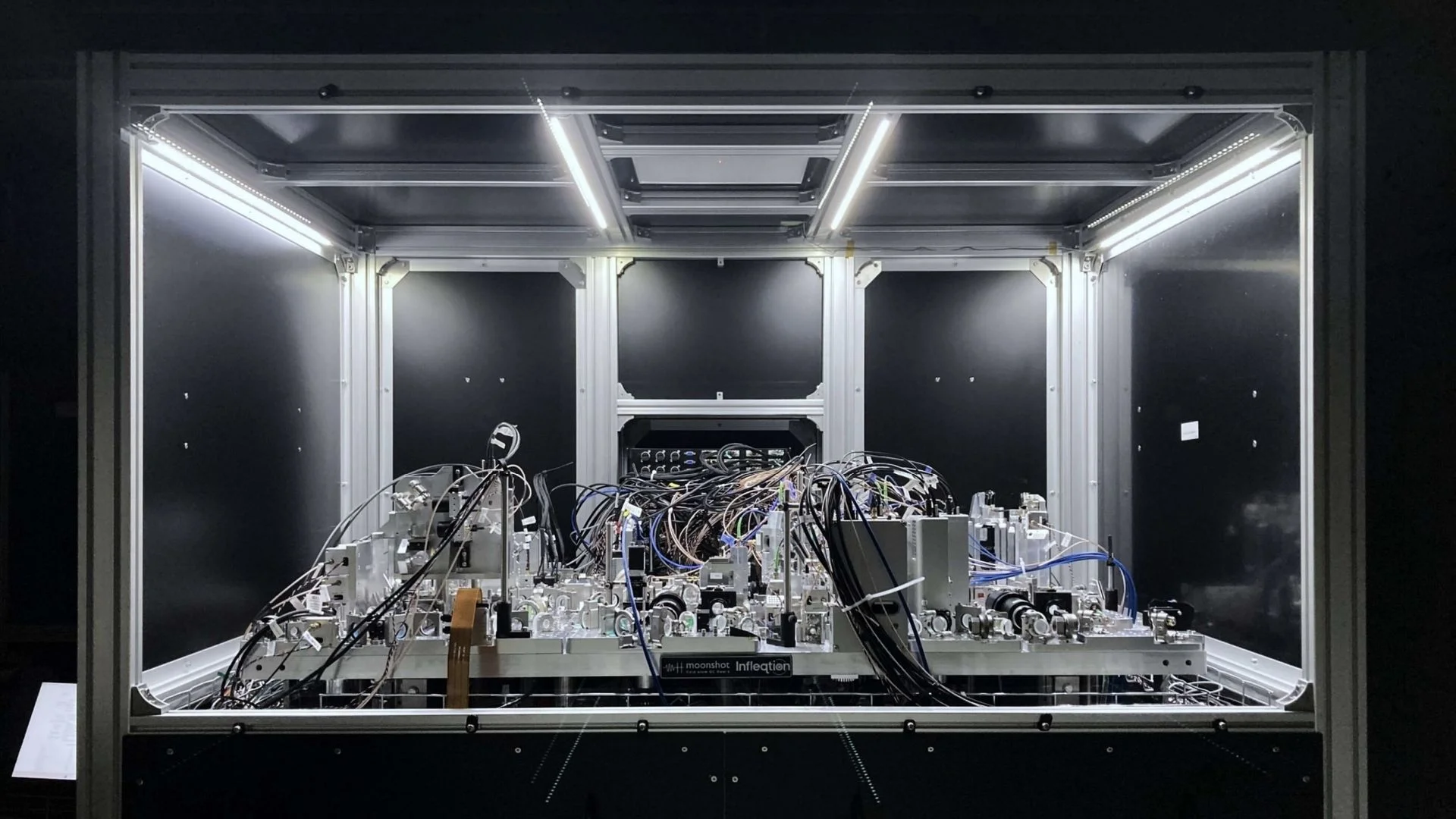
Japan has activated its first full-stack room-temperature quantum computer, named "Shunkai," with aspirations to scale it up to a substantial 10,000 qubits by March 2031. This system distinguishes itself as the first of its kind in the country, incorporating essential software, control, and hardware layers akin to conventional computers. This design aims to enable practical usage, as researchers plan to open Shunkai to external users for experimentation and application development in the coming years.
Ongoing Ambitions in Quantum Computing
Kenji Ohmori, the project's lead and a professor at the Institute for Molecular Science, expressed optimism about Shunkai’s potential impact, suggesting that its deployment could influence various sectors, including industry and academia globally. With the ability to run complex simulations and solve problems considered intractable for classical computers, quantum systems like Shunkai might usher in a new era in fields ranging from cryptography to drug discovery, and even machine learning. The machine will be integrated into an existing supercomputing facility, paving the way for a hybrid computing model that combines quantum and GPU capabilities, which could maximize resource efficiency and broaden its practical applications.
Challenges in Quantum Computing
Quantum computing, while offering immense potential, grapples with several intrinsic challenges. Unlike traditional computers that operate on binary bits, quantum computers utilize qubits, which can exist in multiple states simultaneously, thanks to the principles of quantum physics. This capacity introduces a richness of computational capabilities; however, it also creates vulnerabilities. Qubits are highly susceptible to disruptions from their environment, contributing to a higher error rate—approximately 1 in 1,000—compared to classical computing bits that can function with remarkable reliability at rates as low as 1 in a billion or even 1 in a trillion. This variance in reliability presents a formidable barrier that researchers need to overcome.
The field of quantum error correction is crucial for addressing these challenges. It focuses on embedding redundancies within qubit information encoding to prevent minor errors from undermining entire calculations. Improvements in quantum error correction are essential not just for enhancing existing qubit quality but also for scaling systems to the ambitious numbers needed for practical quantum computing. Without these advances, the expansive promise of quantum technology may remain largely theoretical.
Mitigating Issues with Neutral Atoms
Shunkai proposes a different approach to mitigate some of these issues. By utilizing neutral atoms as qubits, the quantum system can bypass the need for complex cooling systems typically required for superconducting circuits. This is a significant advantage, as the reliance on elaborate cryogenic technologies often limits the practicality of existing quantum systems. Neutral atoms are confined and managed using "optical tweezers," which employ tightly focused laser beams. This method enables precise manipulation of the atoms' quantum states, making it feasible to perform calculations without the extensive cooling typically demanded by other quantum technologies.
Room-Temperature Operation and Scalability
One significant advantage of Shunkai's design is its ability to operate at room temperature, a feature that could enhance its practical applications. Operating in normal environmental conditions opens up possibilities for more accessible, widespread use beyond specialized labs. Researchers can finely tune qubit arrangements during calculations, leading to improved interaction and the potential for creating entangled states, which are pivotal for quantum computing operations. This flexibility may help solve two critical hurdles in quantum computing: expanding the size of quantum systems and correcting inevitable errors that arise during calculations.
Initially, Shunkai will function with approximately 50 qubits, with plans to expand to around 500 in the near term. The ultimate goal is to develop a highly capable, neutral-atom quantum computer featuring 10,000 physical qubits, complete with quantum error detection and correction capabilities by the specified target date. Achieving this milestone would position Shunkai ahead of a recent 6,100-qubit neutral atom array presented by researchers at Caltech. The competitive stakes are rising, and with increasing global attention on neutral atom-based quantum computing, Shunkai's progress could significantly influence the direction of this technology.
Implications and Future Outlook
Shunkai’s activation could ripple across various industries, pushing boundaries in fields such as material science, finance, and artificial intelligence. If you're working in this space, the successful operation of Japan's first full-stack quantum computer isn't just a milestone; it's a potential turning point. The implications are profound, especially as industries start to visualize real-world applications of quantum computations that could surpass classical systems in efficiency and capability.
Research and investment in quantum technology are increasing globally. As competition heats up, nations and corporations that effectively harness quantum computing will likely gain significant advantages in tech development and innovation. Ohmori’s comments about global interest underline a critical dynamic: Shunkai's success could not only showcase Japan's capabilities but might also influence global strategies regarding quantum investments and developments. Researchers and policymakers will closely monitor its progress, and the focus on scalable, room-temperature quantum solutions like Shunkai could redefine the technological frontier.
Take your knowledge further! Try our computing quiz!
Discussion
Sign in to join the discussion.