A new fossil reveals the feathered dinosaur Norellraptor barsboldi, suggesting that flight evolved independently in different dinosaur lineages.
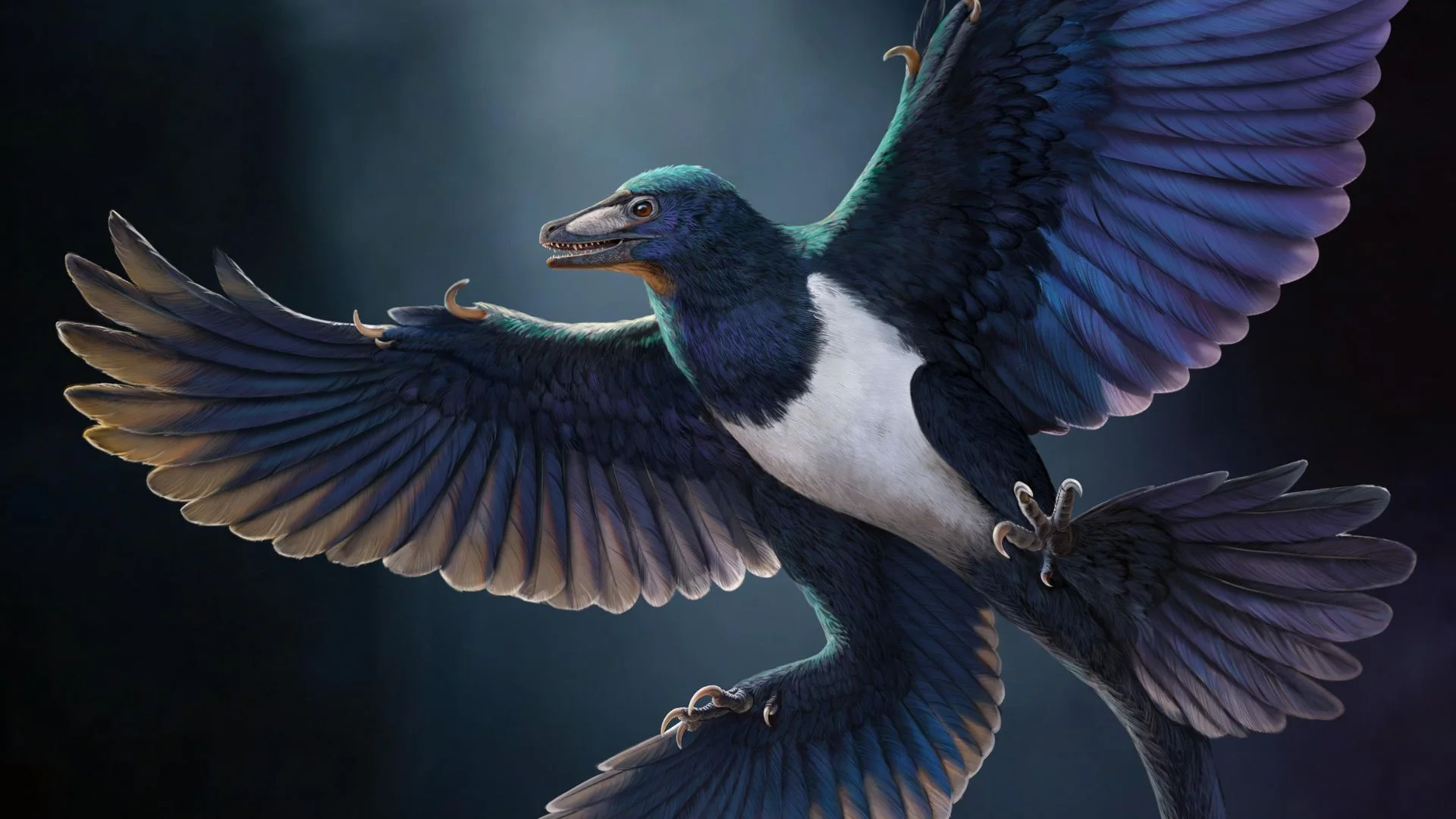
A recently discovered feathered dinosaur, Norellraptor barsboldi, has provided fresh insights into the evolution of flight among dinosaurs, with implications suggesting that the ability to fly may have arisen multiple times across different lineages. This notion challenges traditional views of the evolution of flight as a singular development within a linear lineage.
This exceptional specimen, measuring just 21 inches (57 centimeters) and believed to be three years old at the time of its death, was found in the Early Cretaceous Jiufotang Formation in northeastern China, dating back approximately 145 to 100 million years ago. This geological context places N. barsboldi in a time when various forms of life were rapidly diversifying, setting the stage for the eventual rise of birds from their theropod ancestors.
N. barsboldi exhibits the curved predatory teeth and claws characteristic of a small, versatile predator, likely preying on early mammals, lizards, amphibians, and juvenile dinosaurs. According to vertebrate paleontologist Scott Hartman from the University of Wisconsin-Madison, this creature was unlikely to engage in attacks on larger dinosaurs, likening such a scenario to "mosquitoes attacking battleships." This analogy underscores the size disparities that dominated prehistoric ecosystems, hinting at ecological niches that certain small predators like N. barsboldi exploited.
The Microraptor Connection
Closely related to birds but not direct ancestors, N. barsboldi belongs to a group known as microraptors. These creatures share a common ancestor with birds, classified under a separate group called Avialae. While both microraptors and early bird-like creatures, such as Archaeopteryx, had feathers, the evolutionary origins of flight remain a topic of interest. Researchers have debated whether flight emerged in a shared ancestor of both groups or if it developed independently due to multiple evolutionary events. The implications of this debate shape our understanding of how complex traits like flight evolved.

The findings, published in Nature Communications, stem from a detailed analysis by paleontologist Andrea Cau and his team. They identified approximately 30% of the 194 anatomical changes seen in microraptors that also appeared in the bird lineage, including adaptations like fused bony projections in the ribs, which contributed to a rigid torso, and alterations to forelimb bones, which were sturdier compared to their hind limbs. This kind of comparative anatomical work not only highlights evolutionary parallels but raises further questions about how these adaptations functioned in real-world scenarios, such as predation or evading predators.
Independent Evolution of Flight
Contrasting anatomical changes between microraptors and birds indicate that these two groups did not evolve flight traits in the same sequence. As paleontologist Rui Pei observed, this suggests that features facilitating flight emerged independently in non-avialan dinosaurs and true birds, reinforcing the notion that there were multiple origins of flight. This doesn’t merely complicate our understanding; it suggests a landscape of evolutionary experimentation where different groups sought similar advantages through divergent adaptations.
Hartman shared his thoughts, expressing satisfaction that the research supports the idea of independent evolutionary paths for flight among various groups. Despite their four-winged anatomy, microraptors display many traits resembling those of contemporary flying birds, implying they may have exhibited behaviors similar to modern avian species. If you're working in this space, the crux of this research emphasizes a historical narrative that’s far more intricate than a straight line from dinosaurs to birds.
Hartman speculated that microraptors might have utilized a combination of gliding and flapping techniques for flight. He noted limitations in their forelimb movement, suggesting they might not have been adept at climbing trees. Instead, they may have gained altitude by running down slopes or leaping from elevated surfaces. This points to a fascinating behavioral adaptation that would have altered predation strategies and interaction with the environment.
Flight Mechanics and Potential Purposes
With features such as a large ossified sternum potentially allowing for powerful pectoral muscles, microraptors likely achieved a reliable downstroke for forward thrust. Their hind wings would provide flight stabilization and control in tight turns, crucial for a predatory lifestyle characterized by surprise attacks. Hartman emphasized the importance of precise landings to ambush prey effectively. This mechanical understanding of microraptor flight adds a layer of complexity; they weren’t just flapping around aimlessly but were fine-tuning their aerial acrobatics for specific predation tactics.
There's also speculation that wings might have served additional purposes, from courting displays to warming eggs in nests, highlighting the multifunctional role of these appendages in microraptor behavior. This is where evolutionary biology gets fascinating: many traits develop for a specific purpose but could simultaneously serve multiple roles, creating a rich tapestry of behavior and adaptations.
Future Outlook: What Lies Ahead
Looking ahead, the research surrounding Norellraptor barsboldi opens up questions about the evolutionary pathways of other prehistoric creatures and the environmental factors that shaped their adaptations. As more fossil evidence surfaces and technologies improve, researchers can refine their understanding of these intricate relationships. The implications for our broader understanding of function and adaptation in early avian ancestors could shift how we view not only dinosaurs but their roles in ancient ecosystems as well.
While the evolutionary tapestry of flight in dinosaurs presents a complex picture, each discovery like N. barsboldi reshapes how we interpret these ancient worlds. The significance of these studies cannot be overstated; they continually remind us that evolution isn't linear but a web of possibilities, with every new finding illuminating a path once hidden.
Discussion
Sign in to join the discussion.