Recent research pushes the timeline of animal evolution back by up to 200 million years, suggesting earlier origins than previously thought.
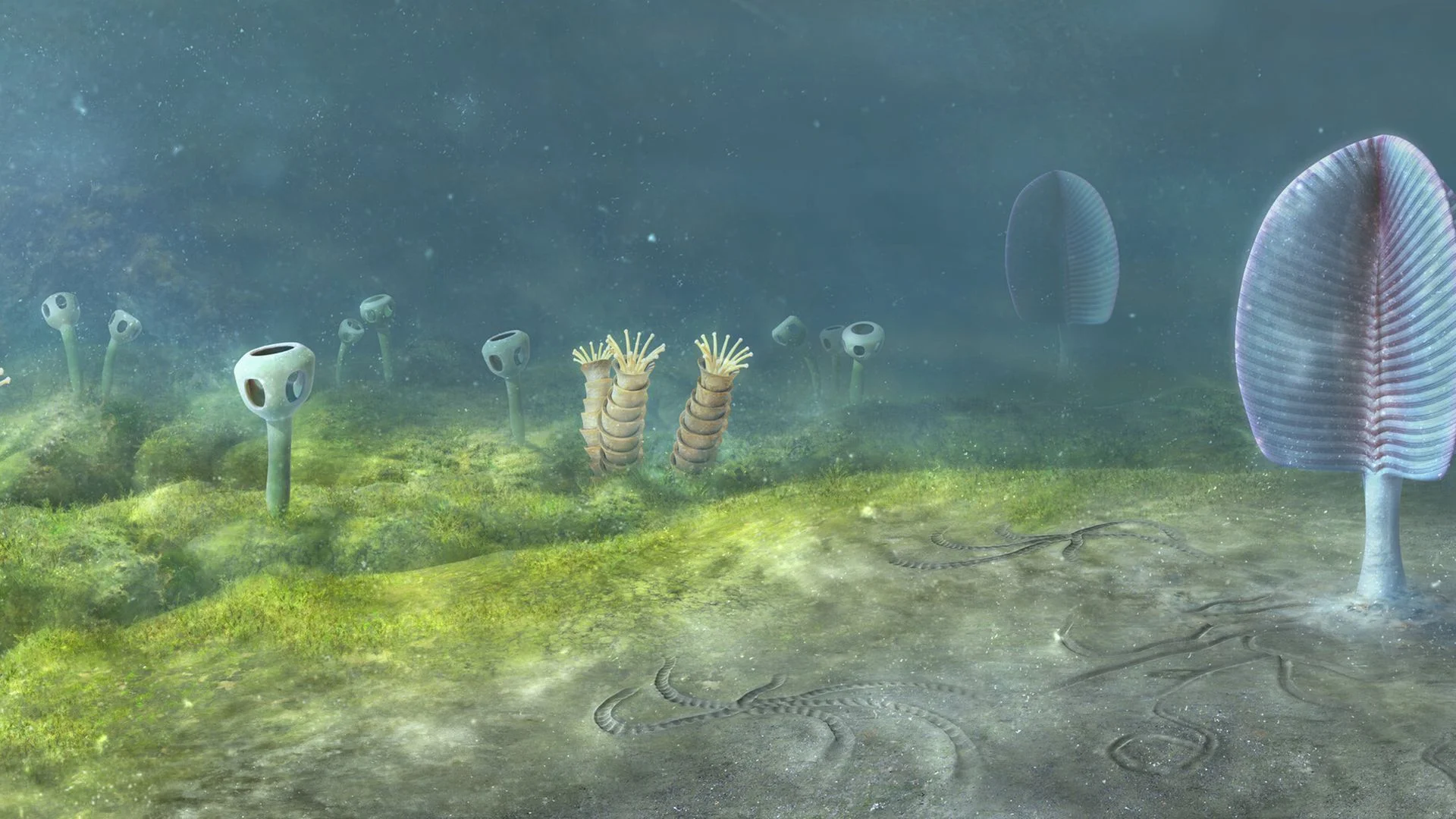
Recent modeling research indicates that the emergence of animals on Earth may have occurred much earlier than the fossil record suggests, potentially by as much as 200 million years. Previously, the earliest animal fossils dated back to about 574 million years ago during the Ediacaran period. The new findings challenge this timeline, proposing that animals could have first appeared between 800 million and 700 million years ago.
The study, published in the journal Science Advances, emphasizes the limitations of the fossil record in capturing the full picture of animal evolution. The researchers argue that gaps in fossil evidence do not necessarily imply that animals were absent; rather, they suggest that we may be missing critical early chapters in the story of animal life.
Examining Fossil Evidence
Historically, scientists have relied on well-preserved fossil deposits like those from the Ediacaran period to mark the advent of animal life. For example, the Weng’an Biota in China, which dates back around 590 million years, offers insights into microscopic organisms, yet lacks definitive animal fossils. Researchers, including study co-author Ross Anderson from the University of Oxford, argue that the scarcity of fossil records from this era shouldn’t be misconstrued as a lack of animal existence.
Many theories suggest that other sites, such as the Kheseen Biota in Mongolia, may provide valuable insights. This younger deposit, about 40 million years later than the Weng’an Biota, was examined for microscopic fossils through advanced electron scanning microscopy. What they discovered were exceptionally preserved microfossils, including tiny spheroidal structures, but none were identified as animals.
Anderson highlighted the paradox: “The Kheseen Biota disproves the assumption that the rich microfossils at Weng’an must indicate the presence of animals, as the same quality of preservation did not yield evidence of animals here, despite their known existence at the time.”
Using Molecular Clocks for Dating
With fossil evidence lacking, the investigators turned to molecular clocks, a method to estimate the divergences in evolutionary lineages based on genetic comparisons. This approach allows researchers to circumvent the poor fossil record and still arrive at plausible timelines for the origin of species.
When researchers compared data constrained by the younger Weng'an deposit, the origin of animals seemed relatively recent. However, when older geological markers from various rock formations in Norway, Australia, and Arizona, dating around 850 to 730 million years ago, were utilized, the timeline shifted significantly. This analysis moved estimates for the origin of animals back to approximately 800 million to 700 million years ago.
Study first author Orin Lole Durbin, a doctoral student in paleobiology, cautioned that while this analysis does not definitively prove the existence of animals at that time, it does suggest that their evolutionary origin could extend further into prehistory than previously recognized.
Biomarkers and Early Animal Existence
The study also aligns with findings from chemical fossils, or biomarkers, which suggest indications of sponge-like organisms existing as early as 650 million years ago—long before known animal fossils. If these findings are substantiated, it could affirm that animals evolved during the Cryogenian period, a time marked by extreme glaciation events known as "Snowball Earth," around 720 million years ago.
The researchers plan to further investigate Neoproterozoic rock formations with varying preservation conditions, believing that these studies could uncover more evidence regarding early animal life. According to Nanglu, “Fossils are naturally hidden from easy discovery, and there may be further hidden complexities in understanding animal origins.”
The ongoing work in this area reflects a broader understanding of how the history of life on Earth can shift dramatically with new approaches and discoveries in paleobiology. Ultimately, as new methods are developed and additional fossil finds occur, our comprehension of the timeline of life's evolution may continue to evolve.
Discussion
Sign in to join the discussion.