Cats often protect sensitive, vulnerable areas from touch. Experts explain what their signals mean and where most prefer to be petted.
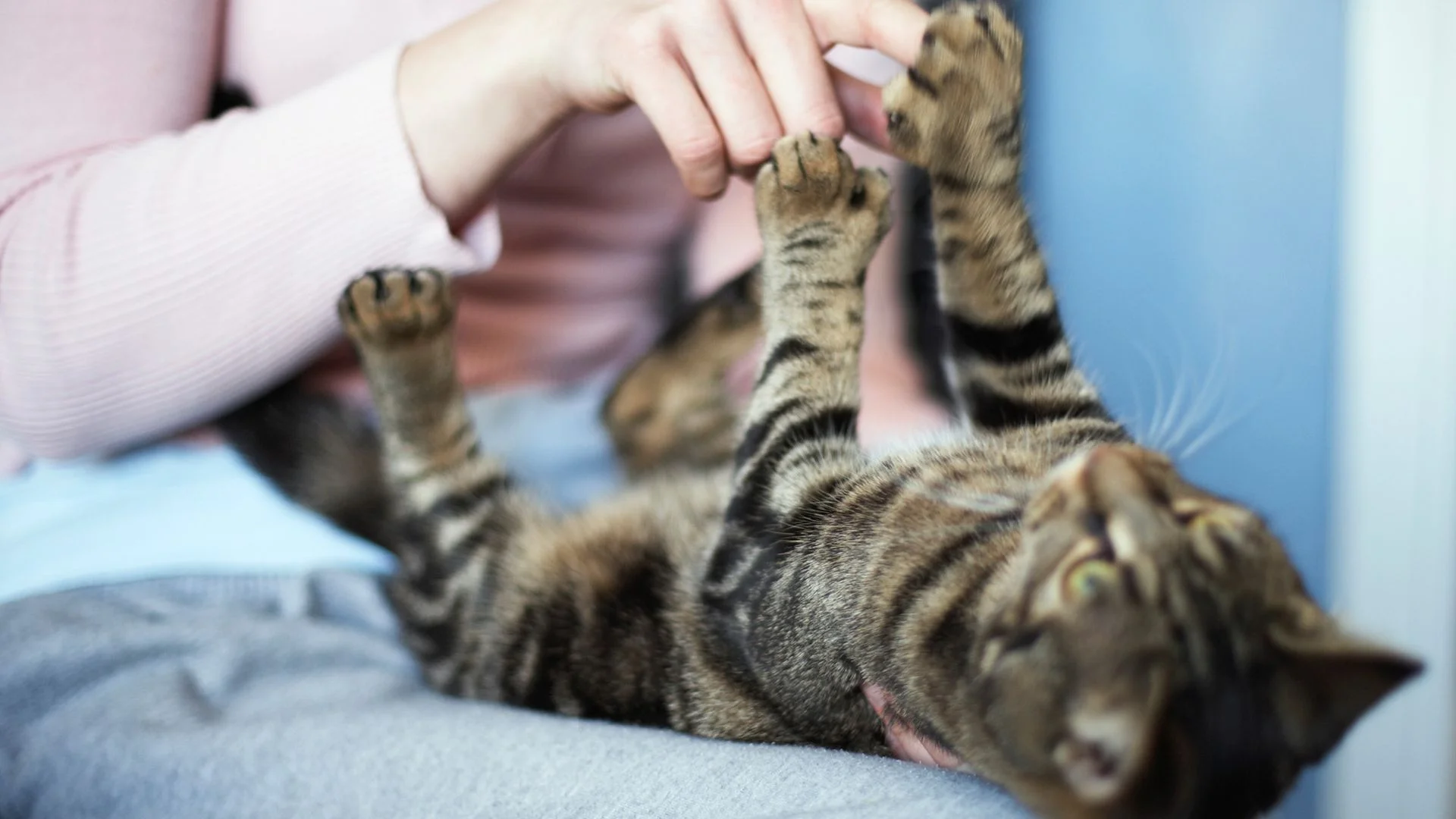
Touch can turn uncomfortable quickly
A cat’s reaction to a hand on its belly, paws or tail can change quickly from subtle discomfort to a bite or scratch. These areas are vulnerable or especially sensitive, and a cat may resist touch to stay ready to escape or defend itself. That response isn’t necessarily a sign of hostility. The practical cue is to watch the cat’s body language and let it set the terms.
“They might do a quick head turn, looking at your hand, or they might start moving away from you or wiggling around a lot, basically trying to get away from the petting,” Mikel Delgado, a cat behaviorist and senior research scientist at Purdue University, told Live Science by email. If those early signals go unheeded, she said, a cat might escalate to “biting, hissing or scratching.” A small change in posture can be the first clear request to stop; waiting for a hiss or swat means the cat has had to make that request more forcefully.
That distinction matters for people trying to build trust. Petting that continues after a cat starts pulling away can teach it that subtle signals don’t work, while stopping promptly gives the animal control over the interaction. Here's the thing: a cat that tolerates a touch for a moment may still be asking for it to end.
Why the belly can feel off-limits
Cats are both predators and prey, and their stomachs contain vital organs without the bony protection ribs provide for the heart and lungs. Sarah Ellis, head of cat mental well-being and behavior at International Cat Care, told Live Science that cats may guard body areas that are vulnerable to injury during an attack. A hand moving toward the abdomen can therefore prompt caution, even in a familiar home and from a trusted person.
A loose fold of skin and fat called the primordial pouch adds some padding, but that doesn’t necessarily make belly rubs welcome. Cats may still feel exposed when a person reaches toward their abdomen. The pouch’s presence shouldn’t be read as an invitation to touch it; padding and comfort are different things.
Unlike dogs, cats can also face threats from animals including dogs, urban coyotes, hawks and owls, making caution around vulnerable areas unsurprising. That background helps explain why a cat might react defensively to a gesture a person intends as affection. It doesn’t mean every cat is consciously assessing predators in the moment; it means protecting a sensitive area can be a useful response.
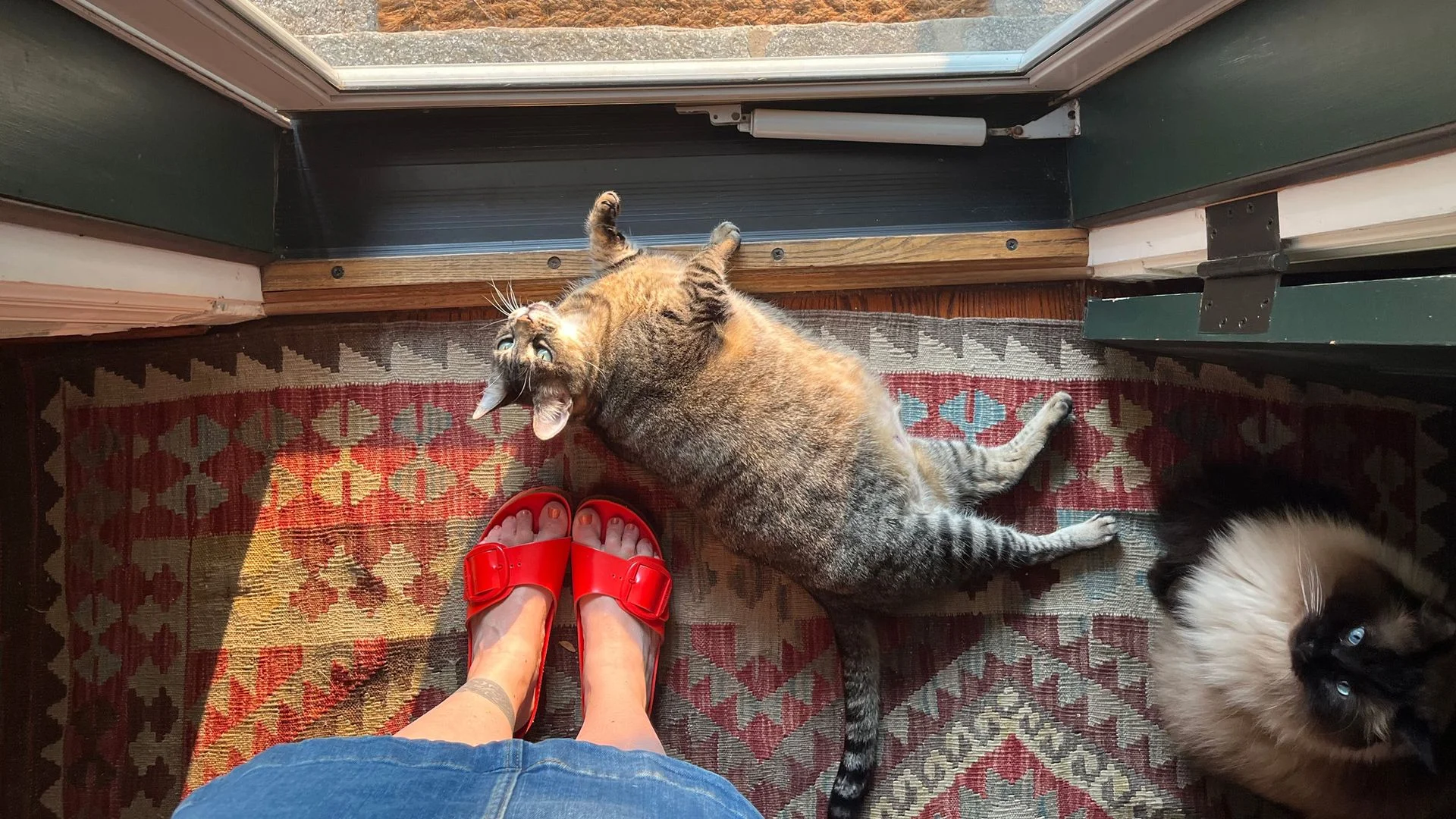
Why cats may guard their tails and paws
The tail can also be a target during a confrontation. When one animal chases another, the tail is often the closest part of the pursued cat’s body, Ellis said, and the base of the tail can be at risk of a bite. That may help explain why some cats shy away from having it stroked. A hand near the tail can also limit how freely the cat can turn or move away, so the animal’s response deserves attention even when the touch seems gentle.
A cat’s paws are essential for getting away from danger. If escape isn’t possible, a cat may swipe or scratch, Ellis said, so being held or touched on the paws can feel like a constraint. The paws are also sensitive: toe pads and wrist whiskers, or carpal vibrissae, respond to stimuli such as pressure and heat, Delgado said. For a cat, then, paw handling can combine two problems: a sensitive sensation and reduced readiness to move.
That’s why a still cat shouldn’t automatically be taken as a willing one. If it’s being held in place, it may have fewer ways to show discomfort than simply pulling away. Letting the cat move freely makes its preference easier to read.
Where many cats welcome touch
For many cats, the safer bet is to pet the base of the ears, cheeks or the area beneath the chin. These spots have scent glands, and cats rub them against feline companions they trust. Delgado’s explanation is simple: cats may welcome those touches because “they treat us as they do other cats.” Familiar social contact helps explain why a cat may lean into a cheek rub while objecting to a hand on its stomach.
Even these areas aren’t guaranteed favorites. If you’re working in this space, the useful approach is to offer a brief touch and see whether the cat leans in, stays relaxed or moves away. A pause gives the animal room to continue the interaction or end it. The numbers here are underwhelming: there’s no single spot that every cat will accept, so observation beats a universal rule.
Read the individual cat
Preferences vary. Delgado has known cats that liked belly rubs; Ellis has seen cats invite brief tail strokes by lifting their tails and pressing their hindquarters into a person’s hand, a response sometimes called “elevator butt.” Ellis said a positive reaction to touch in these areas can reflect a close bond with a person. These examples show that a sensitive area isn’t automatically forbidden; they don’t establish that a cat will want the same touch every time.
And this is the part most people overlook: an invitation is specific to the cat and the moment. A cat leaning into a belly rub may welcome that contact then, while the same cat might move away later. Consent, in this everyday sense. Watch what happens as you pet, and stop if the cat turns its head toward your hand, retreats or starts shifting restlessly.
Those exceptions don’t make a cat’s signals less useful. A head turn, retreat or restless movement is a request to stop. As Ellis advises, “always take the cat’s lead, learn what each individual cat likes and dislikes and respect these preferences.” That’s a more reliable guide than assuming a relaxed pose means every kind of touch is welcome.
What this means for cat owners
Respecting a cat’s boundaries can make ordinary handling easier because the animal learns that moving away will be allowed to work. This is more significant than it looks: a bite or scratch may follow a series of missed signals, not an abrupt change in temperament. Paying attention early can prevent a routine attempt at affection from turning into a confrontation.
There’s no need to decode every movement as a warning. Look for changes from the cat’s usual behavior, give it room to leave, and treat repeated preferences as useful information. The simplest rule is also the most practical: let the cat decide where, how long and whether it wants to be touched.
How much of a cat fan are you? Find out by taking our cat quiz!
Discussion
Sign in to join the discussion.