In a poll of more than 240 readers, 65% said they wouldn’t go to Mars, citing health risks, mission costs and the pull of life on Earth.
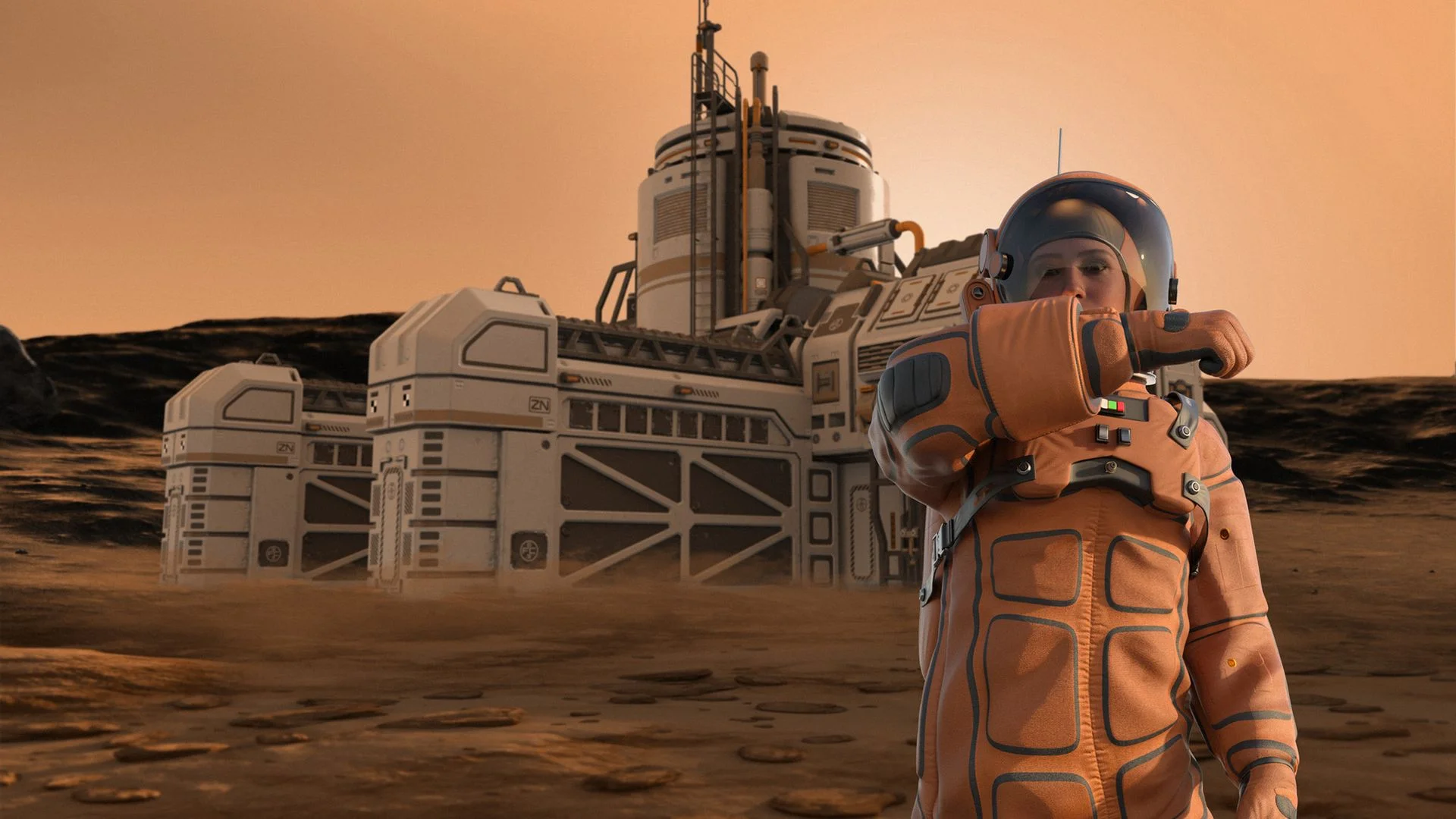
For most Live Science readers, the prospect of visiting Mars doesn’t outweigh the risks. In a poll of more than 240 people, 65% said they wouldn’t make the trip. That’s a clear majority, though it’s a response to a hypothetical choice rather than a commitment made by someone facing an actual mission. The commenters’ arguments show why the question has no simple answer: exploration has always depended on people willing to accept danger, but willingness alone doesn’t settle whether a particular risk is justified.
The poll followed a study in which rats exposed to radiation comparable to what astronauts might encounter on a Mars mission developed more scar tissue around small blood vessels in their hearts than rats in a control group. The result raises a specific concern about possible heart effects, but it hasn’t been confirmed in humans, and it can’t by itself establish what would happen to a crew on a real mission. It adds to the broader questions around long-duration spaceflight, including exposure to cosmic radiation and microgravity. Each risk matters on its own; together, they make a long mission harder to assess than a single laboratory result might suggest.
The study hasn’t settled whether these health risks would deter future crews. The gap between a finding in rats and a decision about human spaceflight is substantial, and readers’ responses reflect that uncertainty rather than resolve it. They weighed the meaning of exploration against its human and financial costs. That’s the tension at the heart of the poll: how much danger is acceptable, and who gets to decide?
Exploration’s risks—and its price
Some readers saw danger as inseparable from exploration. One commenter argued that Mars pioneers could face death or a lifetime away from Earth, with health problems possible even if they returned. That’s a stark description of the stakes, and it points to a difference between a short, familiar journey and a mission where distance could make returning home difficult. But the reader added that such risks have never stopped people from exploring; the harder question is who should go.
That question reaches beyond whether someone is brave enough to volunteer. A person can accept personal danger, yet a mission still has to make choices about the risks its crew will face and what the effort is intended to accomplish. The poll doesn’t answer those questions, but the comments suggest that some readers see the willingness to go as part of the value of exploration itself. Others may see the same willingness as insufficient reason to send people.
Another commenter made a similar case, saying explorers have always faced unusual dangers and that, without risk takers, people might still believe Earth is flat. It’s an argument about the historical role of people prepared to venture into the unknown, not evidence that every risky expedition is worthwhile. Still, it captures a familiar defense of exploration: knowledge and discovery often depend on someone accepting uncertainty before the outcome is clear.
Other readers questioned whether sending people is worth the expense. One called human travelers “flesh water balloons” and argued that the cost of sending one person to Mars could fund robotic missions across the solar system, including mapping, sampling and exploring planets and major moons. The comment is deliberately blunt, but the underlying tradeoff is serious. A crewed mission puts people at the center of the undertaking, while robotic missions can pursue exploration without exposing a human crew to the same personal danger.
The comparison also depends on what people want the mission to achieve. If the goal is to map or sample distant places, readers may reasonably ask whether sending people is necessary. If they value human exploration itself, the calculation changes. The poll doesn’t specify what respondents would count as a sufficient return, so it can’t tell us which goals they’d consider worth the cost.
What Earth offers
For one 77-year-old reader who had long loved science fiction, the attractions of space travel had faded beside the prospect of leaving familiar surroundings. The reader said missing the outdoors—the wind, trees, birdsong and grass—would be devastating, and left spaceflight to those willing to accept its uncertainty. That’s a personal account, not a general measure of how people feel about Earth, but it makes the distance involved feel less abstract. A mission would mean more than leaving behind a familiar view; it would mean giving up ordinary experiences that can be hard to replace.
This is more significant than it looks. Public discussion of Mars can focus on engineering and destination, while a volunteer would also have to consider the daily reality of being far from home and separated from the familiar. (And this is the part most people overlook.) For someone who prizes those surroundings, the promise of discovery may not compensate for their absence. For someone else, the chance to explore may carry more weight.
That divide may shape how people judge future Mars missions: for some, the chance to explore justifies the danger; for others, the health risks, cost and distance from life on Earth carry more weight. The poll offers a snapshot of those instincts, not a verdict on what any future crew should do. If you’re working in this space, the responses are a reminder that technical feasibility won’t answer every question a mission raises. The human choice, too.
What the debate leaves open
The study gives readers a reason to ask more about possible health effects, but it doesn’t establish how those effects would translate to people on a Mars mission. That uncertainty cuts both ways: it can make a trip seem too risky to some, while leaving others unwilling to treat a rat study as a final answer about human health. The poll records people’s stated preferences at this moment; it can’t show how those views might change as more evidence becomes available.
Nor does the poll settle the argument over crewed and robotic exploration. Readers who favor sending people may see risk as part of the undertaking’s purpose. Those who favor robotic missions may judge the same expense and danger against what else could be explored. Here’s the thing: neither position can be reduced to a simple appetite for adventure. The debate is also about what exploration is for, what people are willing to sacrifice, and whether the knowledge gained would justify that sacrifice.
- Chinese lander reveals giant 'cavity' of radiation between Earth and the moon — and it could change how lunar exploration is done
- 'Everything we know about space travel is going to change within a decade': The fusion breakthrough that could unlock a path to the stars
- Scientists finally know why astronauts struggle to poop in space — and reveal a hidden risk of long-haul spaceflight
Discussion
Sign in to join the discussion.