A small fifth-century cemetery near Colmar holds two armed men buried with warhorses, offering a rare look at power after Rome's western collapse.
A small cemetery with a big story
A small fifth-century cemetery near Colmar, a few miles from the Rhine, is giving researchers a clearer picture of the decades after Rome's western collapse. Excavators from France's National Institute for Preventive Archaeological Research (Inrap) found two men buried with high-status weapons, plus two warhorses, and the grave goods are unusually rich for the period. Written records from this stretch of history are thin, so archaeology usually does the heavy lifting. That's what makes a well-preserved site like this worth paying attention to.
The site sits on older ground. A Gallo-Roman village occupied the area from the first through third centuries, and the dig uncovered houses, hearths, wells and craft areas from that era. The cemetery came later, used from roughly A.D. 450 to 500, a window that falls squarely inside the upheaval across Western Europe. Scholars have argued for centuries about why the empire fell, and the repeated occupation of Rome by Goths and Vandals in the fifth century sits at the center of that debate. Here's the thing: a village that was abandoned or reshaped and then followed by a cemetery tells you something about continuity that a single burial never could.
Weapons and warhorses
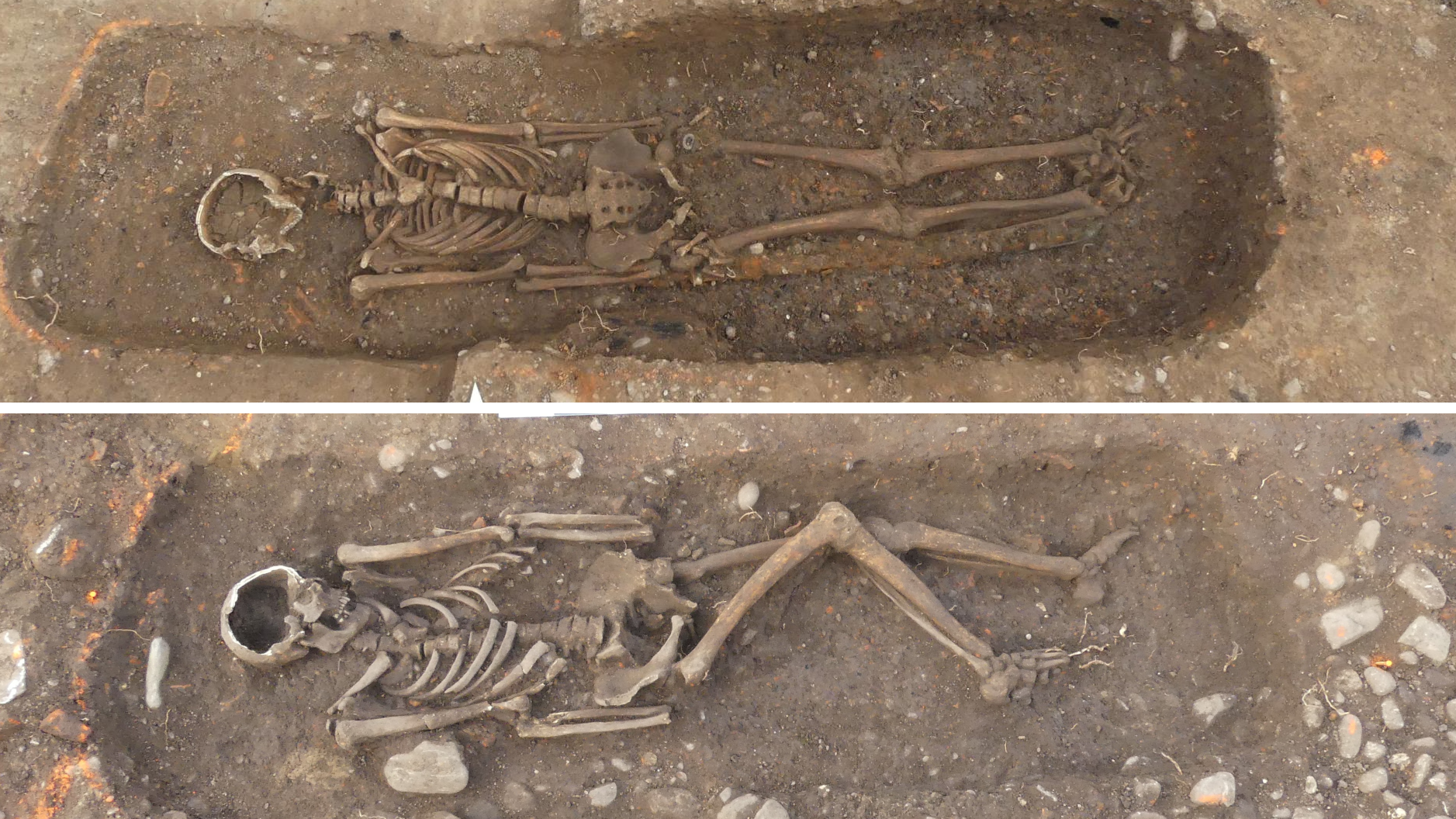
The team counted 11 adult graves, three child graves and two horse burials. Two women's graves held silver bird-shaped brooches, glass bead necklaces and a bone comb, which suggests they may have held high status too. That's a useful detail, because it shows the community wasn't simply marking out fighting men. Grave goods in this period often signal family standing and social role as much as anything about combat, and the women's burials make that point clearly.
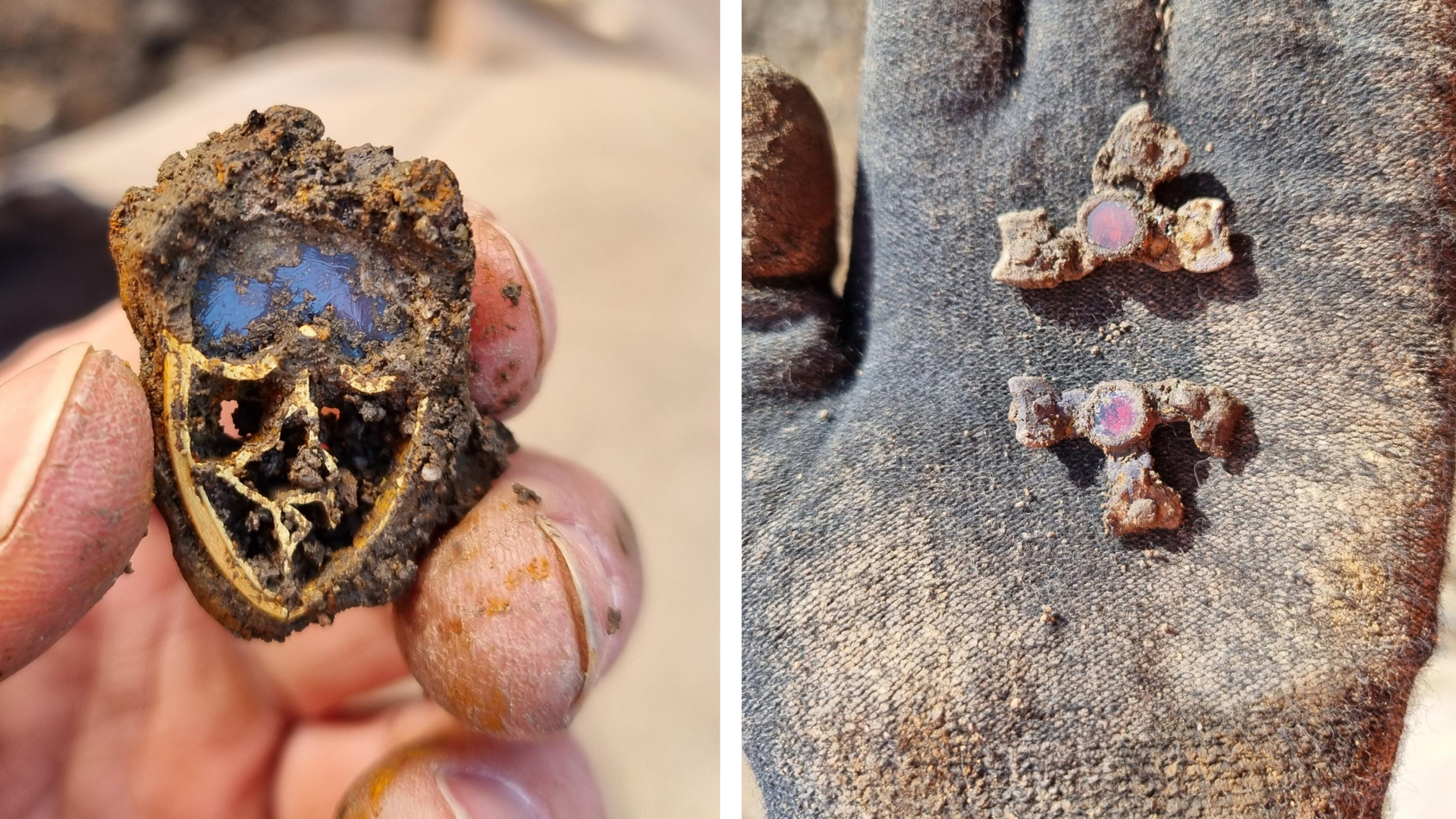
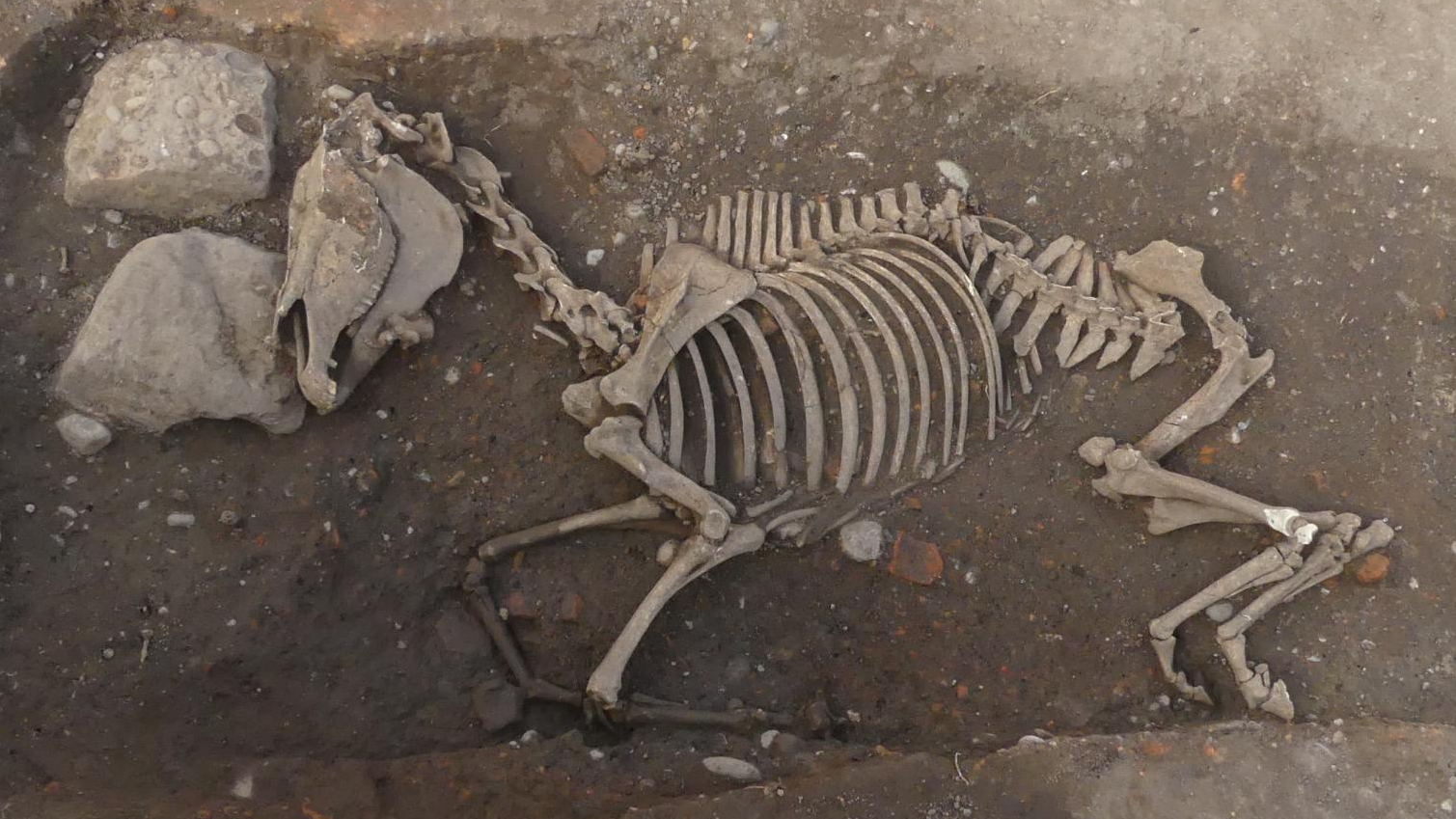
The men's graves are what set the site apart. One held a sword with a partly preserved wooden scabbard, a shield and a javelin. Another contained a scramasax, a Germanic short sword, decorated with a gold-and-garnet fitting. Nearby, two horses lay buried with their harnesses. The archaeologists say these weapons match burials of Germanic chieftains or mercenaries.
Why does that distinction matter? A chieftain and a hired fighter would both have been buried with a sword, but the surrounding evidence, from wealth to the animals placed alongside them, can point toward very different positions in a community. Warhorses are the detail I'd watch most closely. Keeping a horse was expensive, and burying one with its harness suggests the men were mounted figures whose status was tied to that capacity. (And this is the part most people overlook: the horses may say as much about the living community's priorities as about the dead.)
What the skeletons show
The bones add physical evidence to the grave goods. Two people had stab wounds with no sign of healing, which points to quick, violent deaths. Injuries like these are hard to explain away, and they're the kind of evidence that moves a site from "wealthy burial" to "possible combat." Still, a wound with no healing only tells you the person died soon after receiving it, not how or why.
Another man's right knee bones had fused completely. That condition, called ankylosis, usually follows a badly healed injury, and it would have locked the knee in place. For a mounted warrior, that's a serious limitation, and it raises an uncomfortable question about whether he could have ridden or fought at full capacity. The honest answer is that the skeleton can't settle it alone.
The team believes the weapons were more than display pieces. Whether those wounds came from combat is still open, and confirming it will require further study of the skeletons, which is planned. I'd treat that caveat seriously. Weapons in a grave can be symbolic, and wounds can come from accidents, disease or interpersonal violence that has nothing to do with war.
Why this site matters
Few Germanic settlements and cemeteries from the fifth century have been excavated, so this one fills a real gap. Much of what's known about the period comes from elite material or from later written accounts, and cemeteries like this one let researchers test those pictures against ordinary, if still unusually wealthy, graves. That's valuable work, and it's slow.
It should shed light on the upheaval tied to the fall of the Western Roman Empire and on how that political collapse reached communities at the empire's edge. The site's location, near a former Roman settlement and on the Rhine frontier region, makes it a useful place to watch how older Roman-era communities and incoming groups actually interacted on the ground. Not every question gets answered by a single cemetery, but this one gives the debate something concrete to push against.
My read is that the strongest finds here will come from the skeletal analysis, because it could turn these burials from a striking display of wealth into evidence of who fought, and how. Grave goods are easy to admire and easy to over-interpret. Bones are harder to argue with, and that's where I'd expect the sharpest revisions to the story.
What comes next
If you're working in archaeology, late Roman history or early medieval studies, this site is worth tracking. The planned skeletal study will be the real test of the current interpretation. If it confirms combat injuries and matches the weapons to the men buried with them, the case for a militarized, mounted elite here gets much stronger. If it doesn't, the graves may point more toward status and display than toward battle.
What this means for the broader debate is more cautious than the headlines will suggest. One well-furnished cemetery won't rewrite the story of Rome's fall, and it shouldn't be treated as proof of any single explanation. But it adds a body of evidence, literally, to a conversation that has relied too heavily on texts written by people looking at events from a distance. That's the real value here, and it's a modest one. Modest is fine.
Discussion
Sign in to join the discussion.