NASA's Swift Observatory burned up over Sumatra after 22 years, but its ultraviolet view of Andromeda shows why its archive will keep paying off.
A mission built for speed
Swift's reentry over Sumatra on Wednesday, Nov. 4, closed out a 22-year mission. The telescope's data, though, will keep generating science for years. That's the part working astronomers care about most. Swift rarely won headlines for pretty pictures. It earned its reputation by moving fast.
Here's the thing about that reputation: speed matters more in this field than most outsiders expect. This category of event often fades quickly, so the instrument that points at it first gets the measurements that shape everything that follows. Later observations refine the picture, but they can't recover the early minutes. (And this is the part most people overlook.) Those first moments are frequently the only window in which a signal is bright enough to pin down properly.
Swift was built to swing toward deep-space explosions at a moment's notice. It carried optical, ultraviolet and X-ray instruments, so it could follow a flash across the electromagnetic spectrum. That breadth mattered. A burst that looked faint in one band often looked very different in another, and Swift caught the flares that slower or narrower telescopes missed.
That multiwavelength design is the real story, and it's easy to undersell. A single-band instrument gives you one slice of a violent event, and you're left guessing about the rest. Pairing X-ray, ultraviolet and optical views lets researchers test models against each other instead of against one snapshot. That's a practical problem, not just a theoretical one, because the same object can look like a different kind of event depending on which instrument you trust.
The brightest blast on record
Among those catches was a gamma-ray burst so intense that astronomers nicknamed it "the BOAT," short for "brightest of all time." The event, GRB 221009A, is thought to have come from a massive star that exploded as a supernova and collapsed into a black hole. Swift's X-ray image of the aftermath looks like a speckled orange bull's-eye, with waves from the explosion rippling outward through space.
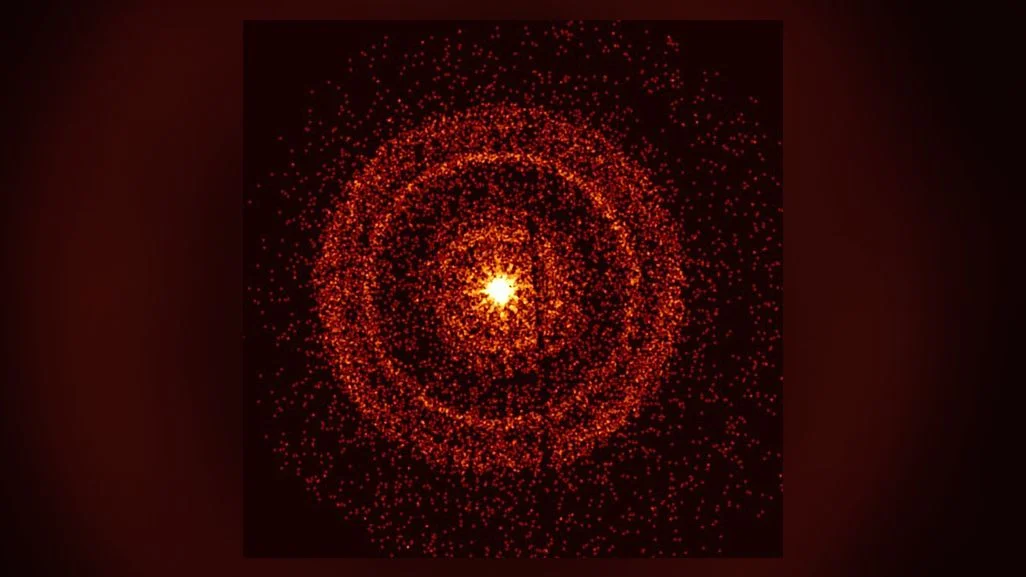
Images like that one are easy to admire and harder to read. The speckled pattern reflects the X-ray afterglow, the lingering emission that follows the initial flash, and it tells researchers how that energy spread into the surrounding material. I'd argue that's more useful than the nickname suggests. "The BOAT" sticks in headlines, but the scientific value sits in the slow, careful reading of how the emission changes over time.
Pictures like this also carry a warning. A dramatic image invites you to treat the burst as a single event with a single answer. It isn't. Every interpretation depends on assumptions about distance, geometry and the material around the star, and those assumptions deserve as much scrutiny as the image itself.
Turning the same eye on home turf
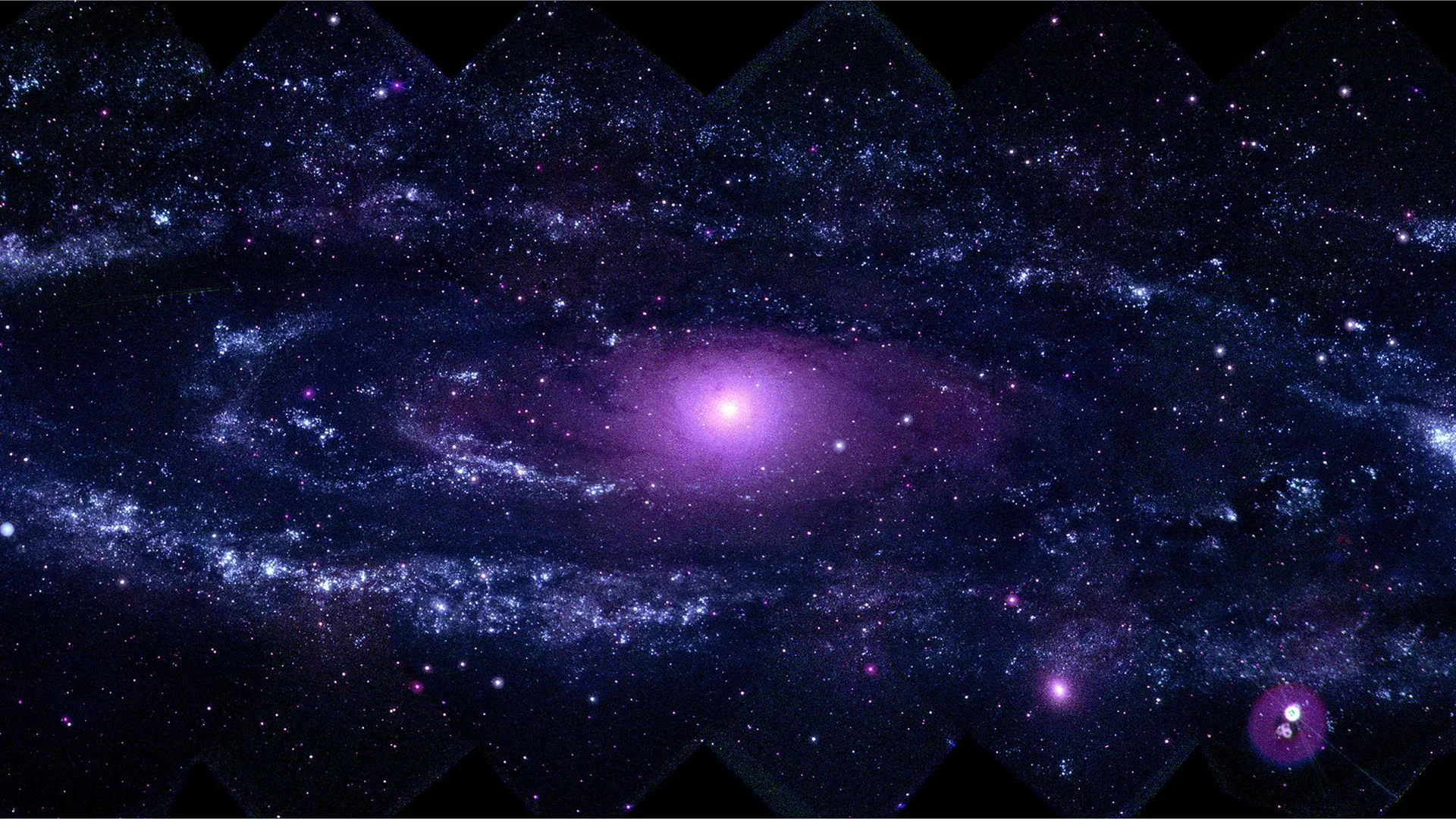
Swift's record isn't just cosmic fireworks. It also logged millions of observations of the nearby universe, including galaxies in our own neighborhood. One standout is a 24-hour exposure of the Andromeda galaxy (M31), roughly 2.5 million light-years away.
That kind of target sounds mundane next to a gamma-ray burst. It isn't. A nearby galaxy packs in huge numbers of stars that sit at roughly the same distance, which makes comparisons far cleaner than they are with faraway objects where everything smears together. If you've ever tried to read a crowded photo of a distant cluster, you'll know why that matters.
Andromeda is the closest major galaxy to the Milky Way, and the two may be on a collision course. The merger would add Andromeda's estimated 1 trillion stars to our night sky, though Earth probably wouldn't host anything left to enjoy the view. Galaxy collisions are slow by human standards, and the stars themselves rarely crash into each other. The gas and dust, on the other hand, do plenty of damage, which is why these mergers reshape galaxies rather than simply stacking them.
Swift's ultraviolet instrument shows a different side of the neighbor. Tens of thousands of Andromeda's stars glitter like sapphires set in a bright ring. According to NASA, the observatory picked up about 20,000 ultraviolet sources in the image, gathered over two months from May to July 2008. Many are dense, hot star clusters spread across a ring about 150,000 light-years wide. The galaxy M32 also appears as a bright orb to the lower right of Andromeda's center.
Compare that with visible-light images of Andromeda from ground-based telescopes. The galaxy's glowing core drowns out many of the hot young stars that stand out so clearly in ultraviolet. Here's the thing: the wavelength you pick decides what you see. Swift's archive is built on that principle, and I'd expect the next few years of work with its data to turn up more surprises.
What the archive is worth now
The reentry closes the spacecraft's operational life, but it doesn't close the data. Observations already recorded can be reprocessed, cross-checked and combined with newer instruments, and that's where a lot of the real work happens. Researchers who never touched the telescope can still build careers on its measurements.
This is more significant than it looks. A mission's value is often judged by its best-known images, but the bigger contribution is usually the boring, steady accumulation of observations that others can use. Swift's catalog of sources, bursts and nearby galaxies gives future projects something to compare against, which is a quieter kind of legacy.
I'm less convinced that any single discovery will define Swift's place in the record. The gamma-ray burst will get the attention, and Andromeda will get the wallpaper, but the archive's usefulness depends on people asking questions the original team didn't anticipate. That's hard to predict, and anyone who claims otherwise is selling something.
If you're working in this space, the practical lesson is simple. Plan for data that outlives the instrument, document your assumptions carefully, and treat headline events as starting points rather than conclusions. What this means for you is less about chasing the next big burst and more about making sure the observations you have today still make sense in a decade.
Discussion
Sign in to join the discussion.