Sagas, graves, and skeletal wounds point to Viking women fighting, but experts agree it was rare. The evidence is thinner than the legend.
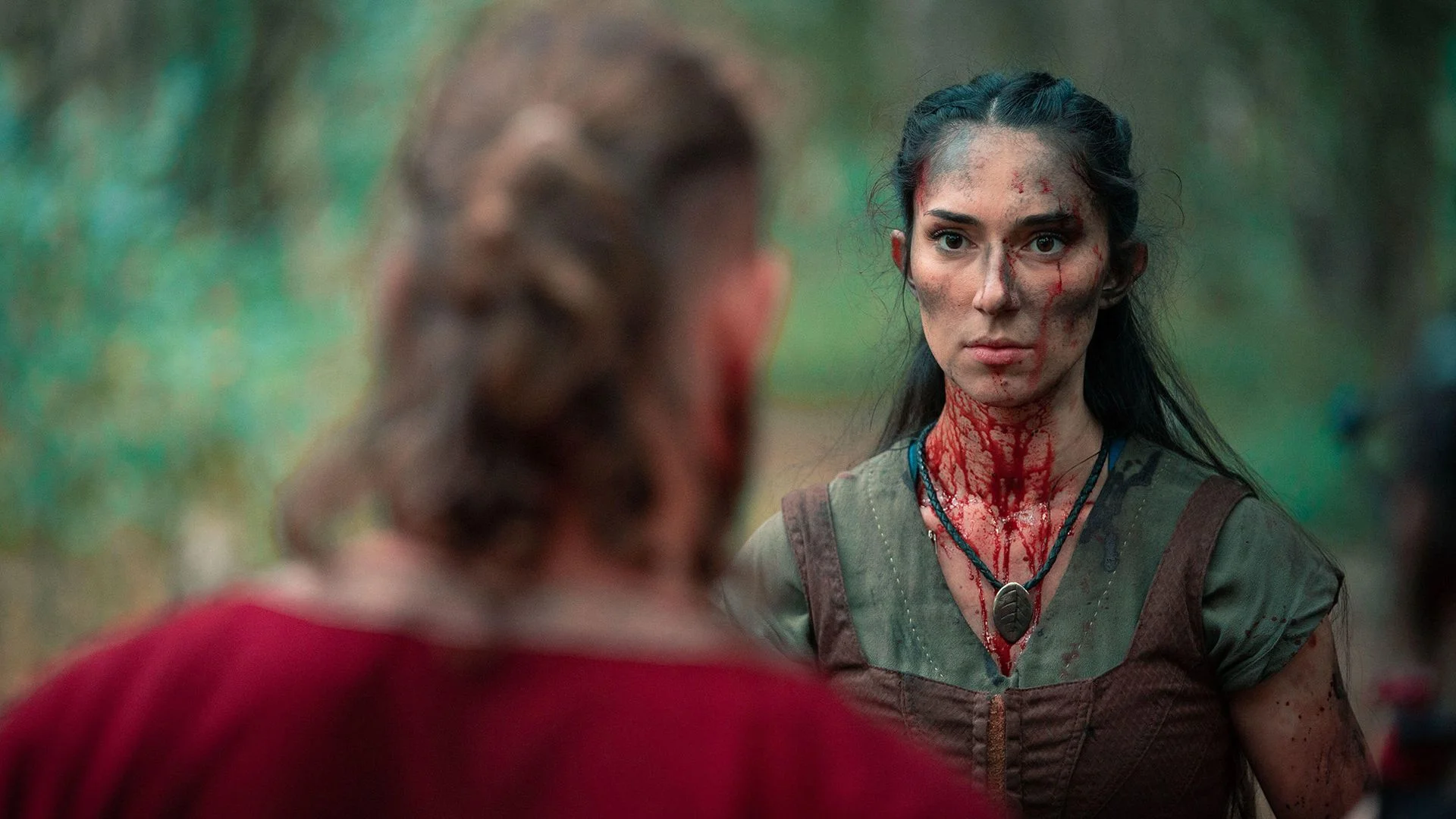
The short answer from specialists is that Viking women fought, but not often. Most researchers who study the Viking Age think female warriors were a rare exception, and the hard part is that the evidence supporting even that modest claim is patchy, contested, and easy to over-read.
Pop culture still leans on the image of a brawny Norseman with an axe. The more interesting question is what the record actually shows about women. Over the past few decades, scholars working on the Viking Age (roughly A.D. 793 to 1066) have shifted attention toward women and the roles they played. Texts describe "shield maidens" who fought alongside men. Some of those texts mention women who took part in battle. Graves hold women buried with weapons and shields that look like the gear of a warrior. Taken together, that's a tantalizing picture. Pulling a number out of it is another matter.
Experts who spoke with Live Science agree the answer hinges on interpretation. Texts, artifacts, and burials of Viking Age women get far more scrutiny than the graves of men buried with similar or even fewer weapons. If a man was buried with a sword, researchers call him a warrior. A woman with the same sword invites debate.
Written sources with an agenda
The Vikings used a runic system of writing, but they left very few texts behind. Most of what we know was recorded by outsiders or by Norse descendants writing generations later. That gap matters a great deal when the question is how often women fought.
One of the most vivid sources is Gesta Danorum, written in the 12th century by the Danish historian and theologian Saxo Grammaticus. Its Latin title means "History of the Danes," and the passage in question, translated by Jenny Jochens, describes "women in Denmark who dressed themselves to look like men and spent almost every minute cultivating [combat] skills." Saxo goes on to say these women "put toughness before allure, aimed at conflicts instead of kisses," and "sought the clash of arms rather than the arm's embrace." It's vivid writing, and it's exactly the kind of passage that makes historians nervous.
Thomas Kristian Heebøll-Holm, a history professor at the University of Southern Denmark, argues Saxo isn't a reliable witness here. In his view, Saxo writes about female warriors only in the sections dealing with Denmark's legendary past. "Furthermore, these writings are not accurate, but moral and fictitious," Heebøll-Holm told Live Science. He also points out that Saxo sometimes seems to be borrowing from stories of the Amazons, legendary female warriors that the ancient Greeks believed in, with tales stretching back more than 2,500 years. A moral lesson dressed up as history is still a moral lesson, not a census.
The Irish sources are no easier. The medieval Irish text Cogadh Gaedhelre Gallaibh ("War of the Irish with the Foreigners") describes a woman known as the "Red Lady" leading a Viking fleet in a raid on Belfast in the 10th century. It's a striking detail. But Neil Price, an archaeology professor at Uppsala University in Sweden who has written extensively about the Vikings, says the text's accuracy is debatable. That's the core problem with the textual record: the most dramatic accounts come from sources with their own reasons to exaggerate, moralize, or invent.
What the graves can and can't prove
Archaeology looks more solid on the surface. Researchers know of about 30 Viking Age female burials containing weapons, including three with swords in Scandinavia. Many more women's graves contain objects that could have served as weapons, such as spears, axes, and knives. Those same tools were also used for hunting and tending farms, which is where the trouble starts.
Deborah Shepherd, an independent researcher with a doctorate in archaeology who has studied the Vikings extensively, puts the first concern bluntly. Did the deceased actually use those weapons, or were they included as signs of special status or social rank inherited through family? Shepherd also notes that graves are often poorly preserved, which makes it hard to reconstruct what was really there and how it was used. Every missing bone or rotted scrap of leather is a gap someone has to fill with assumptions.
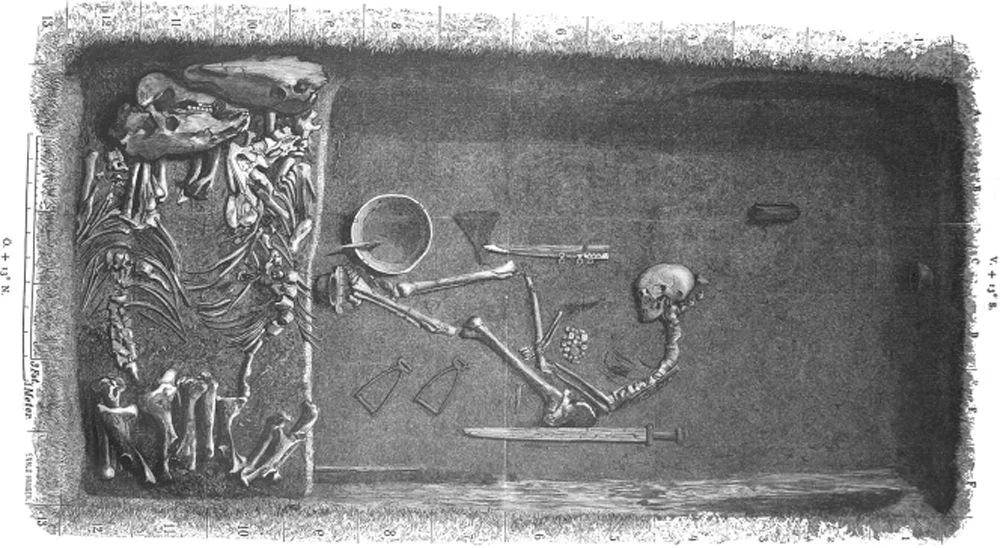
Shepherd's read is that there were likely "some few female warriors, but they were probably only found in the highest ranking families, and their warrior career was probably short-lived." She suspects they didn't serve in the large armies of later centuries but may have fought in pre-Christian skirmishes. The timing matters. The Vikings converted to Christianity gradually between the ninth and 12th centuries, so any female combat roles would belong to a shifting religious and social order that was itself changing fast.
Ole Kastholm, a curator and senior researcher at the Roskilde Museum in Denmark, sees the same uncertainty. Weapons turn up as grave goods in "a handful of graves with female human remains," he told Live Science. "Often it is just a single weapon [such] as a spear or [a] battle axe." The exception is Birka in Sweden, where one woman's grave includes a full set of weapons along with riding equipment. Kastholm's point about double standards lands hard here. "If this was a man's grave, researchers would have no doubt that it was a warrior grave, and this explanation must necessarily also apply when the interred is a woman," he said.
Injuries, outliers, and a Norwegian case
Bones can be more persuasive than objects. There is at least one known case of a Viking woman with what may be combat-related trauma. A Viking woman found in Solør, Norway, had a head injury consistent with a sword strike. She was 18 or 19 when she died, lived around 900, and was buried with weapons. A single case doesn't establish a pattern, but it's the sort of evidence that makes a skeptic pause. It shows that at least some women were close enough to real violence to be wounded by it, and that's a more concrete claim than a saga's flourish.
Here's the thing, though: none of this makes Viking women unusual in a global sense. Price notes in his book, The Sea-King and the Sorceress: Life and Death in the Viking Age (Basic Books, 2026), that "female warriors were an almost common feature of central Asian societies for at least a millennium before the Viking Age." The Scythians, who flourished across eastern Europe and Asia, buried women with horses and weapons. Some of those women bore combat wounds, including arrowheads, and researchers have speculated that such women may have helped inspire stories of the Amazons. Against that backdrop, Viking women with weapons look less like an anomaly and more like one local expression of a wider pattern in which some women in mounted, weapon-using societies fought.
That is the most defensible reading of the evidence. Women in Viking society could fight, and a few did. The bigger question is whether they were ever a meaningful share of the warbands that raided across Europe. Current evidence doesn't support that. Price's estimate is that female warriors "were probably a very small minority," and the other specialists quoted here broadly agree.
What would change the picture? The most useful next steps are probably unglamorous: re-examining older excavations with modern osteological methods, testing whether weapons show signs of use, and tracking how many graves with weapons are later confirmed as female. Each confirmed case would sharpen the estimate. Until then, the honest answer is that Viking women fought, the sources are better at dramatizing it than documenting it, and the evidence points to a rare role rather than a common one.
Discussion
Sign in to join the discussion.