Two new Amazon howler monkeys bring the known count to 16, and DNA work is redrawing how the group diversified. One may already be nearly extinct.
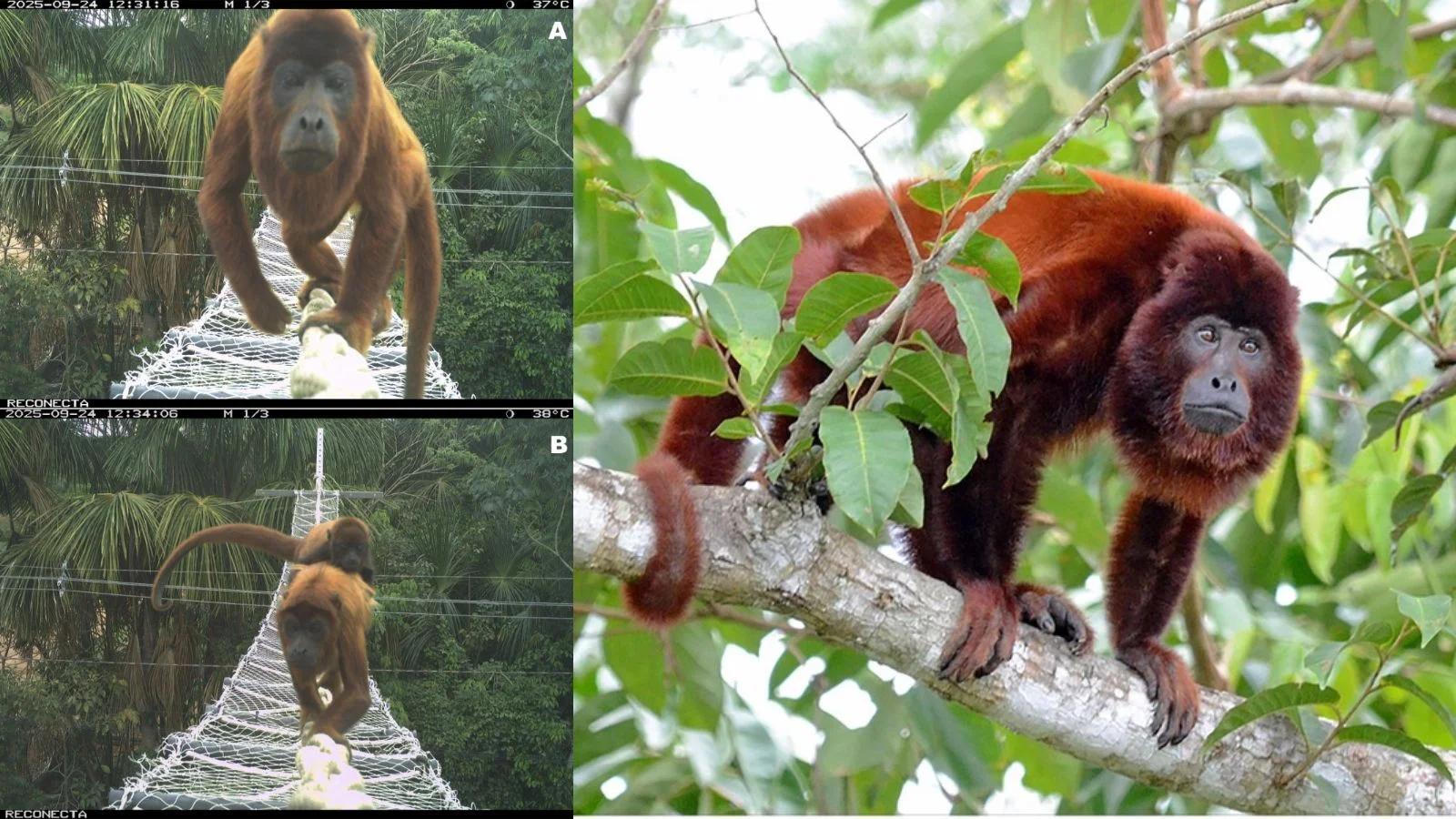
Two newly described howler monkeys from the Amazon raise the known species count to 16, and one of them may already be close to disappearing. That's a rough start for a discovery, but it's the story here. The primates have bushy beards, expressive faces and bright red fur, and they've been hiding in plain sight in a region that still has plenty left to catalog. Howlers are loud, conspicuous and well studied, which is exactly why a new species in this group lands harder than one found deep in a remote corner of the forest.
The new species are Alouatta iroi and Alouatta matogrossensis. "Our study shows that the Amazon still holds remarkable biological secrets, even among well-known animals such as howler monkeys," said study first author Romina Batista, a biodiversity scientist at the University of Gothenburg in Sweden and the University of Salford in the U.K. Naming a species is more than bookkeeping. A name gives conservationists something concrete to point to in land-use fights, and it tells researchers that a population they assumed was settled is actually something else. That's the practical side. The scientific side is that a supposedly familiar animal turned out to have more going on than the textbooks suggested.
A new read on the family tree
The naming is the headline, but the genetics is where the bigger shift happens. The study, published Oct. 30 in Communications Biology, combined existing DNA datasets with new genomic data from specimens held in Brazilian zoological collections. The team analyzed genomes from 11 howler species across South and Central America. That's a wide sweep, and it matters because species boundaries drawn from body shape and coat color alone have a habit of going wrong. Genomes don't care how an animal looks, and that's the reason they're so useful here.
The results pin the group's split from close relatives to between 19 million and 13.5 million years ago. That's deep time, and it tells you the lineage was already diverging long before the modern Amazon took shape. The more recent picture is messier. The Tapajós red-handed howler (A. tapajozensis) and the Amazonian black howler (A. nigerrima) turn out to be less closely related than researchers had assumed. Meanwhile, the Trinidad howler (A. insulanus) has long had an unclear status, and the team argues it should be confirmed as a distinct species. If you're working in taxonomy, this is a useful warning: two animals that look alike can be distant relatives, and two that look different can be close.
Two species, two different kinds of trouble
The conservation news is grim. A. matogrossensis is probably on the brink of extinction, which means the species may be on the edge before most people have heard its name. That's a strange kind of milestone. A discovery that arrives with a countdown attached isn't really a celebration.
The other new species faces a different threat: a planned dam on the Rio Branco River. Neither problem is abstract. Habitat loss hits primates hard, and howlers depend on forest canopy that a dam or clearing can break up quickly. Canopy-dependent animals don't simply walk to the next patch of trees, especially when the gaps between patches are wide. (And this is the part most people overlook: the damage from a dam often reaches well beyond the flooded area itself, through changed water flows, fragmented habitat and access roads that open the forest to further clearing.)
Rivers do the dividing
Here's the thing about the Amazon: its rivers are as much a wall as a road. The researchers found that major waterways, including the Amazon, Xingu and Branco rivers, drove many howler populations apart. Howlers can swim small channels, but big rivers stop groups from interbreeding. Over time, isolated populations picked up different traits and became separate species. The authors note that natural barriers like these are a common reason new species emerge across the basin.
That's why the genetic work matters beyond taxonomy. Each new species record is a marker of how the river network shaped the forest's biology. It's also a reminder that the basin's diversity is partly a product of geography. And geography can be altered in a single construction project. A river that has separated populations for millions of years can be reshaped by a dam in a matter of years, which is a mismatch that conservation planning has struggled with in similar systems.
A closing window
Jean Boubli, a professor and chair of primate ecology and evolution at the University of Salford who co-authored the study, put the urgency plainly. "This discovery comes at a critical time, as increasing deforestation, climate change and habitat loss threaten many Amazonian species before they are fully understood or even discovered by science."
My read is that howler monkeys are a useful test case. If a conspicuous, widely studied primate can still hide two species and a tangled family history, the Amazon's less visible animals are probably hiding far more. That's the uncomfortable part. Most of the basin's biodiversity is unlikely to get the attention these howlers did, and that's a gap that matters.
What this means from here
Let's be clear about what the study does and doesn't establish. It identifies two new species, sharpens the picture of how howlers diverged, and flags at least one population as at serious risk. It doesn't tell us how quickly the threats will move, and the source material doesn't give us numbers on how many individuals remain. That gap is worth keeping in mind before anyone treats a single study as a verdict on a species' future.
If you're following Amazon conservation, the practical question is whether taxonomic findings like this get translated into protection before the habitat disappears. Discovery is the easy part to celebrate. Acting on it is slower, messier and often political, and the record of similar cases suggests that naming a species doesn't guarantee its survival. The question now is whether scientists can describe those species before the forests they live in are gone.
Discussion
Sign in to join the discussion.