Voyager 1 is nearing a 24-hour signal delay from Earth, while dwindling power narrows its science mission and its discoveries endure.
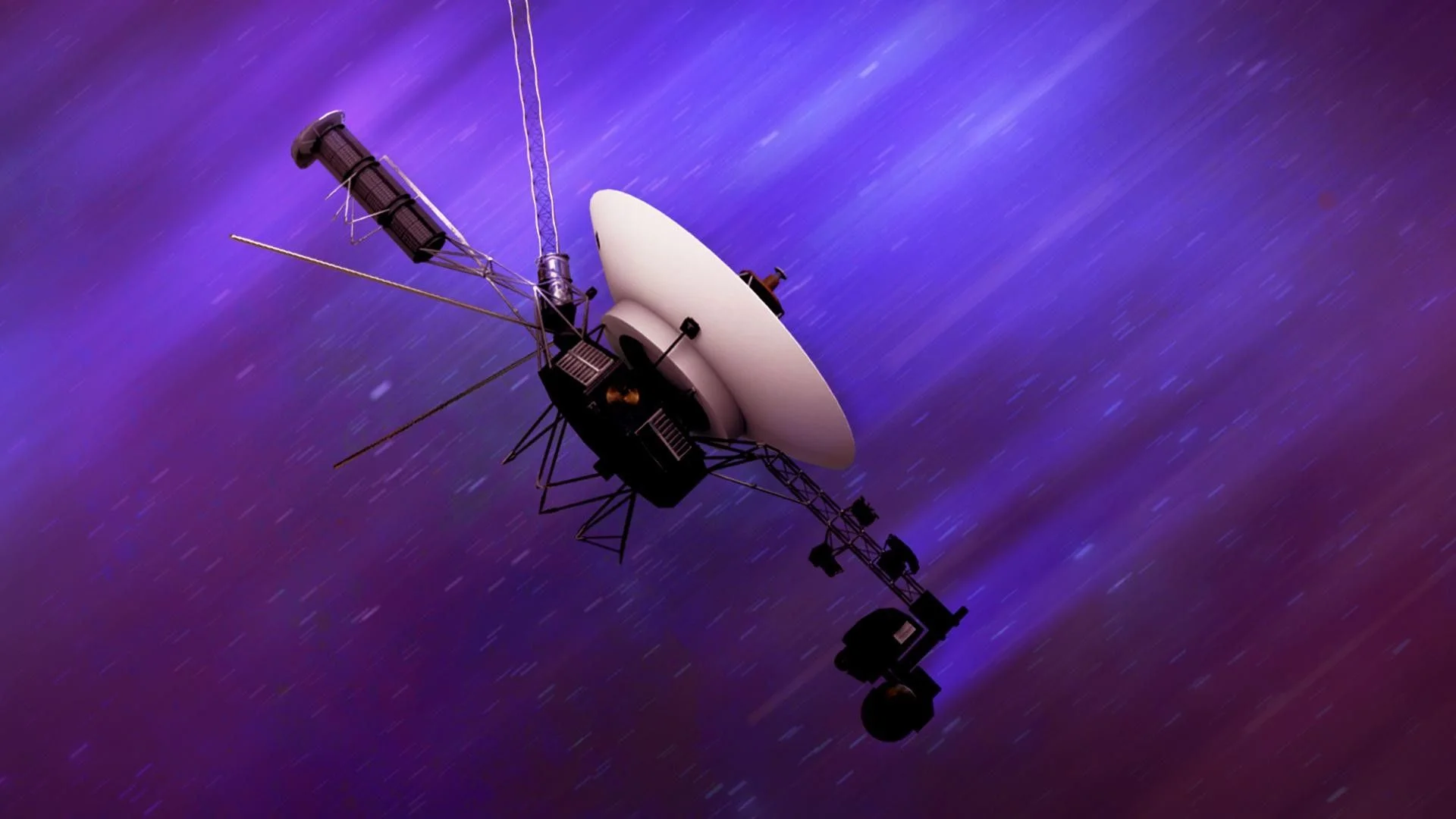
Voyager 1 is approaching a distance that makes communication feel less like a conversation than a patient exchange across the void. On Nov. 18, light from Earth will take 24 hours to reach the spacecraft, meaning any reply will arrive another day later. The milestone sharpens the central fact of the Voyager mission: nearly 50 years after launch, the probes still return science from beyond the Sun’s protective bubble, but their power supply is running down.
Launched in September 1977, Voyager 1 and Voyager 2 turned fleeting planetary encounters into some of the most consequential observations of the outer solar system. Their work has shaped later missions and continues to provide the only in situ measurements from beyond the heliosphere. The probes are also increasingly fragile machines, with engineers switching off systems to keep their remaining instruments operating.
A vast distance, and a longer wait
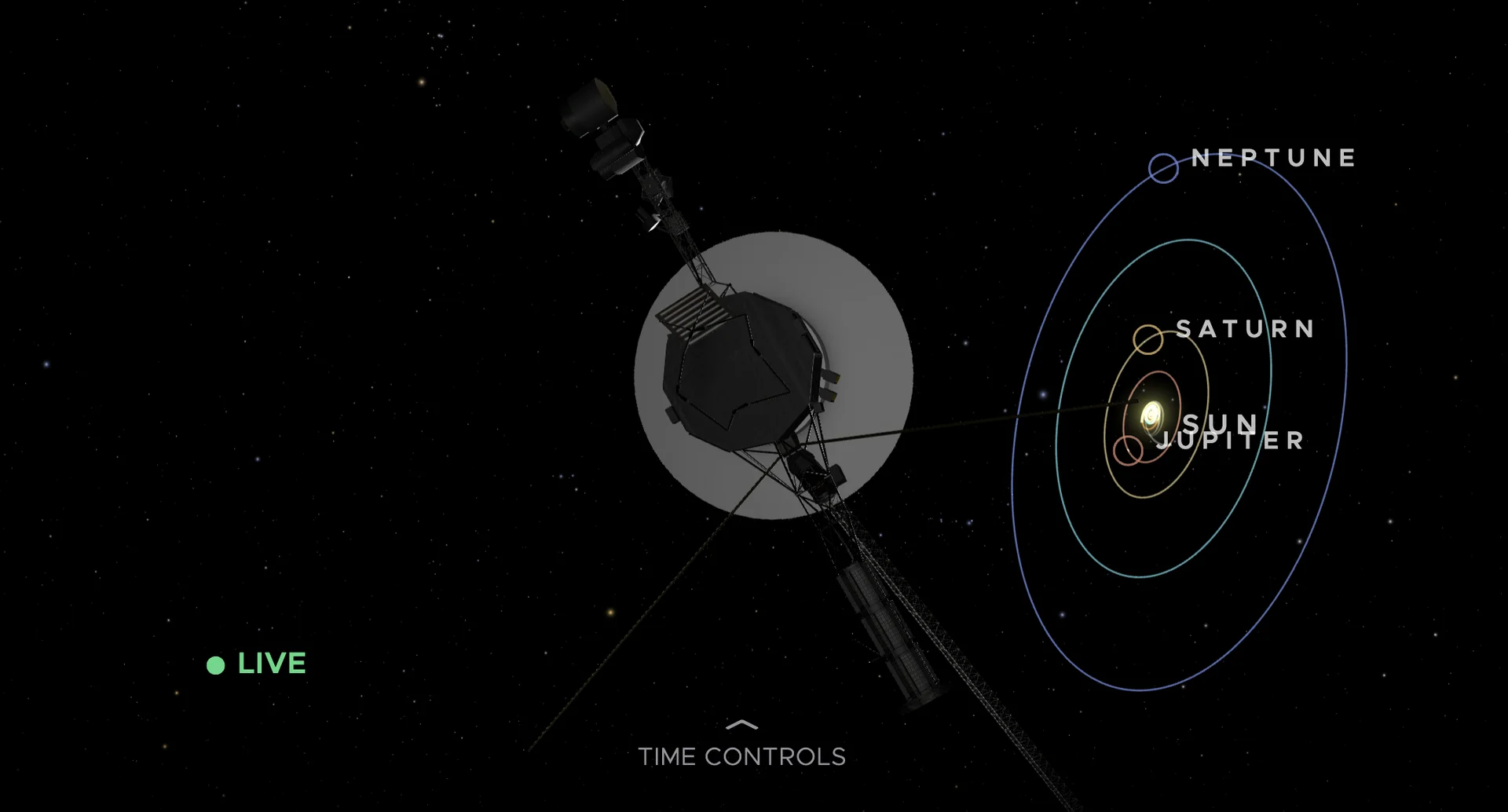
Voyager 1 is traveling at nearly 38,000 mph (61,000 km/h) and sits just under 16 billion miles (about 26 billion kilometers) from Earth. It is expected to reach one light-day on Nov. 18 at 5:16:07 a.m. ET, after 49 years, two months and 11 days in space.
The distance has an immediate operational meaning. NASA sends commands and receives data by radio, which travels at light speed. At one light-day, a command takes 24 hours to arrive; a response takes another 24 hours to return. “If you want to say ‘hello’ to Voyager, you send your message and then you go home and you wait two days before you finally get a response,” Voyager project manager Suzanne Dodd of NASA’s Jet Propulsion Laboratory said in a recent statement.
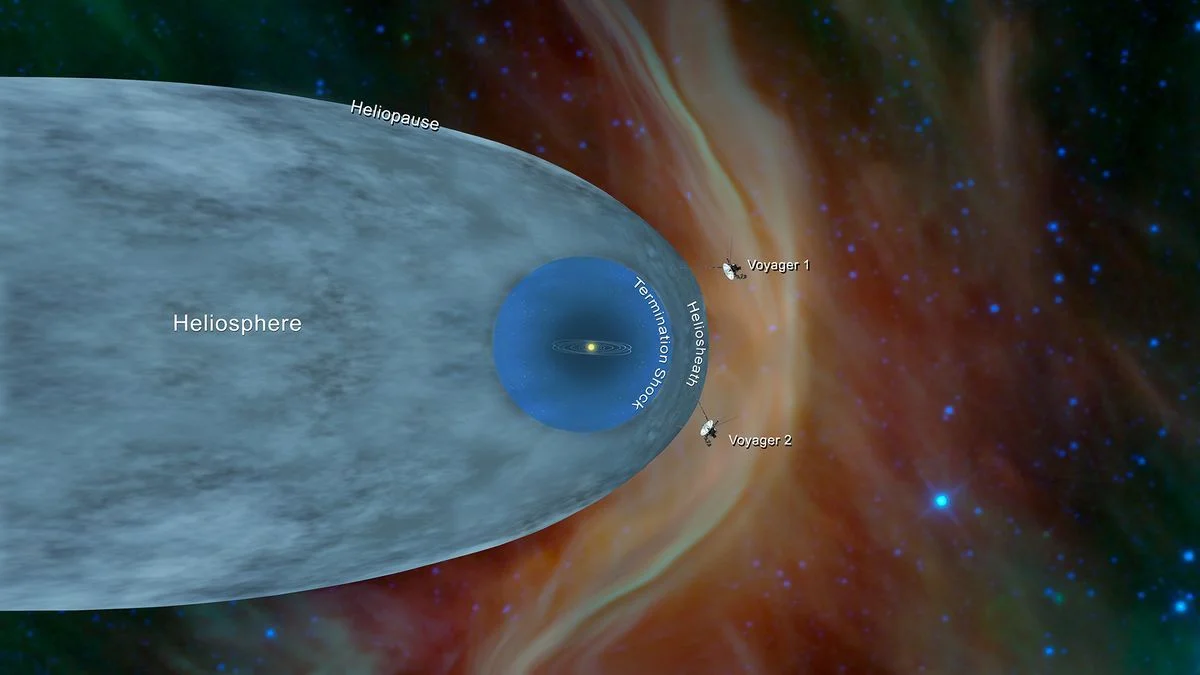
For planetary scientist Pascal Lee, who worked with the Voyager 2 team during its 1989 Neptune flyby, the milestone is also a reminder of scale. The probe has crossed the heliosphere, the plasma bubble created by the Sun, but it remains within the Sun’s gravitational reach. That boundary extends beyond the Oort Cloud, a distant shell of icy bodies. NASA estimates Voyager 1 will take about 300 years to reach the cloud’s inner edge and perhaps 30,000 years to pass beyond it.
“If anything, it reminds us of the sheer vastness of space and time, and how this spacecraft is just a little mote of dust that’s barely drifted out of the solar system still,” Lee said.
Voyager 1 is on course to pass within 1.7 light-years of the dim star Gliese 445 in roughly 40,000 years. At that point, it will be closer to that star than to the Sun. Proxima Centauri, the nearest star system to our own, is about 4.24 light-years away.
Voyager 2 followed a different route, visiting Uranus and Neptune after Jupiter and Saturn. It is now in interstellar space, about 13 billion miles (21 billion kilometers) from Earth, and NASA projects it will reach a one-light-day distance in November 2035. Its trajectory and that of Voyager 1 carry the spacecraft into different stretches of the space between stars.
What the probes changed about the outer planets
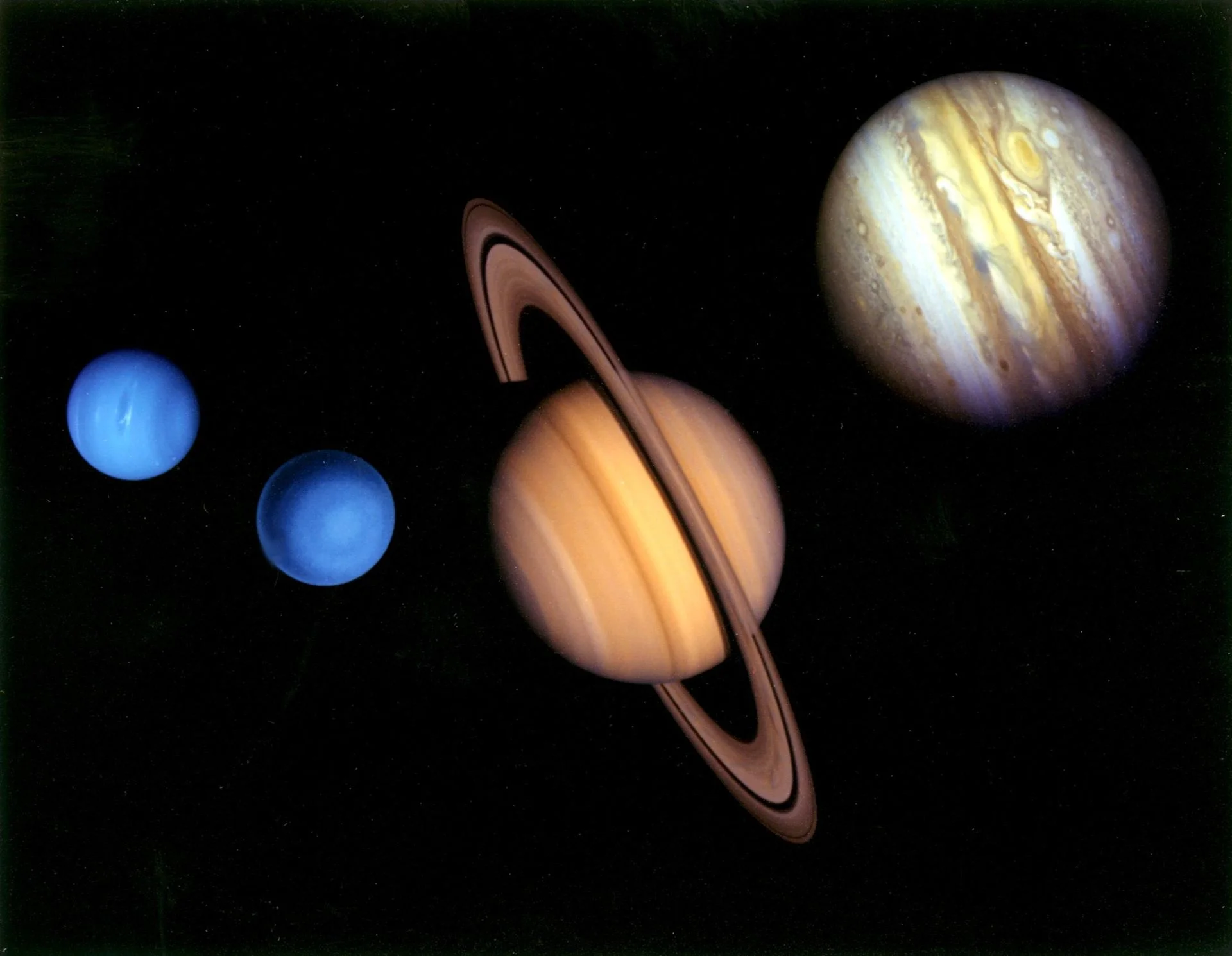
The Voyagers launched during a rare alignment of the outer planets, an arrangement that occurs about once every 176 years. Gravity assists let the spacecraft move from one giant planet to the next, turning the alignment into a series of close encounters that transformed distant points of light into worlds with measurable features.
Together, the probes discovered 23 moons, revealed faint rings around Jupiter and gathered the first detailed atmospheric profiles of Saturn, Uranus and Neptune. Their close-up images of Europa, Jupiter’s moon, showed a remarkably smooth, geologically young surface. That view helped establish Europa as a leading place to investigate when searching for possible life beyond Earth.
Voyager 1 also found active volcanoes on Io in 1979, the first observed on a world other than Earth. The discovery made Jupiter’s moon an active geological body rather than a static satellite. Lee recalled that before the encounters, scientists had little sense of what these worlds looked like. The images made them places researchers could map and imagine exploring.
The probes’ planetary work helped set the stage for NASA’s Galileo mission at Jupiter and Cassini at Saturn. Their later measurements beyond the heliosphere extended the mission’s scientific reach: interstellar space has proved to be a dynamic environment, not an empty expanse.
Power management is now the mission’s daily reality
Each spacecraft began with 10 science instruments. Two are still active on Voyager 1 and three on Voyager 2, measuring magnetic fields, plasma and cosmic rays. Voyager 1’s camera was turned off shortly after it captured the 1990 “Pale Blue Dot” image of Earth. NASA has since shut down other instruments as the spacecraft’s available electrical power declines.
The Voyagers cannot rely on solar panels so far from the Sun. Instead, nuclear batteries convert heat from the natural decay of plutonium into electricity. That supply steadily shrinks, forcing engineers to make tradeoffs between operating instruments, keeping systems warm and maintaining communications.
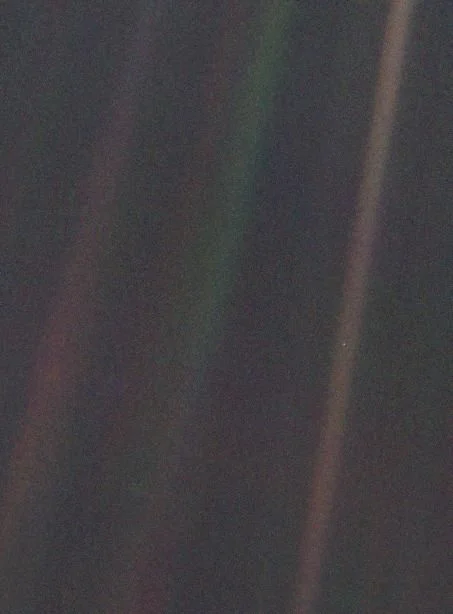
A recent power-saving effort, nicknamed the “Big Bang,” switched off some high-power subsystems and brought lower-power alternatives online. Kelly Perry, a Voyager data systems engineer at JPL, said the change bought nearly two years before another instrument would need to be turned off. The team’s priority, she said, is to “keep the spacecraft going as long as possible.”
That effort can extend the mission, but it can’t stop the power source from fading. Perry said the science mission will be considered complete when no science instruments remain operational. The team has decided that the magnetometer should be the final instrument left on; Perry said it will never be intentionally switched off.
NASA expects the probes may continue sending basic engineering information, including health and power status, until around 2036, even after their science instruments stop returning data. The spacecraft should remain intact as they coast onward. Researchers will be able to estimate their positions from their last known speed and trajectories, though any future interception would be impossible to track from Earth once communications end.
The Golden Record is a message with no expected audience
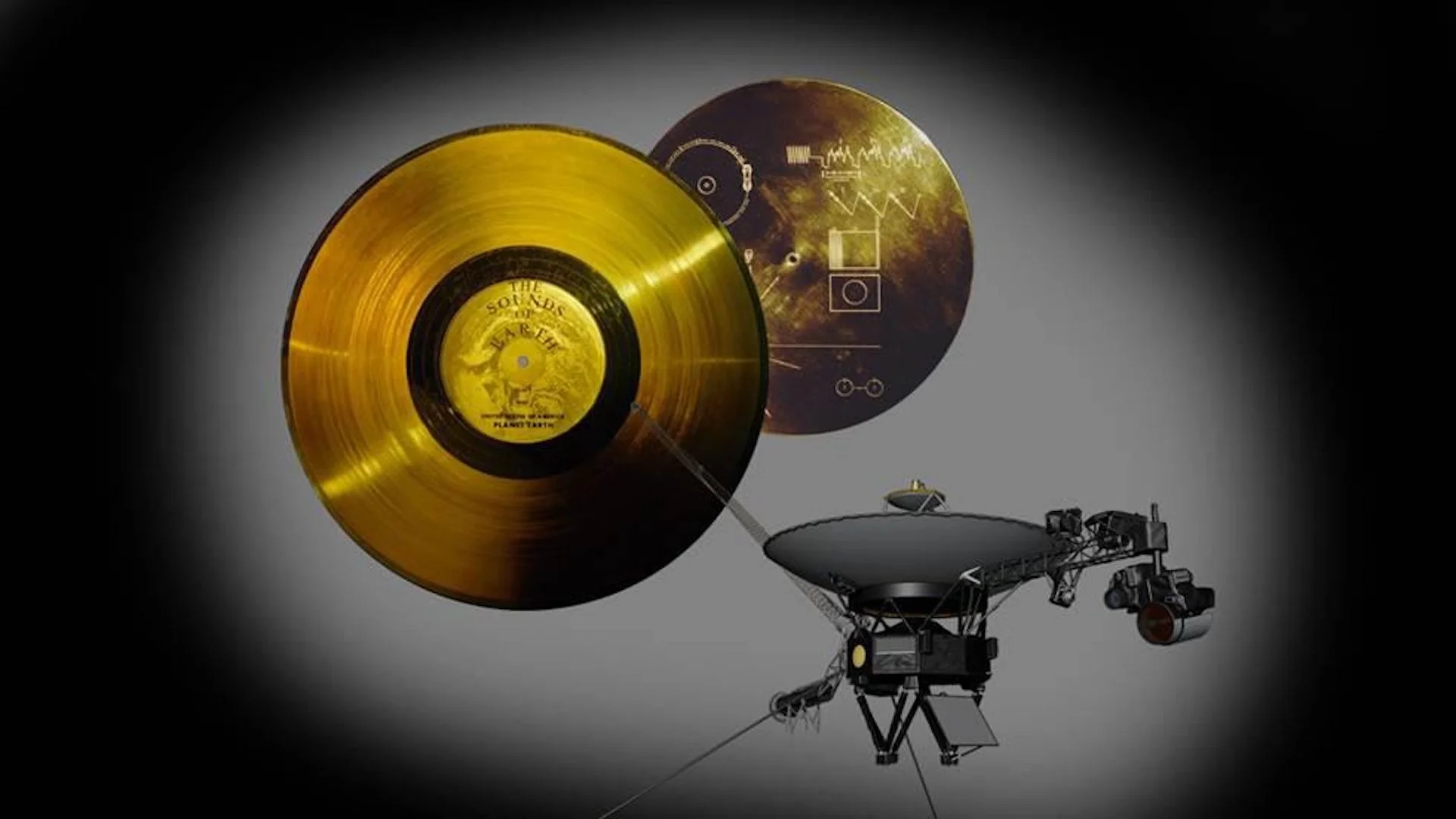
Both probes carry Golden Records: gold-plated discs intended to represent life on Earth. They include sounds such as wind and animal calls, greetings in 55 languages, images and a map showing the Sun’s location. The spacecraft also carry instructions explaining how to play the records.
The possibility that another civilization will find and decode one is vanishingly small. Lee said retrieving a probe for a museum would be more plausible, though still unlikely, than an extraterrestrial discovery followed by a successful playback. If someone did find a Voyager after contact with Earth had ended, anthropologist Deana Weibel said, there would be no way for us to know.
That leaves the records as both a message and a statement about the people who made them. They were designed as a time capsule, preserving sounds and images from Earth for a hypothetical listener. Their meaning doesn’t depend on anyone receiving them. The spacecraft will keep moving long after the teams that built and operated them are gone, carrying their remaining measurements—and a small human greeting—into a region no instrument has yet mapped from close range.
Discussion
Sign in to join the discussion.