Cleopatra likely chose to die rather than face Roman captivity, but the famous asp account remains uncertain and the evidence is thin.
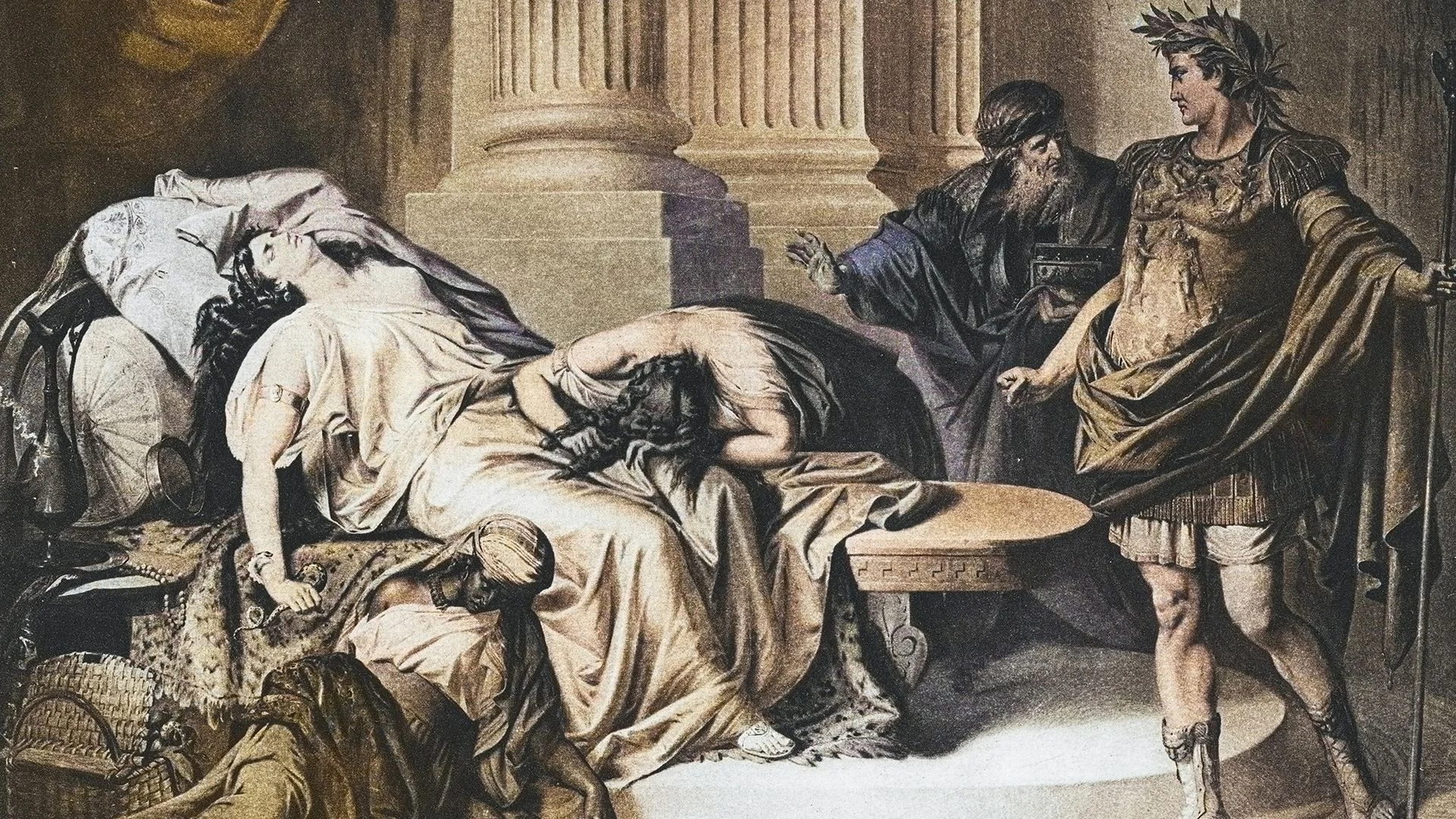
Cleopatra’s death served two purposes in the story Rome told about its victory: it turned the defeated queen into a dramatic symbol, and it left historians with an account they can’t verify. Most scholars think Cleopatra VII took her own life in 30 B.C. The method remains uncertain. The asp is famous, but the surviving evidence does not establish that a snake killed her.
A death recorded by her enemies
Cleopatra and Mark Antony lost to Octavian at the Battle of Actium in 31 B.C. The following summer, Roman forces captured Cleopatra in Alexandria. According to the version associated with Octavian, she died after a venomous asp snake bit her, sparing her the humiliation of defeat. Some Roman writers, including the historian Velleius Paterculus, accepted the story.
That account has an obvious weakness: Octavian was Cleopatra’s enemy and the beneficiary of her defeat. Jane Draycott, a historian at the University of Glasgow, points out that the earliest surviving account is a poem by Horace, whose patron was a close friend of Octavian. Written around the time Cleopatra died, Horace’s Ode 1.37 celebrates Octavian’s victory and depicts Cleopatra with serpents. Yet the poem also grants her a measure of admiration: she chose death over being paraded through Rome as a captive.
“We cannot know for sure exactly how Cleopatra died,” said Prudence Jones, a professor of classics at Montclair State University and author of Cleopatra: A Sourcebook. The gap is hard to close. Cleopatra’s personal physician, Olympus, may have been an important witness, but his account has not survived. The only people said to have been present with the queen also died.
Captivity was the outcome she feared
The circumstances before her death make suicide plausible, even if they don’t identify the means. Cleopatra was under Roman guard and had already tried to die. When soldiers broke into the mausoleum where she had barricaded herself, she attempted to stab herself. Later, she tried to starve herself, according to the surviving accounts, but stopped after Octavian threatened her children.
Draycott reads those attempts as evidence that Cleopatra would not accept life as a prisoner. In her view, the queen understood that Roman triumphal customs could turn a defeated ruler into a public spectacle. Suicide in the Greco-Roman world also carried a different meaning from the stigma it acquired later under Christianity. It could be seen as a way to avoid disgrace and retain control over one’s final act.
Plutarch, the Greek biographer, says Cleopatra went to Antony’s tomb, bathed and ate before sending Octavian a sealed letter asking to be buried beside Antony. Octavian recognized the implication and sent messengers to intervene. They arrived too late: Cleopatra was dead in royal dress, with her attendants Iras and Charmion dying beside her. The account makes the queen’s intention appear clear, while leaving open what she used.
Antony had died by suicide first, after hearing a false report that Cleopatra was dead. His remaining forces had been defeated at Alexandria. In this setting, Cleopatra’s death reads less like an isolated puzzle than the final decision of a ruler whose military and political options had collapsed.
What the snake evidence can—and can’t—show
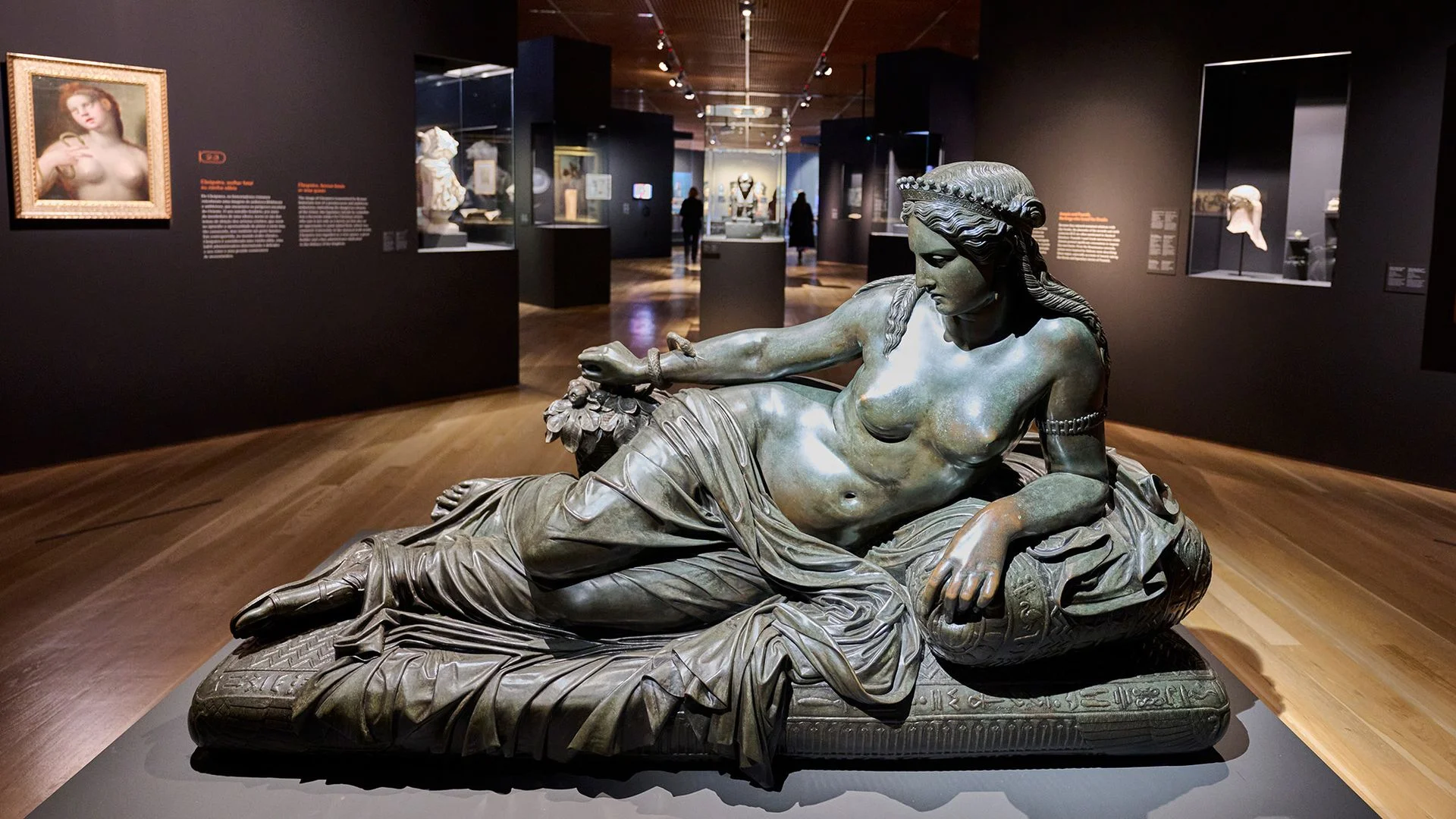
Ancient accounts repeatedly associate Cleopatra’s death with a snakebite, but they don’t agree on the details. Other proposed methods include a poisonous ointment, poison concealed in a hollow hairpin, or venom introduced into a wound the queen made by biting herself. The geographer Strabo is the only known writer in this group who was alive when Cleopatra died; he was not necessarily an eyewitness.
The Roman historian Cassius Dio identified what he described as two faint marks on Cleopatra’s arm, which some readers have treated as evidence for a snakebite. Jones cautions that this clue is inconclusive. Cobra bites can leave two small punctures, but they don’t always do so, and two puncture wounds can have other causes. The physical record, if Dio’s description is accurate, cannot settle the question by itself.
There’s also a possible route by which the snake story could have taken shape without a live cobra in Cleopatra’s chamber. Draycott notes that snake-shaped jewelry was fashionable in Alexandria. An image of the queen wearing a serpent ornament might have been read by Roman viewers as a depiction of an actual snake. Plutarch says an image of Cleopatra with an asp was carried in Octavian’s triumphal procession in Rome. That image helped preserve the story, but it doesn’t prove how she died.
Could one snake have killed Cleopatra and both attendants? Draycott doubts it. Jones considers it possible: venom delivery varies from bite to bite, and some bites inject no venom, but a cobra can carry enough venom to kill more than one person. Neither view resolves the central problem. There’s no surviving eyewitness account from someone who lived, and no confirmed physical evidence linking a snake to the deaths.
A poison fits some accounts, but certainty is out of reach
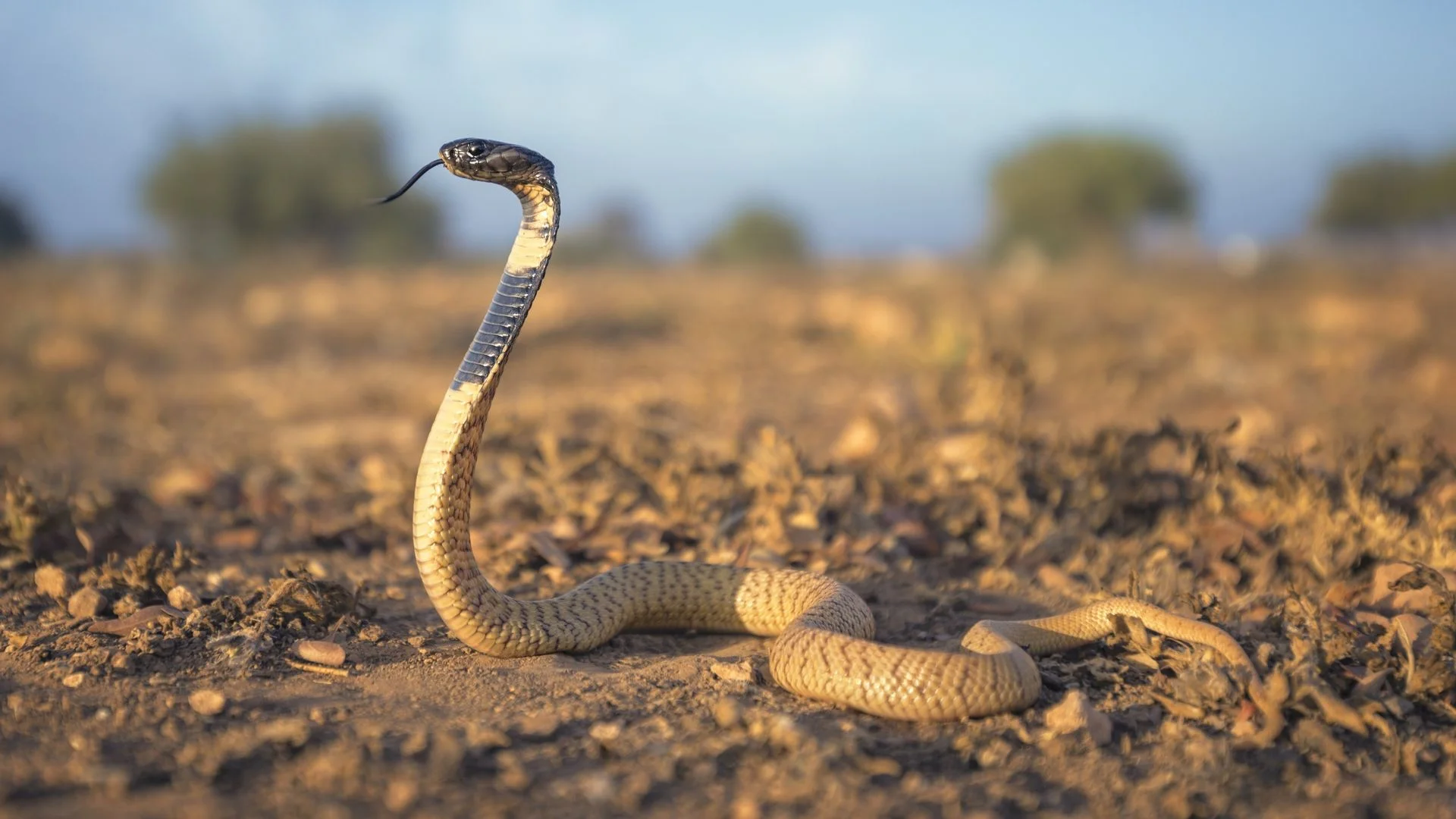
Many historians favor poison as the broad explanation, though not necessarily snake venom. Draycott says the reported absence of seizures and vomiting points toward a fast-acting poison that did not produce those effects. The Egyptian cobra, also called an asp in some ancient accounts, is now known as Naja haje. Its venom is associated with a slower death involving respiratory failure, which makes the classic image of a quick, composed death harder to reconcile with a cobra bite.
Cleopatra could have had access to knowledge about poisons. Alexandria was a major center of scientific study, and texts such as Nicander’s Theriaca cataloged venomous animals. Her father, Ptolemy XII, consulted the pharmacologist Zopyrus about antidotes. Plutarch also claimed that Cleopatra supervised experiments on the effects of deadly poisons on condemned prisoners.
Those stories need careful handling. Draycott warns that Roman accounts often cast women as secretive poisoners, while depicting men as warriors who fought openly. Accusations of poisoning also circulated around Hellenistic dynasties in Egypt and the Seleucid kingdom, as well as Rome’s imperial family. Some may have been true; others could have confused poisoning with foodborne illness or conditions ancient observers could not explain.
Cleopatra’s mausoleum has not been found. Much of Alexandria’s royal quarter is underwater, and underwater archaeologist Franck Goddio has been excavating the area without locating it, Jones said. Even if remains were recovered, bones would be unlikely to reveal whether poison was involved. The evidence may never distinguish among a prepared toxin, venom, or another method.
The strongest conclusion is narrower than the legend: Cleopatra probably chose to die rather than be held and displayed as a Roman captive. The asp remains a compelling emblem of that choice, but the method itself is still uncertain.
Discussion
Sign in to join the discussion.