Jeremy Hansen recounts Artemis II’s reentry, the six-minute communications blackout and the parachute sequence that brought Orion safely to the Pacific.
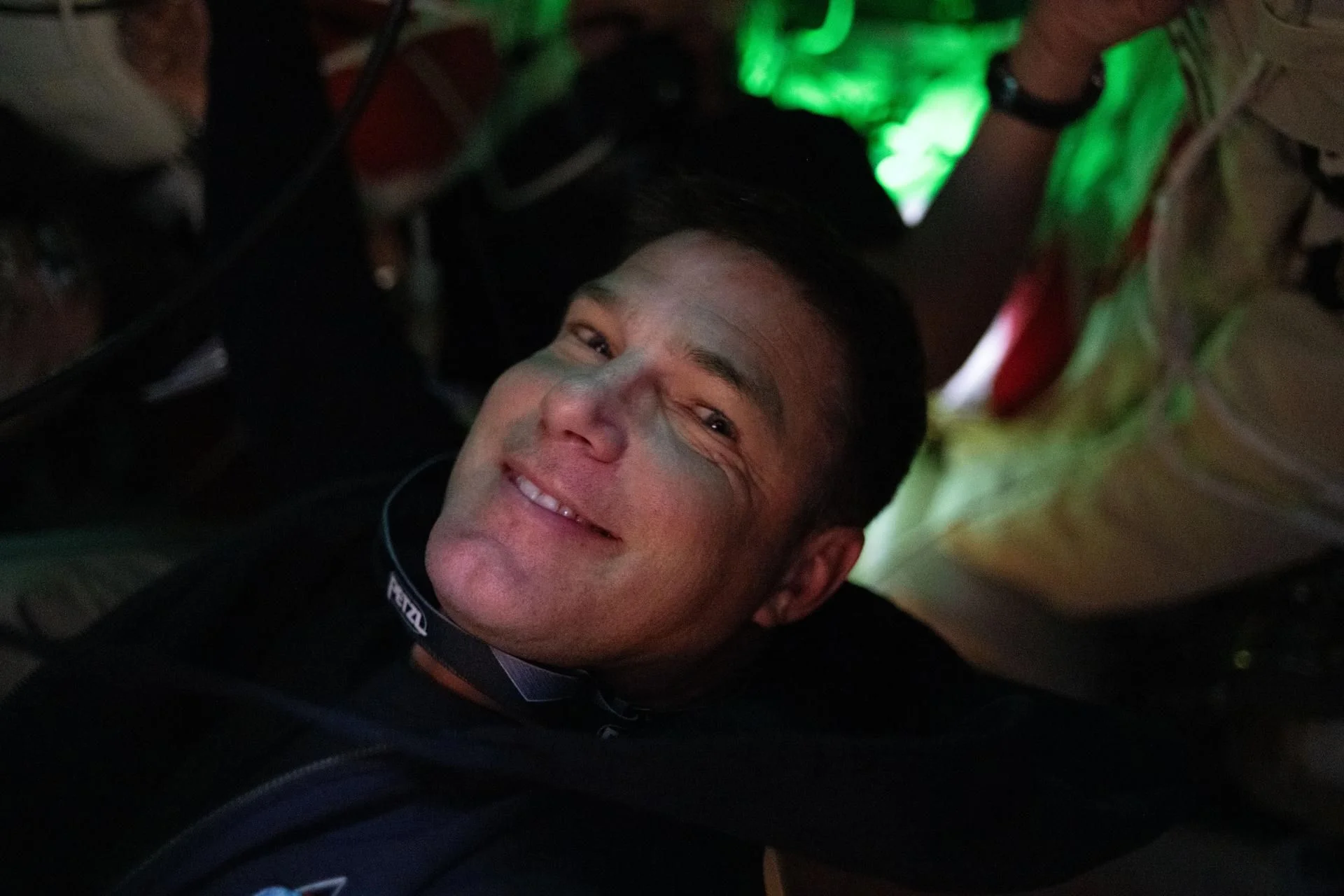
For Artemis II astronaut Jeremy Hansen, the most tense stretch of the return wasn’t the fiery plunge through Earth’s atmosphere. It was the wait afterward, when Orion was still falling and its main parachutes had yet to open. His account captures the narrow sequence of events that turned a record-setting lunar mission into a safe Pacific splashdown.
Hansen, the Canadian Space Agency’s sole astronaut on the four-person crew, describes the descent in Earthrise: Inside Artemis II, the Groundbreaking Human Mission into Deep Space, written with John Larsen. It was Hansen’s first spaceflight. As Orion approached Earth, he knew his wife, Catherine, and their three children would be watching the mission’s highest-risk phase from below.
A precisely timed final burn
About 30 minutes before splashdown, after Orion had separated from its European Service Module, Mission Control called for a 19-second crew module raise burn. It was the only burn using the capsule’s small thrusters. The maneuver adjusted the entry path and increased separation from the service module, which was due to encounter the atmosphere soon after the crew capsule.
The burn went as planned. Hansen tightened his restraints, preparing for the atmospheric entry. Orion reached the atmosphere at 7:53 p.m., moving faster than 10 kilometers per second—about 24,600 miles per hour.
The capsule’s thrusters fired repeatedly to keep it stable as the forces of reentry began slowing it down. Hansen heard heavy impacts against the spacecraft and watched plasma form outside the windows. Soon, flames surrounded the capsule. Their color shifted from red to a vivid blue-green, an extraordinary view separated from the crew by the heat shield and the capsule’s aluminum structure.
Inside the heat and blackout
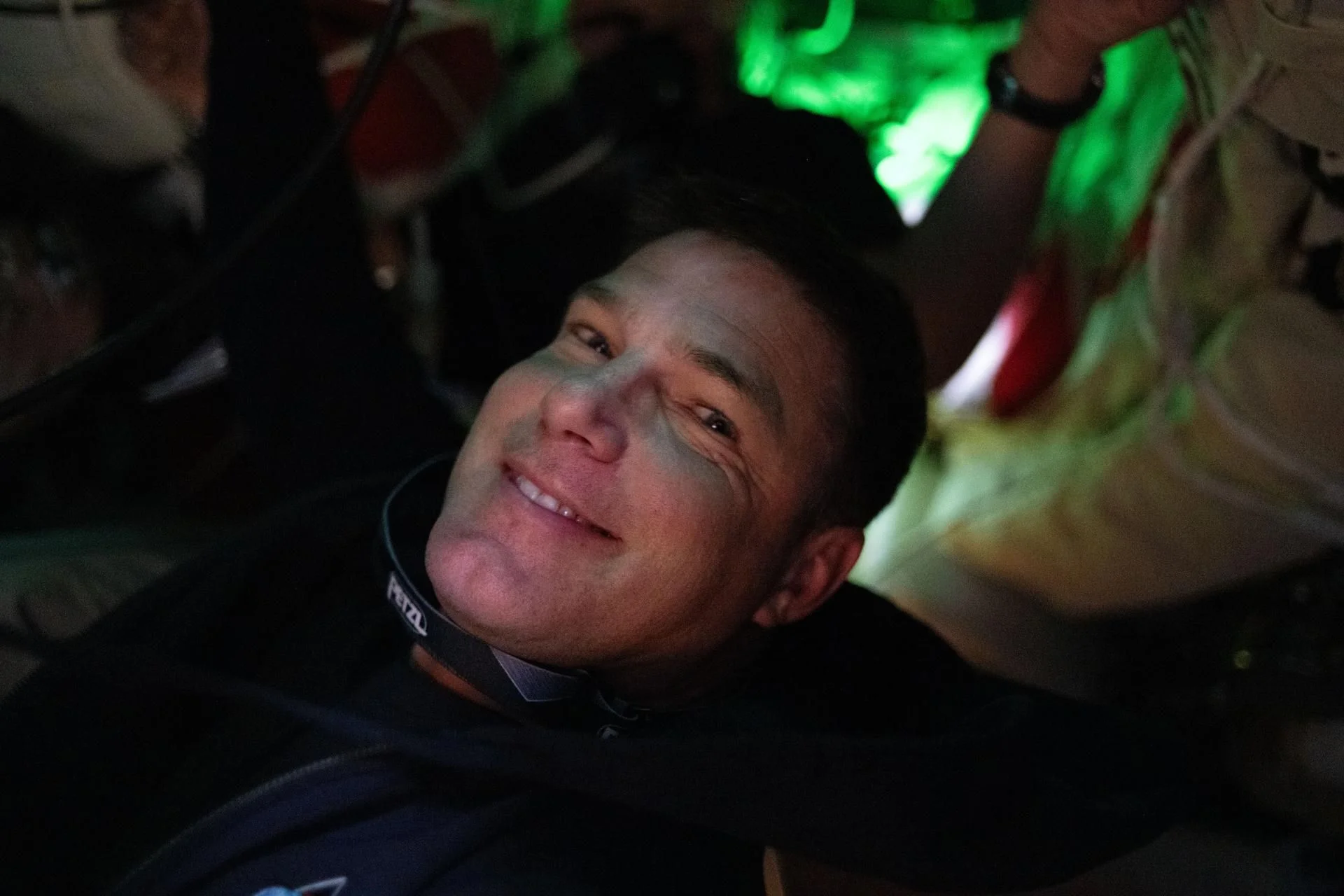
Hansen had trained for high G-forces in NASA’s centrifuge, but the actual return brought those forces together with the sight and sound of a spacecraft wrapped in plasma. The load climbed to nearly four times Earth’s gravity. Inside the capsule, the temperature also rose, though Hansen says his thermally controlled clothing kept him comfortable.
For about six minutes, Orion remained in the intense part of reentry before the flames faded and communications returned. The crew had been prepared for a communications blackout, but its end brought a palpable change: Houston’s voice came through at 8 p.m. Mission commander Reid Wiseman answered that the crew could hear Mission Control clearly.
Hansen was calm during the descent, he says, but felt the strain his family was enduring. He tried to reassure them in his thoughts. Catherine later told him she had been worried about the heat shield; when communications resumed, she began crying and missed the parachutes deploying.
That reaction points to the gap between a successful reentry and a completed landing. Orion had cleared the hottest part of the descent, but it still needed its parachute system to slow the capsule enough for impact.
Parachutes complete the return
At roughly 7,100 meters above the ocean, timed charges released the drogue parachutes. They pulled away the cover protecting the larger canopies and slowed Orion enough for the main parachutes to open. The deployment jolted the capsule, throwing the crew back and forth.
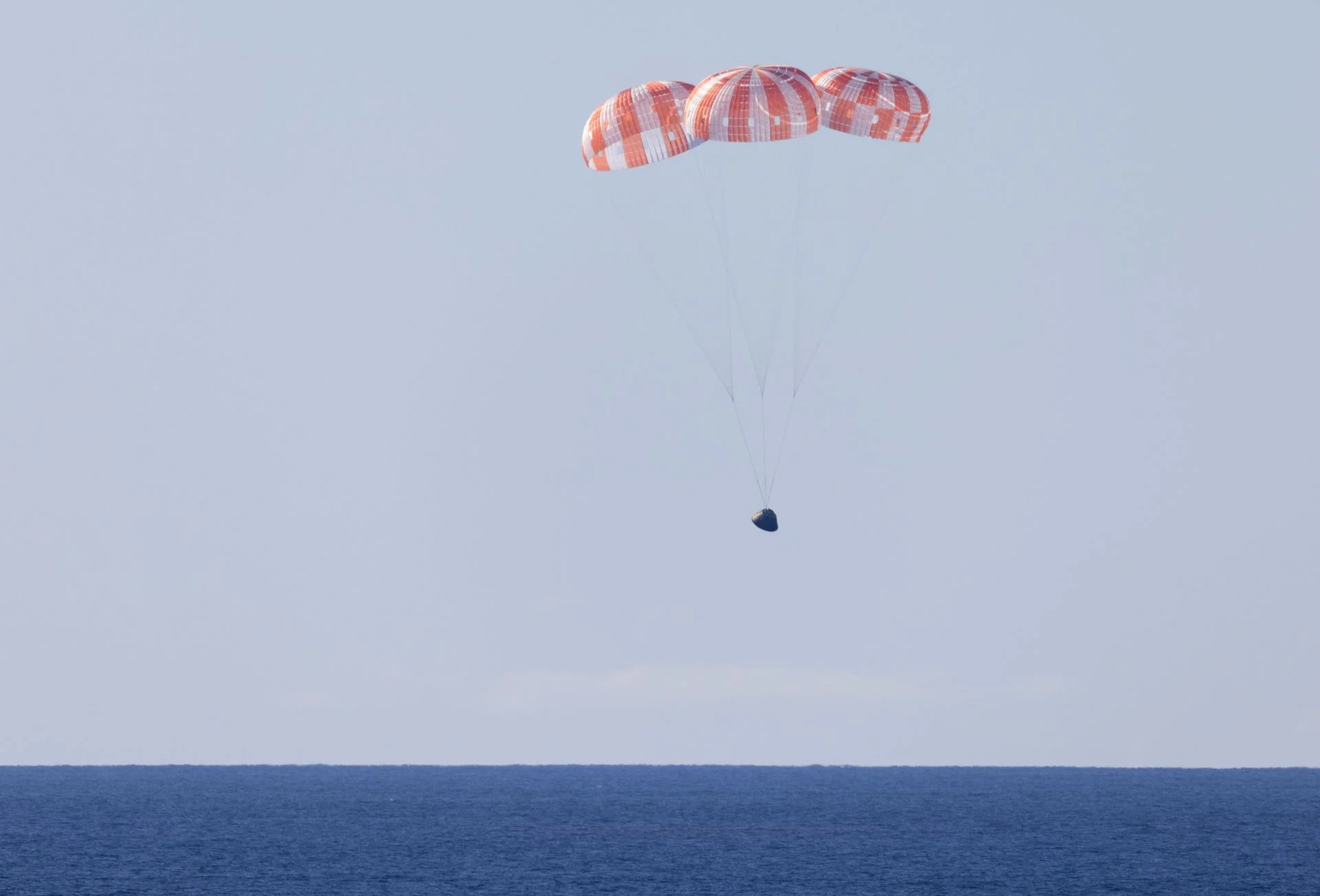
A minute later, at about 1,500 meters, the drogue chutes detached. The three main parachutes opened in sequence, their 35-meter-wide red-and-white canopies filling gradually to avoid tearing. Orion’s thrusters continued to orient the capsule for impact.
When the crew heard that all three parachutes looked good, the capsule’s descent had slowed to 27 kilometers per hour. Hansen finally felt they could survive what remained. He and mission specialist Christina Koch clasped hands in celebration.
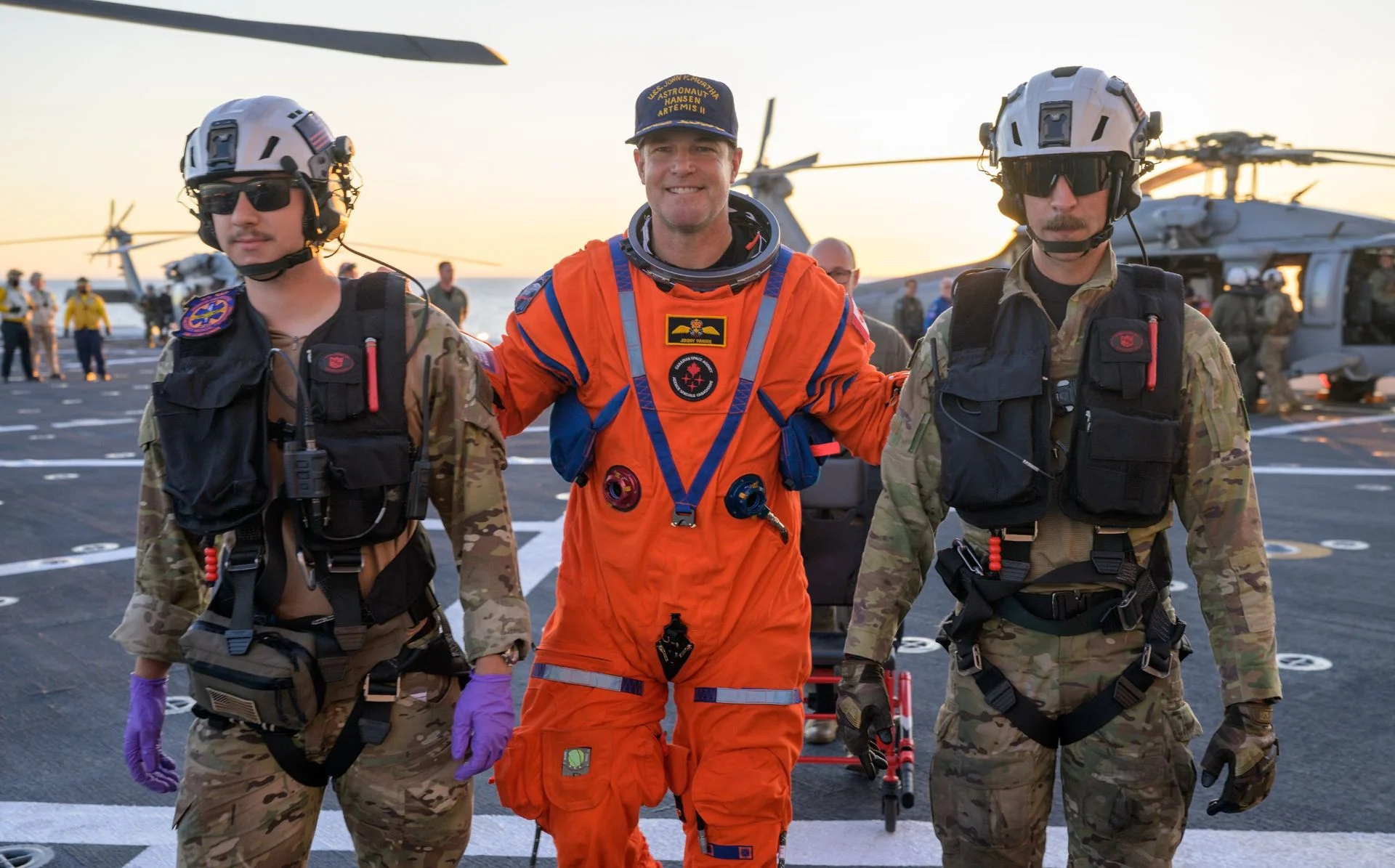
The return had carried the crew more than 250,000 miles from Earth, farther than any humans had traveled before, and back through a descent that compressed extreme heat, high acceleration, a communications blackout and a tightly choreographed parachute sequence into minutes. Hansen’s account makes clear why the landing wasn’t assured until those three canopies were open. Orion then reached the Pacific, where the four crewmembers were recovered in good health.
Discussion
Sign in to join the discussion.